Gaming Copilot

Search documents
AI在偷偷“看你打游戏”?Win11被曝默认录屏上传数据,帧率还下降
3 6 Ke· 2025-10-24 13:14
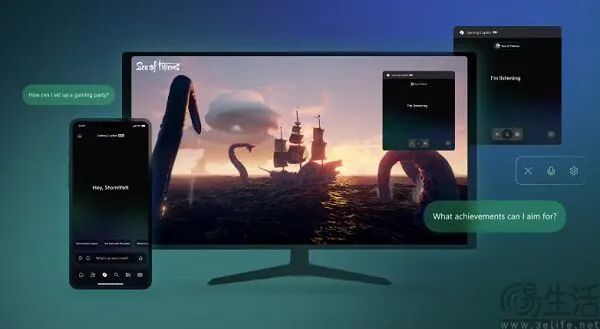
Core Viewpoint - Microsoft is facing backlash over its new Gaming Copilot feature in Windows 11, which raises privacy concerns and impacts performance negatively for gamers [1][11]. Privacy Concerns - Players have reported that Gaming Copilot monitors and captures gameplay footage, uploading this data to Microsoft for AI model training, contradicting the company's FAQ stating that screenshots would not be saved or used for training [3][6]. - The default setting for "Model training on text" is enabled, meaning users may unknowingly allow Microsoft to access their gameplay data unless they manually disable it [6][7]. - In addition to text data, Gaming Copilot collects voice chat data, personalized data, and conversation content with the AI assistant, requiring users to navigate through multiple settings to disable these features [7][8]. Performance Issues - The Gaming Copilot feature has been reported to negatively affect game performance, with frame rates dropping significantly when model training is enabled [9]. - For instance, while playing "Dead As Disco," frame rates dropped to 70 FPS with Copilot enabled, compared to a stable 84-89 FPS when it was disabled, highlighting the resource strain on lower-end devices [9][10]. - Accessing or exporting data captured by Gaming Copilot requires running Microsoft Edge, which further consumes system resources [9]. Trust Erosion - The controversy surrounding the default data upload feature, combined with Microsoft's recent decisions, has led to a growing distrust among players [11][12]. - Recent actions include raising prices for Xbox consoles and development kits, increasing Game Pass subscription fees by 50%, and laying off over 9,000 employees while prioritizing AI initiatives [12][14]. - Players express that they prioritize system performance and privacy over AI assistance, indicating that without addressing these fundamental issues, Gaming Copilot may be viewed as an unnecessary burden [12].



微软出了个“游戏搭子”,但劝你先别急着用
3 6 Ke· 2025-10-09 09:28
Core Viewpoint - The introduction of Microsoft's Gaming Copilot aims to enhance the gaming experience by providing real-time assistance to players, addressing a growing demand for AI-driven support in gaming [1][10]. Group 1: Product Features - Gaming Copilot operates through voice commands, allowing players to interact without interrupting their gameplay, unlike previous products that required switching applications [3][5]. - The integration with Windows Game Bar enables seamless access to game strategies while playing, leveraging advanced multimodal AI capabilities [6]. - The product is designed to cater to the interactive nature of games, which are often easy to start but challenging to master, thus fulfilling a critical need for players seeking guidance [6][8]. Group 2: Market Context - The rise of mobile gaming has shifted player demographics, with casual gamers becoming the majority, influencing game design towards more accessible experiences [8]. - There is a notable change in player attitudes towards game guides, with acceptance growing as developers also provide assistance, reflecting a shift in the gaming culture [8][10]. Group 3: Competitive Landscape - Gaming Copilot is not the first AI gaming assistant; similar products have been launched by Google and NVIDIA, but Microsoft's offering is distinguished by its real-time, non-intrusive support [3][5]. - The competitive edge lies in its ability to provide immediate assistance without disrupting gameplay, a significant improvement over existing solutions [5][6]. Group 4: Potential Concerns - Previous experiences with Microsoft's Edge Game Assistant raised concerns about performance issues during gameplay, leading to skepticism about the reliability of Gaming Copilot [10][11]. - The complexity of Gaming Copilot's functionality may increase the likelihood of performance-related problems, suggesting caution for early adopters [11].