GigaTIME

Search documents
Scaling insights into immunotherapy with GigaTIME
Microsoft· 2026-02-24 17:14
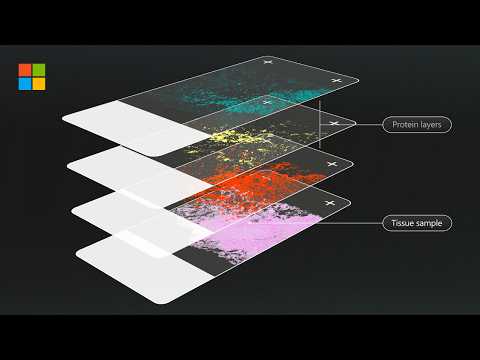
Immunotherapy is really the most promising direction for taming cancer once and for all. The whole idea is using the immune system to fight cancer. The big challenge that we have in the field right now is to understand which patients will respond.Spatial proteomics can simultaneously measure multiple proteins and create multiplex immunofluorescence images. They can tell you whether the patient might respond to immunotherapy or not. But unfortunately to generate these kind of images takes days and costs thou ...

基于1.4万真实数据,华盛顿大学/微软等提出GigaTIME,绘制全景肿瘤免疫微环境图谱
3 6 Ke· 2026-02-12 11:37
Core Insights - The research team from Microsoft Research, the University of Washington, and Providence Genomics has developed a multimodal AI framework called GigaTIME, which can generate virtual mIF maps from conventional H&E slides, enabling systematic modeling of tumor immune microenvironments across a diverse population of over 14,000 cancer patients [1][3][5]. Group 1: Technology and Methodology - GigaTIME utilizes advanced multimodal learning techniques to convert H&E pathology slides into spatial proteomics data, generating virtual populations that reflect cellular states [5]. - The model addresses the limitations of traditional immunohistochemistry (IHC) and costly multiplex immunofluorescence (mIF) techniques by leveraging widely available and low-cost H&E stained slides [2][13]. - The AI model was trained using a comprehensive dataset, including 441 mIF images paired with H&E slides, covering 21 key biological markers essential for analyzing immune cell composition and tumor activity [7][9]. Group 2: Data and Validation - The training dataset consists of H&E slides from 14,256 cancer patients across 24 cancer types and 306 subtypes, integrated with genomic markers and clinical information, providing a real-world representation of diverse patient demographics [11][19]. - GigaTIME's performance was validated through a systematic evaluation, demonstrating superior image translation capabilities compared to baseline models, with significant improvements in pixel, cell, and slice-level correlations [18][24]. Group 3: Clinical Findings and Implications - The analysis of nearly 300,000 virtual mIF images led to the identification of 1,234 significant associations between virtual protein expression and clinical biomarkers across various cancer types and subtypes [19][21]. - GigaTIME revealed critical insights into the relationship between tumor mutation burden, microsatellite instability, and immune infiltration markers, suggesting potential mechanisms for immune activation and evasion [21][27]. - The model's findings were corroborated in an independent cohort from the TCGA, highlighting the robustness and reliability of the discovered associations [23][25]. Group 4: Future Directions and Industry Impact - GigaTIME represents a significant milestone in the application of multimodal AI in cancer research, providing a reusable technical framework and data resources for future studies [29]. - The ongoing advancements in virtual-reality data generation and low-cost detection technologies are expected to transform the understanding of tumor complexity and accelerate precision medicine [29][28].