多模态人工智能

Search documents
基于1.4万真实数据,华盛顿大学/微软等提出GigaTIME,绘制全景肿瘤免疫微环境图谱
3 6 Ke· 2026-02-12 11:37
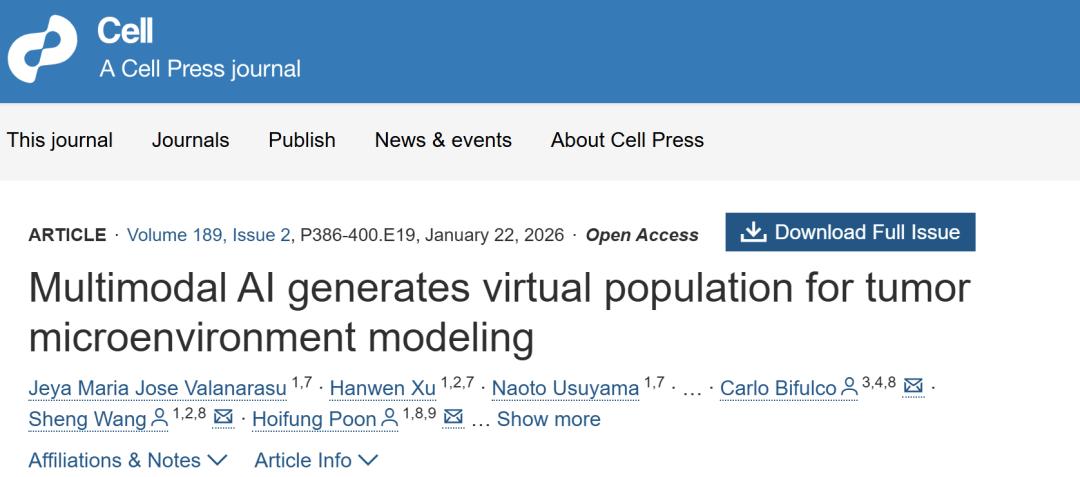
Core Insights - The research team from Microsoft Research, the University of Washington, and Providence Genomics has developed a multimodal AI framework called GigaTIME, which can generate virtual mIF maps from conventional H&E slides, enabling systematic modeling of tumor immune microenvironments across a diverse population of over 14,000 cancer patients [1][3][5]. Group 1: Technology and Methodology - GigaTIME utilizes advanced multimodal learning techniques to convert H&E pathology slides into spatial proteomics data, generating virtual populations that reflect cellular states [5]. - The model addresses the limitations of traditional immunohistochemistry (IHC) and costly multiplex immunofluorescence (mIF) techniques by leveraging widely available and low-cost H&E stained slides [2][13]. - The AI model was trained using a comprehensive dataset, including 441 mIF images paired with H&E slides, covering 21 key biological markers essential for analyzing immune cell composition and tumor activity [7][9]. Group 2: Data and Validation - The training dataset consists of H&E slides from 14,256 cancer patients across 24 cancer types and 306 subtypes, integrated with genomic markers and clinical information, providing a real-world representation of diverse patient demographics [11][19]. - GigaTIME's performance was validated through a systematic evaluation, demonstrating superior image translation capabilities compared to baseline models, with significant improvements in pixel, cell, and slice-level correlations [18][24]. Group 3: Clinical Findings and Implications - The analysis of nearly 300,000 virtual mIF images led to the identification of 1,234 significant associations between virtual protein expression and clinical biomarkers across various cancer types and subtypes [19][21]. - GigaTIME revealed critical insights into the relationship between tumor mutation burden, microsatellite instability, and immune infiltration markers, suggesting potential mechanisms for immune activation and evasion [21][27]. - The model's findings were corroborated in an independent cohort from the TCGA, highlighting the robustness and reliability of the discovered associations [23][25]. Group 4: Future Directions and Industry Impact - GigaTIME represents a significant milestone in the application of multimodal AI in cancer research, providing a reusable technical framework and data resources for future studies [29]. - The ongoing advancements in virtual-reality data generation and low-cost detection technologies are expected to transform the understanding of tumor complexity and accelerate precision medicine [29][28].


中国科学家研发出自主显微眼科手术机器人系统
Xin Lang Cai Jing· 2026-01-20 03:55
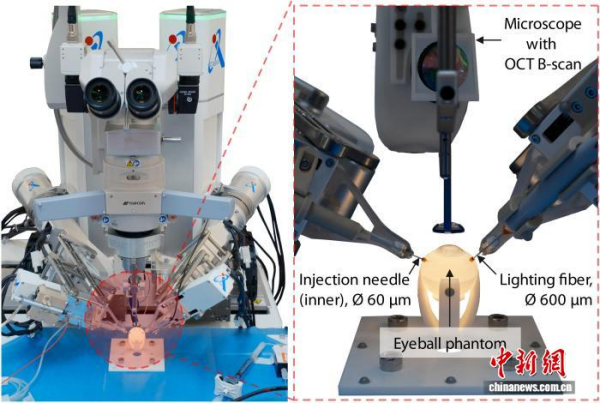
Core Viewpoint - The Chinese Academy of Sciences' Institute of Automation has successfully developed an autonomous ophthalmic surgical robot system, demonstrating clinical feasibility, which enhances the precision, safety, and consistency of intraocular injections [1] Group 1: Technology Development - The autonomous ophthalmic surgical robot system can perform subretinal and intravascular injections throughout the entire intraocular space [1] - This technology significantly improves the accuracy and safety of fundus injections, allowing surgeons to focus more on surgical design and supervision tasks [1] Group 2: Research and Publication - The research results have been published in the international academic journal "Science Robotics" [1]

【中国新闻网】中国团队成功研发自主显微眼科手术机器人系统 已验证临床可行性
Zhong Guo Xin Wen Wang· 2026-01-20 02:11
Core Viewpoint - The rapid development and application of artificial intelligence technology have made the research and development of ophthalmic surgical robots a key focus in the industry, aiming to enhance precision and safety in eye surgeries [1][3]. Group 1: Technological Advancements - The Chinese Academy of Sciences' Institute of Automation has successfully developed an autonomous microscopic ophthalmic surgical robot system that has been clinically validated [3]. - This robotic system can autonomously perform subretinal and intravascular injections within the eye, significantly improving the precision, safety, and consistency of fundus injections while minimizing iatrogenic damage [3][4]. Group 2: Research Contributions - The research team has innovatively constructed core algorithm modules for three-dimensional spatial perception, precise cross-scale positioning, and trajectory control during surgeries [4]. - A multi-view spatial fusion method has been proposed to overcome imaging heterogeneity and dynamic spatial misalignment in multimodal intraocular imaging, creating a dynamically updated global 3D map for comprehensive perception of the intraocular region [4]. Group 3: Performance Metrics - In experiments involving retinal and vascular injections in artificial and live animal eyes, the autonomous surgical robot achieved a 100% injection success rate, with average positioning errors reduced by 79.87% compared to manual surgery and 54.61% compared to doctor-assisted robotic surgery [4]. - The research indicates that this development opens a new technological pathway for the autonomy of intraocular surgeries, potentially leading to intelligent and precise upgrades in ophthalmic surgical treatments [4].
人工智能专家凌海滨全职加入西湖大学,创立智能计算与应用实验室
生物世界· 2025-12-30 00:18
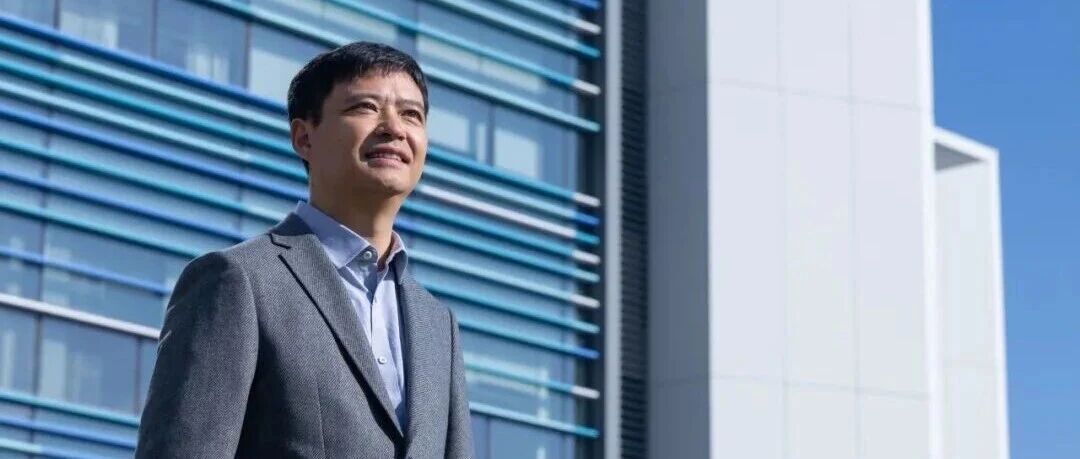
Core Viewpoint - Westlake University has announced the full-time appointment of Haibin Ling, an Empire Innovation Professor from Stony Brook University, to lead the establishment of the Intelligent Computing and Applications Laboratory, focusing on artificial intelligence and interdisciplinary research [2]. Group 1: Appointment and Research Focus - Haibin Ling will serve as a chair professor at Westlake University, leading research in areas such as computer vision, multimodal AI, augmented reality, AI for Science, and quantum information [2]. - The newly established laboratory aims to advance research and applications in artificial intelligence [2]. Group 2: Academic Background and Career - Haibin Ling, born in 1974 in Anshun, Guizhou, holds a Bachelor's and Master's degree from Peking University and a Ph.D. from the University of Maryland [4][5]. - His career includes positions at Microsoft Research Asia, UCLA, Siemens Research, and Temple University, before joining Stony Brook University in 2019 [5]. - Ling's research has significantly impacted the field of computer vision, particularly in dynamic object tracking, which is crucial for various applications including security monitoring and medical imaging [5]. Group 3: Achievements and Contributions - Ling has received multiple awards, including the ACM UIST Best Student Paper Award (2003), the NSF CAREER Award (2014), and the IEEE VR Best Journal Paper Award (2021) [6]. - He has served on editorial boards for several prestigious journals and has been involved in leading roles at top AI conferences [6].
微软最新Cell论文:AI 将常规病理切片转化为肿瘤免疫图谱,最终目标是生成“虚拟患者”,加速癌症治疗
生物世界· 2025-12-15 04:33
Core Viewpoint - The article discusses the development of GigaTIME, a multimodal AI framework that enables large-scale modeling of the tumor immune microenvironment (TIME) by connecting cellular morphology and status, overcoming the limitations of traditional costly and low-throughput multiple immunofluorescence (mIF) techniques [4][22]. Group 1: GigaTIME Framework - GigaTIME utilizes a cross-modal translator trained on paired H&E and mIF data from 40 million cells, successfully converting conventional H&E pathology slides into virtual mIF images [4][10]. - The framework has generated virtual mIF images covering 24 cancer types and 306 subtypes, identifying 1,234 associations related to immune activity, tumor invasion, and survival rates, paving the way for scalable data-driven oncology research [4][14]. Group 2: Traditional Techniques vs. AI Breakthroughs - Traditional mIF technology, while rich in protein expression information, is limited by high costs and complex processes, making it difficult for large-scale application [7]. - H&E staining, a cost-effective and widely used method, lacks the ability to directly display protein activity, prompting the need for AI solutions to extract sufficient information from H&E slides [8][9]. Group 3: Clinical Discoveries and Applications - The creation of a virtual population allows for large-scale clinical discoveries, identifying significant protein-biomarker associations across various cancer types [14]. - GigaTIME demonstrates clinical value in patient stratification, with its integrated features outperforming single protein channels in predicting patient survival, highlighting the importance of multi-faceted analysis [19]. Group 4: Future Prospects - Future plans include exploring additional protein channels and integrating cell segmentation models to study intercellular interactions, further elucidating the "grammar" of the tumor microenvironment [21]. - GigaTIME represents a significant advancement in digital pathology, offering researchers tools for large-scale studies of the tumor microenvironment and opening new avenues for precision immuno-oncology [22].

AI 交易:2025 年完整指南
Xin Lang Cai Jing· 2025-12-02 11:59
Core Insights - Artificial Intelligence (AI) is revolutionizing the trading landscape, bringing unprecedented efficiency, accuracy, and speed to financial markets. By 2025, AI is expected to handle nearly 89% of global trading volume, impacting everything from high-frequency stock trading to decentralized cryptocurrency ecosystems [1][10]. Group 1: Evolution of AI in Trading - The adoption of AI in trading is driven by the need for automation, reducing human errors, and executing trades at record speeds [10]. - Current markets generate and process over 2.5 million terabytes of data daily, including news, social media, satellite images, and blockchain transactions, creating a data explosion that AI can help manage [13]. Group 2: Core Technologies Driving AI Trading - Key technologies include machine learning, deep learning, natural language processing, and quantum computing, which enhance trading strategies and decision-making [13][14]. - AI systems can achieve nanosecond-level trading responses, significantly faster than human reaction times, improving overall market efficiency [13]. Group 3: AI Trading Platforms and Strategies - AI trading strategies encompass quantitative trading, algorithmic trading, sentiment analysis, and reinforcement learning, all aimed at maximizing returns and managing market risks [14][15]. - The regulatory landscape is evolving, with institutions like the SEC approving new AI-driven order types, legitimizing autonomous trading systems [13].
MIT成果登Nature正刊:90天,「AI科学家」完成3500次电化学测试
3 6 Ke· 2025-10-21 01:34
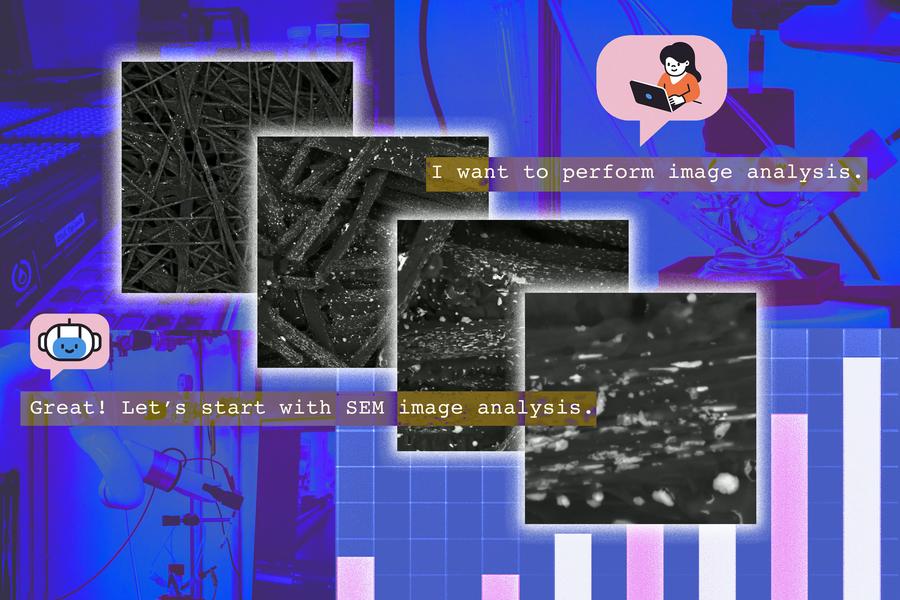
Core Insights - The research team from MIT has developed a multimodal robotic platform called CRESt, which significantly enhances the speed and quality of catalyst development by integrating multimodal models with high-throughput automated experiments [1][3][14] Group 1: Platform and Methodology - CRESt combines knowledge-assisted Bayesian optimization (KABO) with automated experiments to collect various forms of data within a unified active learning framework [3] - The platform utilizes precise control of chemical components, high-throughput scanning electron microscopy for microstructural imaging, and large language models to embed literature knowledge into the search space [6] - An innovative algorithm, Bayesian Optimization with Improved Constraints (BOPIC), dynamically adjusts the balance between exploration and exploitation, eliminating the need for manual parameter tuning [6] Group 2: Experimental Achievements - Within three months, CRESt completed over 900 catalyst chemical compositions and conducted more than 3,500 electrochemical tests, discovering formulations that significantly outperform traditional palladium-based catalysts [6][12] - The new eight-component high-entropy alloy catalyst demonstrated a 9.3-fold increase in unit cost power density compared to pure palladium benchmarks and achieved the highest performance in direct formate fuel cells with only a quarter of the previous noble metal loading [12] Group 3: Addressing Experimental Challenges - The research team tackled the common issue of reproducibility in experimental science, initially facing significant data noise due to inconsistencies in synthesis and testing [8] - Visual-language models (VLMs) were employed to diagnose sources of irreproducibility and suggest corrective measures, such as identifying misalignment in pipette tips and carbonized surfaces on sample holders [8][9] - The team improved stability and consistency by switching to stainless steel fixtures based on feedback from the VLM diagnostics [10] Group 4: Theoretical Insights - The study combined in situ X-ray absorption spectroscopy (XAS) with density functional theory (DFT) calculations to understand the mechanisms behind performance improvements [12] - Results indicated that palladium and platinum maintained metallic states under reaction conditions, which is crucial for catalytic activity, while dopants like Nb, Cr, and Ce introduced structural perturbations without significant lattice distortion [12] - DFT calculations revealed that the energy barrier for the rate-determining step in the indirect oxidation pathway was significantly lower in the high-entropy alloy compared to pure palladium, enhancing resistance to carbon monoxide poisoning [12]
安博通(688168):安全人工智能产品收入突破,致力构建AI时代安全算力生态
ZHONGTAI SECURITIES· 2025-08-21 12:22
Investment Rating - The report maintains a rating of "Accumulate" for the company [2][5] Core Viewpoints - The company achieved a significant revenue increase of 34.37% in 2024, reaching 737 million yuan, primarily driven by rapid growth in its security gateway and security service revenues, as well as breakthroughs in new security AI products [4][5] - Despite the revenue growth, the company reported a net loss of 119 million yuan in 2024 due to substantial increases in operating expenses, including a 122.45% rise in sales expenses and a 55.78% rise in management expenses [4][5] - The first quarter of 2025 saw a remarkable revenue growth of 444.91%, amounting to 308 million yuan, indicating strong performance in new business deliveries [4][5] Financial Projections - The company’s revenue projections for 2025, 2026, and 2027 are 814 million yuan, 922 million yuan, and 1,055 million yuan respectively, reflecting a growth rate of 10.5%, 13.2%, and 14.4% [2][4] - The forecasted net profits for 2025, 2026, and 2027 are 4 million yuan, 27 million yuan, and 61 million yuan respectively, showing a significant recovery from the previous losses [2][4] - The report highlights a projected increase in earnings per share (EPS) from -1.54 yuan in 2024 to 0.05 yuan in 2025, and further to 0.79 yuan in 2027 [2][4] Market Position and Strategy - The company is transitioning from being an innovator in network security visualization technology to becoming a builder of a secure computing ecosystem in the AI era [4][5] - Strategic partnerships have been established with various organizations to enhance technological development and market expansion, including collaborations with Inspur Cloud and Jiangyuan Technology [4][5] - The company has received recognition for its innovative products, including awards for its next-generation AI firewall and its inclusion in the digital security capability landscape by the China Academy of Information and Communications Technology [4][5]

《浙江省加快推动“人工智能+医疗健康”高质量发展行动计划(2025—2027年)》印发
Zheng Quan Shi Bao Wang· 2025-08-13 02:59
Core Viewpoint - The Zhejiang Provincial Health Commission and ten other departments have issued an action plan to accelerate the high-quality development of "Artificial Intelligence + Healthcare" from 2025 to 2027, focusing on data resource aggregation and the establishment of a robust health data management system [1] Group 1: Data Management and Standards - The plan emphasizes the need to develop and improve data security management and utilization systems in the healthcare sector [1] - It aims to establish a health data standard system to enhance the quality and capacity of health data [1] - The initiative includes the construction of a trustworthy data space for the healthcare industry and the development of data governance tools and intelligent engines [1] Group 2: AI Development and Research - The action plan outlines the creation of a provincial medical bioinformatics database and the sharing of high-quality industry datasets and corpora [1] - It aims to build a multi-modal medical industry large model and establish a fully autonomous AI research and development framework [1] - The plan encourages the development of specialized models and medical intelligent agents covering various areas such as medical services, health management, public health, and drug/device research [1] Group 3: Interdisciplinary Collaboration and Innovation - The initiative focuses on deploying major technological projects in fields like AI data and applications, brain-computer interfaces, and new drug development [1] - It promotes interdisciplinary collaboration among research institutions to generate globally influential research outcomes in medical AI [1]
Cell综述:生成式AI,开启医学新时代
生物世界· 2025-07-13 08:16
Core Viewpoint - The article discusses the transformative potential of artificial intelligence (AI) in the biomedical field, emphasizing advancements in large language models (LLMs) and multimodal AI that can enhance diagnostics, patient interactions, and medical predictions [2][6][11]. Group 1: Technological Innovations - Recent advancements in AI, particularly in LLMs and multimodal AI, are set to revolutionize the medical field by improving diagnostics and patient interactions [6]. - Key architectural innovations such as Transformer architecture, generative adversarial networks, and diffusion models have contributed to the development of complex generative AI systems [2][4]. Group 2: Medical Practice Transformation - AI-enabled medical practices are shifting clinical care from sporadic interactions to continuous monitoring and regular follow-ups, allowing for proactive healthcare in familiar environments [8]. - New medical knowledge can be more easily integrated into care models, and AI technologies are facilitating the development of new drugs [8]. Group 3: Multiscale Medical Predictions - AI algorithms can predict future medical events based on various dynamic inputs, applicable at multiple levels from molecular to population [10]. - The future of medicine will involve tools capable of processing vast amounts of information, significantly improving diagnostic accuracy and patient outcomes [11]. Group 4: Challenges and Implementation - Despite the promising advancements, the widespread clinical adoption of AI tools faces significant challenges, including bias, privacy concerns, regulatory hurdles, and integration with existing healthcare systems [6][11]. - Most AI tools are still in development, with few demonstrating clear benefits across all users or situations, which remains a major barrier to broader usage by healthcare professionals [11]. Group 5: Roadmap for AI Implementation - The roadmap for implementing medical AI involves transitioning from basic scientific research to concept validation models, leading to larger models and early clinical applications that pave the way for final clinical deployment and optimization [14].