H20 graphics processing units

Search documents
Nvidia and AMD Shares Jump With Sales Set to Resume to China. Is It Too Late to Buy the Stocks?
The Motley Fool· 2025-07-22 08:50
Core Insights - The U.S.-China trade war has shifted, benefiting Nvidia and AMD as the U.S. eases chip export restrictions, allowing these companies to sell AI chips to China [1][6] - Nvidia can resume sales of its H20 GPUs, which were previously halted due to new export rules, potentially recovering billions in revenue [2][5] - AMD anticipates restarting shipments of its MI308 AI chips, which could mitigate an expected revenue loss of up to $800 million [6][14] Nvidia - Nvidia has received assurances from the U.S. government that licenses for chip exports will be granted, indicating a policy reversal from the Trump administration [4] - The company is a dominant player in the GPU market, holding a 92% market share in Q1, and its CUDA software platform enhances its competitive advantage [8][9] - The reopening of the Chinese market is expected to add billions in incremental sales for Nvidia, making its stock more attractive [10] AMD - AMD's AI-related revenue is significantly lower than Nvidia's, but the company has potential for growth if it gains market share [11] - AMD is focusing on AI inference, which is projected to become a larger market than AI model training, and has secured a partnership with a major AI model developer [12] - The company is part of a consortium developing the open UALink standard to compete with Nvidia's NVLink, which could increase the adoption of AMD's chips [13] Market Outlook - The easing of restrictions in China provides AMD with incremental growth opportunities, expanding its total addressable market [14][15] - Both companies are well-positioned to capitalize on the growing AI market, with Nvidia leading in infrastructure and AMD focusing on inference [10][15]



Nvidia's Jensen Huang thinks U.S. chip curbs failed — and he's not alone
CNBC· 2025-05-22 08:23
Core Viewpoint - U.S. export controls on advanced semiconductor technology aimed at curbing China's military advancements and maintaining U.S. leadership in AI have largely failed, causing more harm to American businesses than to China [2][12]. Group 1: Impact of U.S. Export Controls - U.S. semiconductor export controls have been in place for several years, initially targeting China's military capabilities and the AI industry [2][6]. - Nvidia's market share in China has significantly decreased from 95% to 50% over the past four years due to these restrictions [4]. - The controls have inadvertently accelerated China's domestic innovation and development in AI and semiconductor technology [5][9]. Group 2: Consequences for U.S. Companies - The restrictions have limited U.S. companies' access to the Chinese market, while simultaneously fostering competition within China [5][12]. - Nvidia has reported a loss of at least $15 billion in sales due to these export controls, impacting its ability to invest in future innovations [13]. - The evolving nature of these controls has created confusion and collateral damage, leading to questions about their effectiveness [11]. Group 3: China's Response and Developments - Chinese companies, such as Huawei, are developing their own AI chips, benefiting from the U.S. restrictions [7][8]. - The restrictions have spurred an increase in startups and talent within China's semiconductor and AI sectors [9]. - Observers note that China's advancements in AI, such as DeepSeek's R1 model, challenge the effectiveness of U.S. export controls [8].
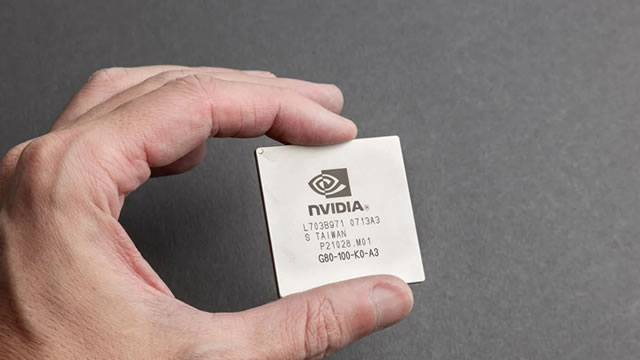
Chip stocks fall as Nvidia, AMD warn of higher costs from China export controls
CNBC· 2025-04-16 13:47
Group 1 - Nvidia's stock experienced a 5% decline, influenced by concerns over President Trump's tariff plans potentially affecting demand and growth in the chipmaking sector [1] - Nvidia announced a $5.5 billion charge related to exporting its H20 graphics processing units to China and other countries, with new government licensing requirements for shipments [2] - The H20 chip was specifically designed for the Chinese market under President Biden's administration to comply with U.S. export restrictions, which are projected to impact an estimated $12 billion to $15 billion in revenue for 2024 [3] Group 2 - Advanced Micro Devices (AMD) indicated that the latest export controls on its MI308 products could result in an $800 million revenue hit [3]

Jim Cramer: NRG Up, Deluxe Out, Nvidia 'You Have To Trim'
Benzinga· 2025-04-16 12:33
Group 1 - NRG Energy, Inc. is viewed positively by Jim Cramer, who describes it as a "very good" utility, supported by Goldman Sachs initiating coverage with a Buy rating and a price target of $129 [1] - NVIDIA Corporation announced a $5.5 billion charge this quarter due to halted shipments of its H20 graphics processing units to China and other markets, indicating a shift in investment strategy [1] - Deluxe Corporation is facing negative sentiment, with Cramer stating "Something is very wrong" and a strategic partnership with Bonko for payment solutions announced [2] Group 2 - Planet Labs has been downgraded by Goldman Sachs from Buy to Neutral, with a reduced price target from $6 to $3.5, reflecting concerns over its financial performance [2] - Telefónica, S.A. is considered a "good" company by Cramer, who also expresses a favorable view of Banco Santander, following better-than-expected FY 2024 results posted by Telefónica [3] Group 3 - On the price action front, NVIDIA shares increased by 1.4% to settle at $112.20, while Deluxe shares decreased by 0.5% to close at $14.63 [4] - Planet Labs shares rose by 4.5% to settle at $3.28, and NRG Energy shares rose by 1.2% to close at $97.11 [4] - Telefónica shares gained 0.4% to settle at $4.68 [4]




Nvidia says it will record $5.5 billion quarterly charge tied to H20 processors exported to China
CNBC· 2025-04-15 21:41
Core Insights - Nvidia announced a quarterly charge of approximately $5.5 billion related to exporting H20 graphics processing units to China and other regions, resulting in a 4% decline in stock price during extended trading [1] - The U.S. government has mandated that Nvidia requires a license to export chips to China and several other countries, indicating potential growth constraints due to increasing export restrictions [2] Group 1: Financial Impact - The H20 chip, designed to comply with U.S. export restrictions, is projected to generate between $12 billion to $15 billion in revenue for 2024 [3] - Revenue from China has reportedly decreased to half of pre-export control levels, equating to approximately $17 billion [3] Group 2: Competitive Landscape - Competition in China is intensifying, with Huawei being listed as a competitor for the second consecutive year in Nvidia's 10K filing [4] - The H20 chip is comparable to Nvidia's H100 and H200 AI chips but has slower interconnection speeds [4] - DeepSeek, a Chinese company, has utilized H20 chips in its research to develop a competitive AI model that has disrupted markets [4] Group 3: Regulatory Environment - Nvidia is facing new export restrictions under "AI diffusion rules" set to take effect next month, which were initially proposed by the Biden administration [5]