Hitem3D 2.0

Search documents
两企融资,一企破产;鞍钢设新公司入局增材制造;全球消费级3D打印机九成中国造|库周报
Sou Hu Cai Jing· 2026-01-12 07:24
Major Events - China dominates the consumer-grade 3D printing market, producing approximately 90% of the global supply, with Shenzhen accounting for 90% of that production, establishing itself as the manufacturing hub for consumer-grade 3D printers [3] - The United States and Europe together hold over 70% of the global market share, while China's domestic market share is around 10%, indicating a strong export-oriented characteristic of the industry [3] Industry Dynamics - Ansteel Group has established a new company, Anshidi Materials Technology, with a registered capital of 20 million yuan, focusing on additive manufacturing and new materials research and development [4] - Black Buffalo 3D, a US-based construction 3D printing company, has filed for bankruptcy protection, highlighting challenges in its commercialization path [5] - The seventh batch of group standards for additive manufacturing medical devices has been released, covering areas such as oral, orthopedic, biomaterials, and advanced manufacturing processes [6][7] Fun Manufacturing - Cobra has launched two new 3D printed golf clubs, the 3DP MB and 3DP X, which combine the feel of forged irons with larger clubhead forgiveness, enhancing shot distance [8] - JD's Jingzhao has introduced 3D printed slippers priced at 299 yuan, with a promotional price of 255.55 yuan after government subsidies, indicating a growing acceptance of consumer-grade 3D printed footwear [9] - Tim, a well-known tech influencer, showcased the ability to turn photos into 3D printed models at CES 2026, emphasizing the appeal of 3D printing technology [10] Financing/Mergers and Acquisitions - Beijing Yuding Additive Manufacturing Research Institute has completed a Pre-A round financing of several hundred million yuan, aimed at the R&D and industrialization of key technologies for large metal components in additive manufacturing [11] - Suzhou Xianyi Technology has secured seed round financing of 10 million yuan, which will be used for new product development, market expansion, and capacity building [12] New Products - Creality has launched the SPARKX i7, a multi-color 3D printer that supports AI and photo modeling, featuring a quick setup time and improved material efficiency [13] - Shenzhen BIQU has released a food-grade 3D printing accessory called "Panda Treat," which allows for the printing of edible designs on food [14] - Shumei Wanhua has introduced the Hitem3D 2.0, a high-definition model generation tool that enhances the realism and structural integrity of 3D printed models [15] - China Aerospace Science and Industry Corporation has developed a 36-beam laser metal 3D printer, achieving a 300% increase in forming efficiency and a 40% reduction in equipment costs [16] Cutting-edge Technology - A research team led by Academician Lü Jian has published findings in Nature Communications, proposing a new design paradigm for additive manufacturing that enhances the strengthening efficiency of titanium alloys [17]


Hitem3D 2.0升级:纹理从“贴”到“长”,革新高精度3D打印模型生产生态
Huan Qiu Wang· 2026-01-05 10:04
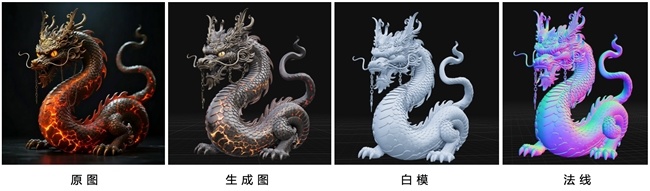
Core Viewpoint - The evolution of 3D content generation is marked by a significant shift from traditional modeling methods to integrated approaches that enhance the structural integrity and realism of digital models, addressing long-standing industry challenges related to efficiency and production quality [1][2]. Group 1: Technological Advancements - Hitem3D 2.0 introduces a groundbreaking integrated 1536³Pro resolution PBR texture generation technology, transforming the process from "texture attachment" to "structural growth," allowing for a cohesive relationship between texture and geometry [2][4]. - The new technology enables the system to generate textures that are deeply integrated with geometric forms, material properties, and spatial scales, providing a stable foundation for subsequent 3D printing and manufacturing processes [2][4]. - The upgrade emphasizes structural and texture unity rather than mere visual appeal, aiming to eliminate the need for extensive post-processing in printing and production [4]. Group 2: Practical Applications - The technology demonstrates its capabilities through examples like the dragon model, where the structure, texture, and material exhibit high synergy, allowing for direct integration into printing processes without additional repairs [4][8]. - Hitem3D 2.0 addresses industry pain points by implementing intelligent completion of invisible structures, ensuring that texture logic aligns with geometric structures, thus reducing rework in printing [8][9]. - The introduction of advanced light semantic recognition and material estimation algorithms enhances the accuracy of color and texture reproduction under standard lighting conditions, improving downstream workflow efficiency [9]. Group 3: Industry Impact - Hitem3D 2.0's technology paves the way for a more realistic approach to 3D content generation, significantly reducing sample iterations and material waste in full-color and resin printing scenarios [13]. - The AI output has evolved from "semi-finished products" to complete models that can be directly integrated into professional workflows, greatly enhancing production efficiency for B-end users [13]. - The continuous development of Hitem3D 2.0 includes features like intelligent 3D semantic model segmentation and support for various file formats, facilitating a seamless transition from modeling to industrial manufacturing [13].
AI三维建模迈入“雕刻级”时代:Hitem3D 2.0版本用一体化纹理生成技术突破高精度3D生成瓶颈
Xin Lang Cai Jing· 2025-12-31 13:47
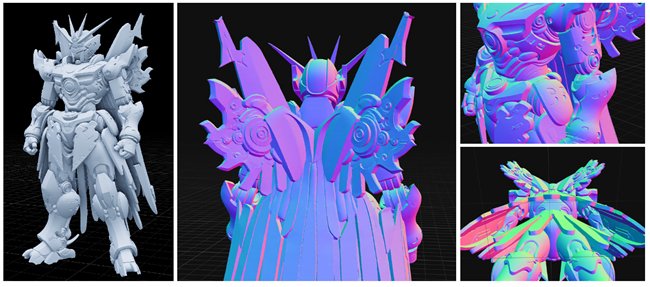
Core Insights - The article discusses the advancements in 3D modeling technology with the release of Hitem3D 2.0, which aims to overcome previous limitations in AI-generated models by integrating texture and structure more cohesively [1][3]. Group 1: Technological Advancements - Hitem3D 2.0 utilizes a unified 1536^3 Pro resolution PBR texture generation technology, allowing for a deep coupling of textures with structures, enhancing the realism of 3D models [1]. - The system employs deep learning to perceive spatial continuity, enabling accurate predictions of micro-geometries, scales, and physical properties, resulting in high-fidelity reconstructions [1][3]. - The technology achieves "full-angle no dead angle" restoration, ensuring clarity in deep structures and sharp edge transitions, eliminating distortions and inaccuracies in hidden areas [3][5]. Group 2: Detail and Realism - Hitem3D 2.0 allows for the natural growth of textures from the geometric structure, as seen in the realistic rendering of feathers and mechanical components, avoiding the traditional "sticker" effect [5][6]. - The model's hair representation has improved significantly, with more detailed strands and natural growth patterns, moving away from the blocky representations of previous versions [6]. - The technology effectively separates environmental lighting from the model, maintaining color purity and stability across different lighting conditions, which is crucial for industrial-grade outputs [7]. Group 3: Industry Integration - Hitem3D 2.0 aims to eliminate the costs associated with post-processing AI-generated models by providing 4-Color Print-Ready models through intelligent 3D semantic segmentation [9]. - The integration of Hitem3D 2.0 into industry workflows is enhanced by support for USDZ format and deep integration with Blender, facilitating seamless incorporation into the digital content creation process [9]. - The technology is positioned to reshape creative paradigms in the industry, allowing teams to focus on innovative designs while minimizing the complexities of model refinement [9].
From “slapped on” to “grown in”: Hitem3D 2.0 bets integrated texture generation can make AI 3D assets actually printable
Globenewswire· 2025-12-31 08:55
Core Insights - Hitem3D has launched Hitem3D 2.0, which integrates texture generation directly with geometry, aiming to improve the quality and usability of 3D models for production workflows [3][5][22] - The new version addresses common issues in 3D printing, such as texture misalignment and missing details, by generating textures during geometry reconstruction [9][12][20] - Hitem3D 2.0 emphasizes structural integrity and material consistency, moving beyond mere aesthetic improvements to ensure models are production-ready [22][23] Technology and Features - The integrated texture generation operates at a resolution of 1536³ Pro, allowing textures to be inherently tied to the object's geometry and material logic [3][5] - The system is trained on a large dataset to learn spatial continuity and surface logic, reducing common projection failures like stretching and distortion [12][14] - Hitem3D 2.0 introduces illumination-aware semantic recognition, which helps create a uniform base for downstream workflows, addressing issues with inconsistent material responses [14][15] Production Capabilities - The software supports automated export for multi-material printing, allowing for assets to be structured for 4, 8, or 16 materials, facilitating a smoother transition into production pipelines [20][24] - Hitem3D 2.0 includes features like semantic 3D model segmentation and automatic retopology, aimed at enhancing manufacturing-oriented workflows [24] - The system is designed to integrate seamlessly into existing creator workflows, with a Blender add-on that minimizes context switching [21][22] Market Positioning - Hitem3D positions its technology as a bridge between AI-generated assets and reliable production capabilities, focusing on usability rather than just visual appeal [22][25] - The company aims to transition 3D generation from a novelty to a dependable tool for B2B production, addressing the rigorous demands of industrial workflows [23][25]