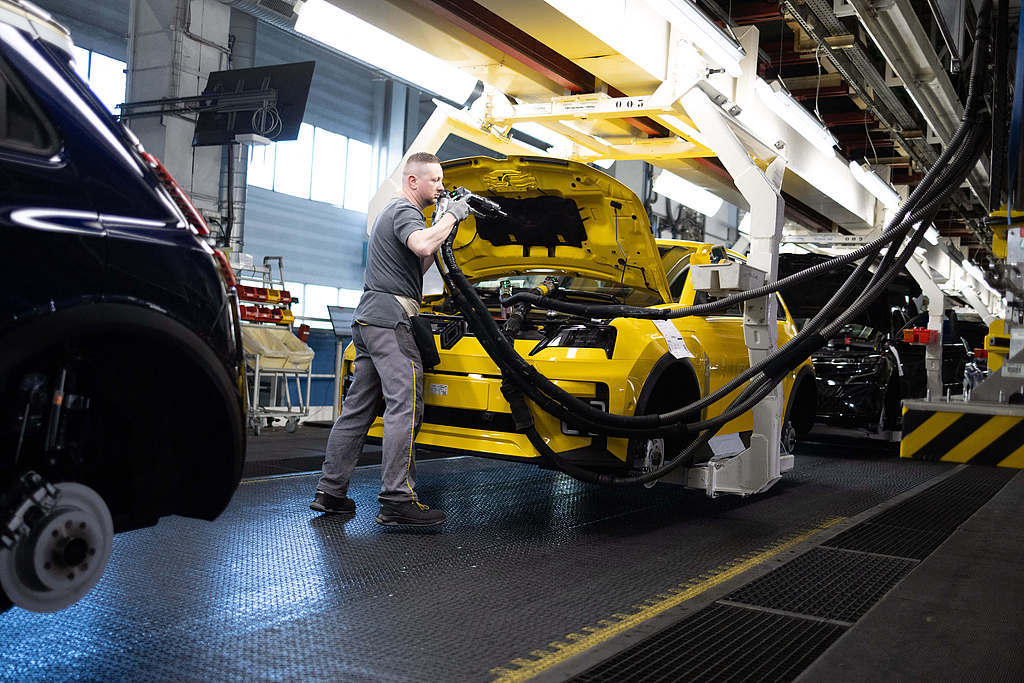
ID.4电动汽车

Search documents
贸易协议争议不断,成本转嫁抛向美国,欧洲车企集体盘点关税重创
Huan Qiu Shi Bao· 2025-07-31 22:49
Core Viewpoint - The European luxury car industry is facing significant profit declines due to U.S. tariffs, with major companies like Mercedes-Benz, Porsche, and Audi reporting steep drops in earnings and sales [1][2][4]. Group 1: Financial Impact - BMW reported a sales revenue of €67.7 billion for the first half of the year, an 8% decrease year-on-year, with a net profit of €4 billion, down 29% [2]. - Mercedes-Benz's profits halved from approximately €6.1 billion to about €2.7 billion in the first half of the year, with a 9% decline in global sales [2]. - Porsche's net profit plummeted 71% to €718 million in the first half of 2025, with a nearly 91% drop in automotive business operating profit in Q2 [4]. - Audi's profits fell 37.5% to €1.3 billion in the first half of 2025, with U.S. tariffs causing approximately €600 million in losses [4]. Group 2: Tariff Effects - The U.S. tariffs have created significant uncertainty for companies, with Mercedes-Benz stating that the tariffs have impacted sales and profitability, reducing its profit margin from a potential 6.6% to 5.1% [2]. - The new trade agreement between the U.S. and EU, while reducing tariffs from 27.5% to 15%, still imposes a higher rate than previously, leading to ongoing financial strain for European manufacturers [5]. - The automotive industry is considering passing tariff costs onto U.S. consumers, with companies like Porsche and Aston Martin already raising prices [1][5][7]. Group 3: Market Dynamics - The North American market is crucial for European automakers, with over 20% of European car exports directed to the U.S. [6]. - Companies like Audi and Porsche, which do not have U.S. production facilities, are particularly vulnerable to tariff impacts [6]. - The competitive landscape is shifting as Chinese electric vehicle brands gain market share, exacerbating challenges for German manufacturers [8][9].