
Impella

Search documents
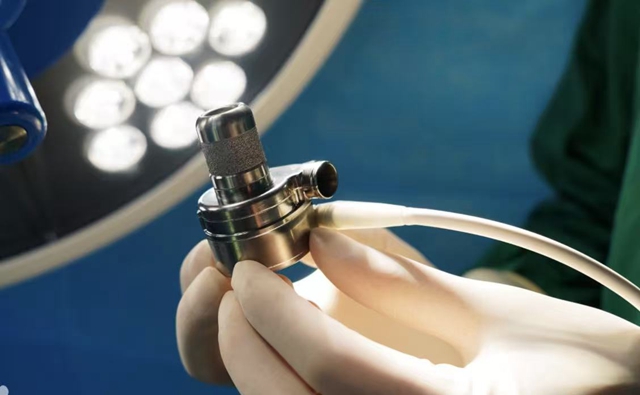
首款国产介入式人工心脏来了
第一财经· 2025-12-25 15:58
Core Viewpoint - The recent approval of China's first interventional artificial heart marks a significant milestone in the domestic medical technology sector, with multiple companies actively engaged in the development of artificial heart products [3][6][15]. Group 1: Product Development and Market Dynamics - Shenzhen Core Medical Technology Co., Ltd. has received approval from the National Medical Products Administration (NMPA) for its interventional artificial heart product, which is part of a growing market with over ten companies involved in similar developments [3][15]. - The interventional artificial heart, also known as the percutaneous ventricular assist device (pVAD), is currently dominated by Abiomed's Impella, which has not yet received approval in China [5][6]. - Core Medical's previous product, the CorHeart6, has a market share exceeding 45% in the domestic market for implantable artificial hearts (LVAD) as of 2024 [6][15]. Group 2: Technical Controversies - The CorHeart6 product has faced technical disputes regarding its classification as a "fully magnetic levitation" device, with experts arguing that it only utilizes "magnetic levitation bearings," which could impact patient outcomes [7][9]. - Concerns have been raised about the safety of similar technologies, with past instances of devices using magnetic levitation bearings being withdrawn from the market due to safety issues [9]. Group 3: Market Potential and Growth - The global market for artificial hearts is projected to grow from $970 million in 2019 to $2.07 billion by 2024, with a compound annual growth rate (CAGR) of 16.4%, and is expected to reach $9.82 billion by 2033 [15][16]. - The interventional artificial heart market is anticipated to expand significantly due to a higher number of potential patients compared to implantable devices, which are limited by surgical complexity and patient eligibility [12][14]. - The number of high-risk percutaneous coronary intervention (PCI) procedures is expected to reach 221.7 million globally by 2024, with a CAGR of 12.1% from 2019 to 2024, indicating a growing demand for interventional artificial hearts [14][15]. Group 4: Industry Challenges and Future Directions - The artificial heart sector is characterized as a "slow track" due to long development cycles, complex clinical validations, and stringent regulatory requirements, making profitability challenging for companies [16]. - Experts emphasize the need for ongoing research into the hemodynamic effects of artificial hearts, as they differ significantly from natural hearts in blood flow dynamics [16]. - Future advancements in artificial heart technology are expected to focus on wireless, miniaturized, and intelligent designs to enhance patient outcomes and expand applications [16].


首款国产介入式人工心脏来了
Di Yi Cai Jing· 2025-12-25 14:47
Core Insights - The latest interventional artificial heart product approved by the National Medical Products Administration (NMPA) comes from Shenzhen Core Medical Technology Co., Ltd. [1] - The approval marks a significant milestone in the development of domestic artificial hearts, with over a dozen companies currently engaged in this field [1][10] - Core Medical's previous artificial heart product, CorHeart6, has recently faced technical disputes regarding its classification as a "fully magnetic levitation" device [2][4] Company Overview - Core Medical's CorHeart6, a left ventricular assist device (LVAD), holds over 45% market share in China as of 2024 [2] - The company’s CorHeart6 was approved for sale in China in 2023, differing from the newly approved interventional artificial heart in terms of indications and surgical approach [5] - Core Medical is positioned in a competitive landscape with several other companies, including Tongling Bionic and Heartking Medical, also developing interventional artificial heart products [10] Industry Landscape - The global market for artificial hearts is projected to grow from $970 million in 2019 to $2.07 billion by 2024, with a compound annual growth rate (CAGR) of 16.4% [10] - The interventional artificial heart market is expected to see significant growth due to the increasing number of high-risk percutaneous coronary interventions (PCI), projected to reach 221.7 million globally by 2024 [10] - The Chinese market for artificial hearts is anticipated to exceed 11 billion RMB by 2033, driven by the approval of new products [10] Technical Disputes - Core Medical's CorHeart6 has been criticized for potentially misleading terminology regarding its technology, which could impact patient outcomes [2][4] - Concerns have been raised about the safety of devices using "magnetic levitation bearing" technology, with precedents of similar products being withdrawn from the market due to safety issues [4] Market Dynamics - The interventional artificial heart is seen as a less invasive option compared to LVADs, which require more complex surgical procedures and long-term patient management [8] - The market for interventional artificial hearts is expected to attract more companies, but the high technical barriers may limit successful commercialization [11] - Experts emphasize the need for ongoing research into the hemodynamic effects of artificial hearts, as they differ significantly from natural hearts [11]
聚焦进博会|进口人工心脏、三尖瓣加速入华 心血管医疗器械赛道活跃
Di Yi Cai Jing· 2025-11-08 14:33
Core Insights - The cardiovascular medical device sector is highly competitive, with major multinational companies like Johnson & Johnson, Medtronic, Abbott, and Boston Scientific actively showcasing their innovations at the China International Import Expo (CIIE) [1][2][3] Group 1: Johnson & Johnson's Innovations - Johnson & Johnson's Impella device, an interventional artificial heart device, is nearing the final registration stage in China, expected to be approved by the end of this year or early next year [1] - Impella is the only device globally approved by the FDA that has been shown to improve survival rates in patients with cardiogenic shock [1] - The company emphasizes that the CIIE serves as an accelerator for introducing advanced medical technologies to China, garnering attention from regulatory bodies and healthcare professionals [1] Group 2: Competitive Landscape - Medtronic showcased a newly FDA-approved ultra-stiff guidewire, aimed at enhancing the stability and safety of transcatheter aortic valve replacement (TAVR) procedures, with plans to introduce it to the Chinese market [2] - The field of cardiac electrophysiology is witnessing the emergence of pulsed field ablation (PFA) technology, with multiple imported and domestic PFA products already approved in China, intensifying market competition [2] - Abbott presented the TriClip device for transcatheter heart valve repair, which has already been used in 10 patients in the Greater Bay Area and is expected to receive formal approval next year [3] Group 3: Technological Advancements - Siemens Healthineers introduced a DSA angiography device capable of generating 3D-like CT images in 2.5 seconds, integrating AI technologies for precise guidance in cardiovascular interventions [3] - The increasing display of advanced cardiovascular medical devices at the CIIE allows the public to engage with cutting-edge surgical equipment, highlighting the need for reasonable pricing models to make these therapies accessible to more patients [3]
Johnson & Johnson (JNJ) 2025 Conference Transcript
2025-05-20 18:37
Johnson & Johnson (JNJ) 2025 Conference Summary Industry Overview - The healthcare industry is currently facing unprecedented challenges related to tariffs and policy changes, impacting growth expectations for many companies [3][4] - Johnson & Johnson is committed to investing $55 billion over the next four years, representing a 25% increase, primarily influenced by tax policy changes [8] Key Financial Insights - In Q1, Johnson & Johnson absorbed an estimated $400 million impact from tariffs, primarily affecting the med tech segment, but this impact has since been reduced to approximately $200 million due to changes in the tariff landscape [5][6] - The company reported a 4% growth in Q1 despite losing a significant product, Stellar, which had a $10 billion market value [27] Innovative Medicine Segment - Johnson & Johnson's innovative medicine segment is projected to grow at a CAGR of 5-7% from 2025 to 2030, driven by transformative drugs [30][34] - Key products include: - Tremfya for psoriasis, projected to generate $4 billion by 2027-2028, with expectations of 25% higher sales than market estimates [23][24] - Ribrovant for lung cancer, anticipated to exceed $2 billion in the same timeframe, with potential for improved patient outcomes [24] - New oral formulation for psoriasis, expected to file for approval later this year [25] - A promising bladder cancer treatment projected to significantly outperform analyst expectations [26] Med Tech Segment - The med tech segment is also expected to grow at a CAGR of 5-7% from 2023 to 2028, although current performance is not meeting expectations [34] - Key developments include: - Progress in wound closure and biosurgery, with advancements in the OTAVA robotic surgical solution [35] - Strong uptake of the Vellus knee solution, with expectations for mid-single-digit growth in orthopedics [36] - Continued leadership in vision care, with plans to reinvigorate growth through commercial efforts [38] - Challenges in electrophysiology (EP) due to increased competition and regulatory pauses, but efforts are underway to regain market position [39][42] Pricing and Access Issues - Johnson & Johnson's average net price has decreased by 3-4% annually over the past six years, limiting pricing power [22] - The company emphasizes the need for discounts and rebates to reach patients effectively, with an average discount of 55-60% off list prices in the U.S. [14][15] - Access to oncology drugs in the U.S. is significantly higher than in other G20 countries, highlighting the importance of maintaining access to innovative treatments [16] Litigation and Financial Management - The company has reversed a $7 billion accrual related to talc litigation, expressing confidence in its legal position and financial stability [49][52] - Johnson & Johnson generates $20 billion in free cash flow, allowing for continued investment in R&D and acquisitions despite litigation risks [52] Investor Outlook - Johnson & Johnson is positioned as a reliable investment with significant growth potential in the second half of the decade, despite current headwinds [55] - The company is focused on delivering sophisticated treatments and maintaining investor returns [55]
