全磁悬浮技术

Search documents
科创板IPO进入冲刺阶段,核心医疗构筑从技术到商业的完整价值闭环
Mei Ri Jing Ji Xin Wen· 2026-02-06 14:20
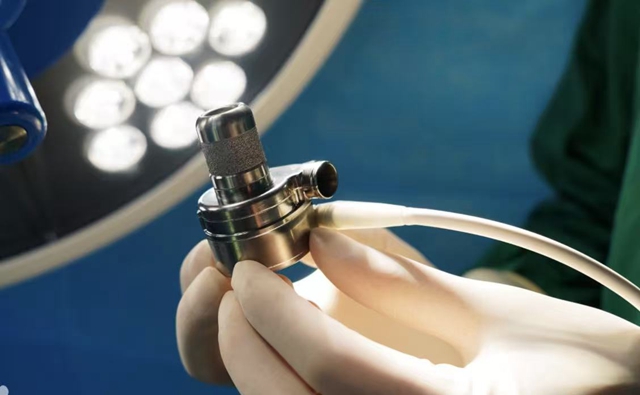
Core Insights - Shenzhen Core Medical Technology Co., Ltd. is pioneering the "next-generation artificial heart" in China's medical device innovation landscape, transitioning from "follow-up innovation" to "original innovation" [1] - The company is the only global entity with products approved for both implantable and interventional artificial hearts, marking a significant shift in the global artificial heart sector towards "Made in China" [1] Product Innovation - The first commercial product, Corheart 6, is the world's smallest and lightest full magnetic suspension implantable artificial heart, utilizing innovative technologies to enhance clinical value [2] - Corheart 6 employs "time-sharing dynamic axial full magnetic suspension control technology," significantly simplifying the structure of the magnetic suspension motor and overcoming traditional limitations in size and power consumption [2] Clinical Data and Validation - Long-term follow-up studies involving 50 patients across 12 clinical centers show a 2-year survival rate of 86% for Corheart 6, outperforming the HeartMate 3's 76.9% [3] - Corheart 6 is one of the few implantable artificial hearts in China to disclose long-term follow-up data based on registered clinical trials, reinforcing its safety and effectiveness [3] Market Position and Growth - Corheart 6 has quickly become the most implanted artificial heart in China, with over a thousand clinical applications, despite not being the first approved domestic product [4] - The global market for short-term artificial hearts is projected to grow from $2.07 billion in 2024 to $9.82 billion by 2033, with a compound annual growth rate (CAGR) of 18.9% [6] Strategic Expansion - Core Medical is expanding its product line to include interventional artificial hearts, with CorVad being the first domestically approved product in this category, targeting a previously untapped market [6] - The company is positioned to leverage its innovative technologies to create a comprehensive product portfolio that meets the full cycle of heart failure treatment needs [7] Global Outreach - Core Medical has established a clinical network across Asia, Europe, and America, achieving over 1,200 global implantations, setting a record for Chinese artificial heart companies in overseas approvals [9] - The company aims to enhance its research and development capabilities through its upcoming IPO, which seeks to raise up to 1.217 billion yuan for product development and industrialization projects [8]
同心医疗科创板IPO获受理,以全磁悬浮技术领跑人工心脏赛道
Zheng Quan Shi Bao Wang· 2025-12-27 07:07
Core Viewpoint - The company, Suzhou Tongxin Medical Technology Co., Ltd., has received acceptance for its IPO application on the Sci-Tech Innovation Board, focusing on the development and commercialization of full magnetic levitation ventricular assist devices, positioning itself as a global competitor in the artificial heart market [1][2]. Group 1: Company Overview - Founded in 2008, the company specializes in full magnetic levitation artificial hearts, leveraging independent technology and operational entities in China, the U.S., and Europe to establish a global business framework [1]. - The company's first product, CH-VAD, entered the special approval process for innovative medical devices in China in 2016 and became the first approved full magnetic levitation artificial heart in China in November 2021 [2][3]. Group 2: Market Context - Heart failure is a critical cardiovascular disease affecting over 60 million people globally, with a 50% annual mortality rate for late-stage heart failure, making artificial hearts a vital treatment option due to limited donor availability for heart transplants [2]. - The artificial heart industry has high entry barriers, with full magnetic levitation technology recognized as the mainstream approach, dominated by Abbott's HeartMate3, leaving a gap for Chinese companies [2]. Group 3: Product Performance - CH-VAD has shown superior performance in clinical settings, with over 670 implantations across more than 80 hospitals in China, and sales revenue projected to grow from 8.27 million yuan in 2022 to 67.06 million yuan in 2024 [3]. - The product features innovative designs that enhance blood compatibility and reduce infection rates, demonstrating excellent safety and reliability with no reported pump thrombosis or failures during clinical studies [3]. Group 4: Global Strategy - The company aims for global market expansion, aligning its R&D and clinical strategies with international standards, and has established a cross-national R&D team to support this goal [4]. - The BrioVAD, a next-generation device, has received FDA approval for clinical trials, marking a significant milestone as the first active implantable medical device from China to enter U.S. clinical trials [5]. - The company is also pursuing market entry in Europe and Japan, with plans for clinical trials and expanding indications for pediatric heart failure [5].


首款国产介入式人工心脏来了
第一财经· 2025-12-25 15:58
Core Viewpoint - The recent approval of China's first interventional artificial heart marks a significant milestone in the domestic medical technology sector, with multiple companies actively engaged in the development of artificial heart products [3][6][15]. Group 1: Product Development and Market Dynamics - Shenzhen Core Medical Technology Co., Ltd. has received approval from the National Medical Products Administration (NMPA) for its interventional artificial heart product, which is part of a growing market with over ten companies involved in similar developments [3][15]. - The interventional artificial heart, also known as the percutaneous ventricular assist device (pVAD), is currently dominated by Abiomed's Impella, which has not yet received approval in China [5][6]. - Core Medical's previous product, the CorHeart6, has a market share exceeding 45% in the domestic market for implantable artificial hearts (LVAD) as of 2024 [6][15]. Group 2: Technical Controversies - The CorHeart6 product has faced technical disputes regarding its classification as a "fully magnetic levitation" device, with experts arguing that it only utilizes "magnetic levitation bearings," which could impact patient outcomes [7][9]. - Concerns have been raised about the safety of similar technologies, with past instances of devices using magnetic levitation bearings being withdrawn from the market due to safety issues [9]. Group 3: Market Potential and Growth - The global market for artificial hearts is projected to grow from $970 million in 2019 to $2.07 billion by 2024, with a compound annual growth rate (CAGR) of 16.4%, and is expected to reach $9.82 billion by 2033 [15][16]. - The interventional artificial heart market is anticipated to expand significantly due to a higher number of potential patients compared to implantable devices, which are limited by surgical complexity and patient eligibility [12][14]. - The number of high-risk percutaneous coronary intervention (PCI) procedures is expected to reach 221.7 million globally by 2024, with a CAGR of 12.1% from 2019 to 2024, indicating a growing demand for interventional artificial hearts [14][15]. Group 4: Industry Challenges and Future Directions - The artificial heart sector is characterized as a "slow track" due to long development cycles, complex clinical validations, and stringent regulatory requirements, making profitability challenging for companies [16]. - Experts emphasize the need for ongoing research into the hemodynamic effects of artificial hearts, as they differ significantly from natural hearts in blood flow dynamics [16]. - Future advancements in artificial heart technology are expected to focus on wireless, miniaturized, and intelligent designs to enhance patient outcomes and expand applications [16].

首款国产介入式人工心脏来了
Di Yi Cai Jing· 2025-12-25 14:47
Core Insights - The latest interventional artificial heart product approved by the National Medical Products Administration (NMPA) comes from Shenzhen Core Medical Technology Co., Ltd. [1] - The approval marks a significant milestone in the development of domestic artificial hearts, with over a dozen companies currently engaged in this field [1][10] - Core Medical's previous artificial heart product, CorHeart6, has recently faced technical disputes regarding its classification as a "fully magnetic levitation" device [2][4] Company Overview - Core Medical's CorHeart6, a left ventricular assist device (LVAD), holds over 45% market share in China as of 2024 [2] - The company’s CorHeart6 was approved for sale in China in 2023, differing from the newly approved interventional artificial heart in terms of indications and surgical approach [5] - Core Medical is positioned in a competitive landscape with several other companies, including Tongling Bionic and Heartking Medical, also developing interventional artificial heart products [10] Industry Landscape - The global market for artificial hearts is projected to grow from $970 million in 2019 to $2.07 billion by 2024, with a compound annual growth rate (CAGR) of 16.4% [10] - The interventional artificial heart market is expected to see significant growth due to the increasing number of high-risk percutaneous coronary interventions (PCI), projected to reach 221.7 million globally by 2024 [10] - The Chinese market for artificial hearts is anticipated to exceed 11 billion RMB by 2033, driven by the approval of new products [10] Technical Disputes - Core Medical's CorHeart6 has been criticized for potentially misleading terminology regarding its technology, which could impact patient outcomes [2][4] - Concerns have been raised about the safety of devices using "magnetic levitation bearing" technology, with precedents of similar products being withdrawn from the market due to safety issues [4] Market Dynamics - The interventional artificial heart is seen as a less invasive option compared to LVADs, which require more complex surgical procedures and long-term patient management [8] - The market for interventional artificial hearts is expected to attract more companies, but the high technical barriers may limit successful commercialization [11] - Experts emphasize the need for ongoing research into the hemodynamic effects of artificial hearts, as they differ significantly from natural hearts [11]
同心医疗核心产品即将试水美国儿科临床,出海进程提速
Cai Jing Wang· 2025-11-19 11:26
Core Viewpoint - The announcement by Tongxin Medical regarding the Brio4Kids clinical trial marks a significant step towards international pediatric applications of their full magnetic levitation artificial heart, BrioVAD, indicating a shift from filling domestic gaps to competing globally in the left ventricular assist device (LVAD) market [1][6]. Group 1: Technology and Market Position - Heart failure, often referred to as the "cancer of cardiovascular diseases," affects approximately 64 million people globally, with about 8.9 million patients over 35 in China, and the incidence is on the rise [2]. - The global VAD market is currently dominated by Abbott's HeartMate 3, which has been implanted in over 40,000 cases since its launch in 2017, generating annual revenues of around $1 billion [2][3]. - Tongxin Medical has focused on full magnetic levitation technology since its establishment in 2008, achieving significant advancements with its self-developed artificial heart, the Cizhi VAD, which received approval from the National Medical Products Administration (NMPA) in November 2021 [3][4]. Group 2: Clinical Data and Performance - Clinical data from Tongxin Medical's products show a one-year and two-year survival rate of 91.3%, compared to Abbott's 86.6% and 79% respectively, highlighting the effectiveness of their technology [4]. - The company has the fewest global lead wires (4) and the thinnest diameter (3.3mm) for its percutaneous cables, resulting in a significantly lower long-term infection risk, with an infection event rate of only 0.07 per patient per year [5]. Group 3: International Expansion and Regulatory Milestones - Following the withdrawal of Medtronic's HVAD from the market, there has been a call for new competitors, leading to Tongxin Medical's FDA approval for clinical trials of BrioVAD, marking it as the first Chinese active implantable medical device to receive such approval [6][7]. - The Brio4Kids clinical trial aims to address pediatric heart failure, expanding Tongxin Medical's reach in the U.S. market and showcasing its leadership in high-end ventricular assist technology [7][8]. - The company has established a robust clinical trial framework, with 60 research centers and 800 participants enrolled, demonstrating its commitment to meeting stringent U.S. regulatory standards [7].
哈工大博士创业,最小“人工心脏”企业冲刺科创板
2 1 Shi Ji Jing Ji Bao Dao· 2025-11-10 10:41
Core Insights - The article highlights the rapid capitalization phase of the artificial heart sector in China, particularly focusing on Shenzhen Core Medical Technology Co., Ltd. (Core Medical), which has recently had its IPO application accepted by the Shanghai Stock Exchange's Sci-Tech Innovation Board after two and a half years of preparation [2][8] - Core Medical's flagship product, Corheart6, is noted as the smallest and lightest commercialized magnetic levitation implantable artificial heart globally, having received NMPA approval in June 2023 and projected to capture over 45% of the national market share by 2024 [2][5] Company Overview - Core Medical is recognized as the fastest capitalizing company among domestic artificial heart manufacturers, aiming to become the first publicly listed company in the "domestic artificial heart" category [2][4] - The company has developed multiple products, including five implantable and six interventional artificial heart products, with Corheart6 being the only one currently commercialized [4][9] Product Development - Corheart6 has been praised for its innovative design, which includes a simpler structure and lower power consumption, leading to quicker patient recovery and a broader applicable demographic [5][10] - The company is also expanding internationally, with Corheart6 expected to receive approvals in Colombia and Ukraine in 2024, and has submitted a CE registration application for the European market [5][10] Market Position - Despite being a latecomer to the market, Core Medical's Corheart6 has achieved a significant market share, with a 52.86% implantation rate from January to May 2025, outperforming competitors [7][9] - The company has completed six rounds of financing, with notable investors including Hillhouse Capital and Prosperity7 Ventures, indicating strong market confidence [8] Financial Performance - Core Medical's financials show a trend of increasing revenue but also significant losses, with revenues of 0 million, 16.55 million, 93.69 million, and 70.48 million from 2022 to the first half of 2025, alongside net losses of 1.78 billion, 1.7 billion, 1.32 billion, and 727.51 million in the same periods [9] - The company's strategy of low pricing to gain market share has raised concerns about its long-term profitability, as the average selling price of Corheart6 has decreased over the years [9][10] Regulatory Environment - Recent developments have seen artificial hearts included in medical insurance reimbursement lists in several regions, which could impact the market dynamics and pricing strategies for Core Medical [10][11] - The company faces potential risks related to dynamic adjustments in provincial medical insurance policies, which could affect product sales and profitability [11]


数百万!凯磁医疗完成新一轮融资
思宇MedTech· 2025-07-15 09:19
Group 1 - The core viewpoint of the article highlights that Chongqing Kaici Medical Technology Co., Ltd. has successfully completed a multi-million RMB financing round aimed at mass production and market expansion of its full magnetic suspension products, as well as accelerating its multi-line R&D process [1] - The company was established in 2023 and focuses on innovation and breakthroughs in full magnetic suspension motor technology, gathering top research talents and industry teams in this field [2] - Kaici Medical's core technology is full magnetic suspension technology, which features contactless, wear-free, high precision, and low noise characteristics. The company has overcome significant technical challenges and has applied for over 70 patents, with more than 40 granted [3] Group 2 - The company has developed a full magnetic suspension artificial heart (blood pump) that is used in various medical devices, including ventricular assist devices, ECMO systems, and extracorporeal circulation machines [3] - Additionally, Kaici Medical has created low-shear, stable-output full magnetic suspension stirrers and clean pumps, achieving series production with numerous models to meet the needs of biopharmaceutical processes from upstream fermentation to downstream purification [5] - These products address issues related to traditional technologies, such as contamination and low cell viability, while also overcoming limitations of high prices, long lead times, and high usage costs associated with imported products [5]