
Instinct MI400

Search documents
美国半导体与半导体设备・SemiBytes:CES 前瞻、2025 回顾US Semiconductors and Semi Equipment_ SemiBytes_ CES Preview, 2025 in Retrospective
2026-01-08 10:42
Summary of the Conference Call Transcript Industry Overview - **Industry**: US Semiconductors and Semiconductor Equipment - **Event**: CES 2026 Preview and 2025 Retrospective Key Points CES 2026 Preview - The team is attending CES in Las Vegas with meetings scheduled with major semiconductor companies including Micron, Marvell, NVIDIA, and others [2][3] - NVIDIA is expected to provide updates on its QuantumX/SpectrumX silicon photonics switches and the Groq technology licensing deal during its keynote [2] - AMD may introduce the Helios rack featuring the Instinct MI400 and Venice server CPUs [2] Market Performance in 2025 - Semiconductors returned **42%** in 2025, outperforming the tech sector at **23%** and the broader market at **16%** [5] - Memory/Storage sector led EPS growth at **+168%**, with Micron and other key players showing significant returns [5] - Memory valuations expanded by **17%** to **9.8x** NTM PE, while semiconductor capital equipment (semicap) expanded by **40%** to **32.5x** [5] - Compute and networking EPS grew by **+65%** and **+63%** respectively, driven by AI integration in data centers [5] Sector-Specific Insights - **Compute**: Market cap increased from **$3,703.9 billion** to **$5,173.4 billion**, with a total return of **+40%** and EPS growth of **+65%** [7] - **Networking**: Market cap rose from **$1,208.1 billion** to **$1,747.9 billion**, with a total return of **+44%** and EPS growth of **+63%** [7] - **Memory/Storage**: Market cap surged from **$471.4 billion** to **$1,373.8 billion**, with a total return of **+199%** and EPS growth of **+168%** [7] - **Analog**: Market cap increased from **$510.8 billion** to **$561.3 billion**, with a total return of **+13%** and EPS growth of **+10%** [7] Future Expectations - The tone in investor meetings is expected to be positive, but share prices may remain stable unless full-year estimates are revised upwards [2] - There is skepticism regarding the wearable devices market despite anticipated new product launches [3] - Electrification sentiment is expected to remain weak due to regulatory risks, but advancements in Level 2+/Level 3 ADAS are anticipated [3] Risks and Valuation - Various valuation techniques such as P/E and EV/FCF are employed for company assessments [9] - Risks include macroeconomic downturns, disruptions in international trade, and technological innovations that could alter market dynamics [9] Additional Insights - The report includes a comprehensive slide deck with key charts, forecasts, and analyses for over **180** semiconductor stocks [4] - The semiconductor sector is expected to continue its growth trajectory into 2026, with significant developments anticipated in AI and data center technologies [4][5] This summary encapsulates the critical insights and data from the conference call, providing a comprehensive overview of the semiconductor industry and its performance in 2025, along with expectations for 2026.


AMD新款AI芯片有望提前量产
3 6 Ke· 2025-08-07 01:16
Core Viewpoint - Advanced Micro Devices (AMD) reported optimistic second-quarter earnings, exceeding revenue expectations but slightly missing profit forecasts due to export restrictions on chips, leading to a post-earnings stock decline of approximately 6.34% [1][3]. Financial Performance - AMD's Q2 results included: - Adjusted earnings per share of $0.48, a 30% year-over-year decline, compared to the expected $0.49 [3]. - Revenue of $7.69 billion, a 32% year-over-year increase, surpassing the forecast of $7.42 billion [3]. - Operating income of $899 million, down 29% year-over-year, against an analyst expectation of $902.8 million [3]. - Adjusted gross margin of 43%, which could reach 54% without considering export control costs [3]. Future Guidance - For the current quarter, AMD projects revenue of $8.7 billion, with a variance of $300 million, compared to an expected revenue of $8.3 billion [4]. AI Chip Development - AMD, the second-largest GPU manufacturer globally, is gaining traction among major AI clients like Meta and OpenAI, who are looking for alternatives to NVIDIA chips, particularly in inference [5]. - The company announced the new AI chip, Instinct MI400, expected to launch next year, and anticipates early production of the Instinct MI350 chip, which competes with NVIDIA's GB200 [5]. Export Control Challenges - AMD faces uncertainties due to U.S. export controls on certain AI chips, particularly the MI308, which resulted in a loss of $800 million in Q2 [6]. - The company is awaiting approval for a license to resume shipments of the MI308, with expectations of AI revenue growth in the upcoming quarter [7]. Other Business Segments - AMD's data center segment, which includes CPU and GPU sales, generated $3.2 billion in revenue, a 14% year-over-year increase, driven by rising demand for CPUs in AI servers [9]. - The client and gaming segment saw a 69% year-over-year revenue increase to $3.6 billion, with client revenue growing 57% to $2.5 billion and gaming revenue rising 73% to $1.1 billion, both exceeding market expectations [9].

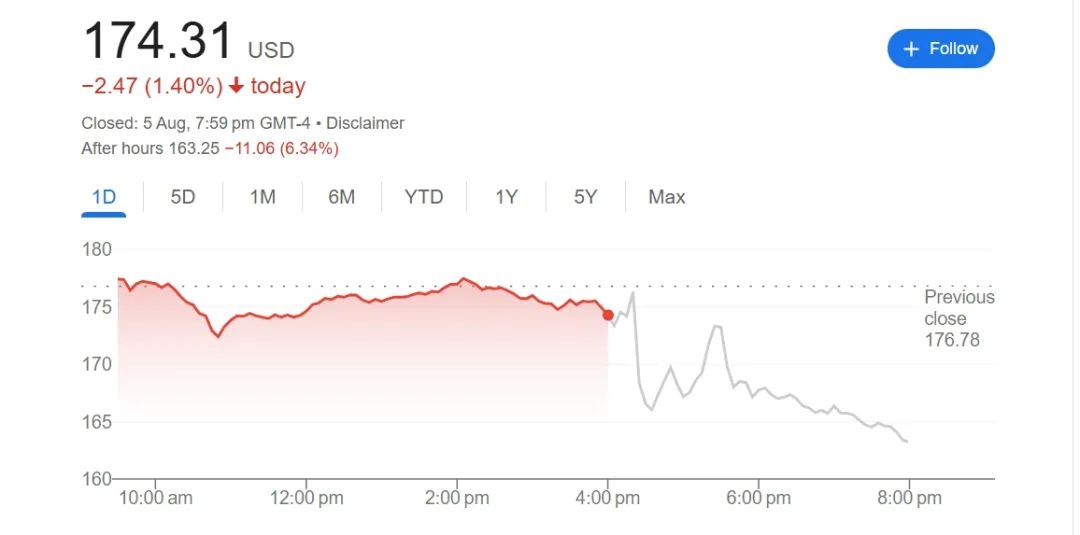
AI大模型推动全球数据中心支出激增,AMD收入为何不及预期?
Di Yi Cai Jing· 2025-08-06 05:48
Core Viewpoint - AMD's quarterly performance fell short of market expectations, particularly in data center chip revenue, leading to a significant drop in stock price after the earnings announcement [1][3]. Financial Performance - For the quarter ending in June, AMD reported revenue of $7.69 billion and a net profit of $872 million [1]. - Data center revenue grew by 14% year-over-year to $3.2 billion, but this was below analyst expectations [1]. - AMD anticipates future quarterly sales to reach $8.7 billion [1]. Impact of Export Restrictions - AMD attributed its weak performance partly to the impact of export restrictions, reporting an adjusted gross margin of 43%, which would have been 54% without these costs [3]. - The company faced a loss of $800 million in the June quarter due to the ban on exporting its AI chip MI308 to China [3]. - AMD expects these restrictions to result in a total revenue loss of $1.5 billion for the year, primarily affecting the second and third quarters [3]. AI Chip Developments - AMD has begun mass production of the next-generation AI chip, Instinct MI350, which is expected to significantly increase output in the second half of the year [3][4]. - The company also announced the upcoming release of the Instinct MI400 AI chip, set to launch next year, with commitments from OpenAI to utilize it [5]. Market Position and Competition - AMD's MI350 competes with NVIDIA's GB200 chip, with seven out of the top ten model builders and AI companies using AMD's Instinct series products [4]. - Despite AMD being the second-largest AI chip manufacturer after NVIDIA, it has not benefited as much from the surge in AI spending compared to its competitor [1][6]. - Major tech companies have reported optimistic capital spending data, with significant increases in forecasts for capital expenditures, indicating a robust demand for AI infrastructure [6].
AMD、OpenAI联合发布超强AI芯片,推理提升35倍
news flash· 2025-06-12 22:31
Core Insights - AMD and OpenAI jointly launched powerful AI chips, the Instinct MI400 and MI350 series, at the 2025 Global AI Development Conference [1] - The MI350 features 288GB of HBM3E memory and offers a 4x increase in AI computing capability and a 35x improvement in inference performance compared to the previous generation [1] - The MI355X chip provides 40% more tokens per dollar than NVIDIA chips due to its lower power consumption [1] Company Developments - AMD introduced its latest AI chips and cloud infrastructure hardware at the conference [1] - OpenAI's CEO Sam Altman attended the event and provided technical feedback during the chip development process [1] - The MI400 chip is equipped with 432GB of HBM4 memory, which surprised Altman during the presentation [1] Industry Impact - The advancements in AMD's AI chips signify a competitive edge in the AI hardware market, particularly against NVIDIA [1] - The significant improvements in memory bandwidth and computing power highlight the ongoing innovation in AI technology [1]