Iron

Search documents
SAGA Metals Acquires Strategic Titanium Assets from Rio Tinto in Quebec
Globenewswire· 2026-03-26 11:30
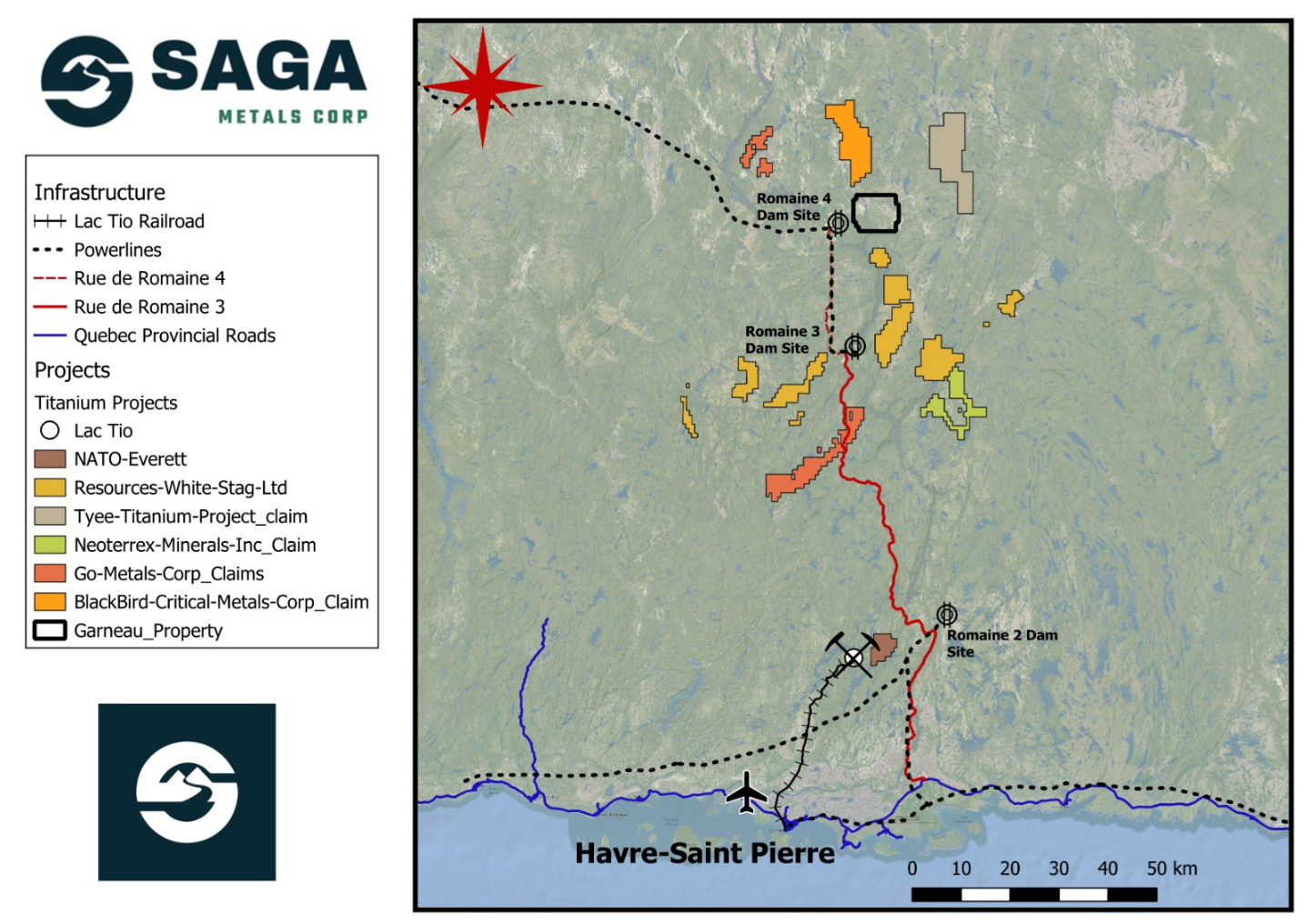
The Garneau Titanium Project Features Ilmenite-Rich Boulder with Grab-Sample Assays of 65.1% Fe₂O₃, 32.4% TiO₂, and 2,260 ppm VanadiumVANCOUVER, British Columbia, March 26, 2026 (GLOBE NEWSWIRE) -- SAGA Metals Corp. ("SAGA" or the "Company") (TSXV: SAGA) (OTCQB: SAGMF) (FSE: 20H), a North American exploration company focused on critical mineral discoveries, is pleased to announce that it has completed the acquisition (the “Acquisition”) from Rio Tinto Exploration Canada Inc (“RTEC”) of a 100% interest in th ...

Rio Tinto: Eyes On The Future Post Glencore Talks, Solid Profit Outlook (Upgrade)
Seeking Alpha· 2026-03-19 20:26
Metal prices soared in 2025 and through the early part of this year. The last few weeks—marked by the war in Iran and intense cross-asset volatility—have weighed on cyclical industrial and base metals. Copper, aluminum, and lithium have all retreated from recent highs, but ironFreelance Financial Writer | Investments | Markets | Personal Finance | RetirementI create written content used in various formats including articles, blogs, emails, and social media for financial advisors and investment firms in a co ...


MetalQuest Completes Due Diligence and Elects to Proceed with the West Cameron Gold Project, Kenora Mining District, Northwestern Ontario
Thenewswire· 2026-03-12 11:15
Core Viewpoint - MetalQuest Mining Inc. has completed its technical due diligence on the West Cameron Gold Project and is proceeding with the acquisition of a 100% interest in the project under an option agreement with Gallik Explorations Inc. [1][2] Company Developments - The completion of due diligence and the advancement of the West Cameron Gold Project signifies the establishment of a new gold exploration division for MetalQuest [2] - The company plans to host an open house on April 11, 2026, at its new field operations office in Kenora, Ontario, to engage with shareholders and interested parties [2][3] Project Details - The West Cameron Gold Project spans approximately 1,700 hectares (about 4,200 acres) and is accessible year-round via established infrastructure [8] - The project is located near First Mining Gold Corp.'s Cameron Gold Project, which has recently been acquired by Frank Giustra's Fiore Group [5][10] - Historical surface sampling at the West Cameron Project has returned gold values up to 9.18 grams per tonne (g/t) [9][12] Exploration Focus - The exploration strategy will include geological mapping, sampling, geophysical surveys, and targeted drilling to validate and expand known mineralization [9] - A new porphyry intrusive target has been identified as a key focus for follow-up exploration [9][18] Regional Context - The Kenora Mining District is noted for being underexplored but is gaining attention due to improved commodity prices and renewed interest from the industry and investors [6][10] - Recent acquisitions and investments in the region indicate a growing support for mineral exploration at various governmental levels [7] Financial Terms - MetalQuest may earn a 100% interest in the West Cameron Gold Project by making a series of cash payments and share issuances, subject to a 2% Net Smelter Return (NSR) [23] - The payment schedule includes an initial cash payment of CAD $15,000 and subsequent payments of CAD $20,000 in each of the following three years [24]

HUB Cyber Security Ltd. (Nasdaq: HUBC) Highlights Tivani Expansion Into Defense-Grade Strategic Minerals
Globenewswire· 2026-03-04 14:15
Core Viewpoint - The inclusion of antimony in the Tivani Tier-1 Critical Minerals Project enhances its role in critical mineral supply chains, particularly for defense and industrial applications [1][2][3]. Group 1: Company Developments - HUB Cyber Security Ltd. announced the expansion of the Tivani project to include antimony, alongside existing minerals like titanium, iron, and vanadium [1]. - Ferrox Critical Minerals Ltd. aims to position Tivani as a multi-commodity platform, enhancing its relevance in defense, aerospace, and advanced manufacturing sectors [3][4]. - The CEO of Ferrox emphasized the goal of becoming a globally relevant critical minerals producer rather than just a single-commodity developer [4]. Group 2: Strategic Importance - Antimony is recognized as a defense-grade strategic material, essential for various technologies including aerospace systems and military applications [2]. - The global supply of antimony is highly concentrated, leading Western governments to view it as a critical vulnerability in secure industrial supply chains [2]. - The addition of antimony to the Tivani project underscores its strategic relevance in national security and industrial policy [7]. Group 3: Infrastructure and Trust - HUBC is embedding trust infrastructure across verification, governance, and digital asset integrity workflows related to the Tivani platform [5][6]. - The company believes that validation and trust infrastructure will be foundational for transparency and governance in next-generation critical mineral supply chains [7].


Temas Commences Valuable Re-Assay Program at La Blache
Accessnewswire· 2026-02-20 12:30
Core Insights - The company is re-assaying 36,614 meters of historic drilling to enhance development and potentially save approximately $40 million in future drilling costs [1] Group 1: Development Strategy - Preliminary indications from the historical data review suggest potential for gallium, scandium, and chromium at the La Blache site [1] - A total of 181 historic holes will be re-evaluated for various minerals including iron, titanium, vanadium, chromium, gallium, scandium, and other Rare Earth Elements (REE) [1]

Green Bridge Metals Can Help Secure U.S. Production of Critical Mineral Titanium
Accessnewswire· 2026-02-07 00:00
Core Viewpoint - Green Bridge Metals Corporation is advancing exploration and metallurgical programs to assess the critical mineral potential of its properties in the South Contact District, linked to Minnesota's Duluth Complex [1] Group 1: Company Developments - The company is focusing on understanding the critical mineral resources within its properties, which include titanium, copper, nickel, cobalt, platinum group elements, vanadium, and iron [1]

Saga Metals Acknowledges U.S. Strategic Critical Minerals Reserve “Project Vault” and Highlights Titanium’s Strategic Importance to North American Defense Supply Chains
Globenewswire· 2026-02-06 12:30
Core Insights - SAGA Metals Corp. is strategically positioned to benefit from the U.S. government's "Project Vault," which aims to enhance domestic supply chains for critical minerals, particularly titanium, in alignment with national security priorities [1][3][4] Group 1: Project Vault and U.S. Strategic Initiatives - Project Vault establishes the U.S. Strategic Critical Minerals Reserve as a public-private partnership to store essential raw materials across U.S. facilities [2] - The Export-Import Bank of the United States (EXIM) has approved a Direct Loan of up to USD 10 billion to support Project Vault, aimed at strengthening U.S. production and processing capacity [3] - The initiative is part of a broader strategy by the Trump administration to counter China's dominance in critical minerals, particularly in refining [4] Group 2: Titanium's Strategic Importance - Titanium is recognized as a critical mineral for defense and aerospace applications due to its strength-to-weight ratio and corrosion resistance [11] - Over 90% of mined titanium is processed into pigment, highlighting a significant supply chain gap for aerospace-grade titanium [12] - The defense sector consumes a substantial portion of titanium, with some aircraft, like the F-15, comprising up to 40% titanium by weight [13] Group 3: SAGA Metals' Project Focus - SAGA's flagship Radar Ti-V-Fe Project in Labrador has achieved a 100% drilling success rate in 2025, with exceptional grades of titanium, vanadium, and iron [13] - The project is strategically located near existing infrastructure, enhancing its potential for supporting secure supply chains for defense and aerospace [14] - The evolving policy environment emphasizes the importance of North American critical minerals projects, reinforcing SAGA's focus on supply-chain security and advanced manufacturing [14] Group 4: Implications of Project Vault - SAGA Metals identifies key implications from Project Vault, including the rising strategic value of titanium and other critical metals in defense readiness and aerospace manufacturing [17] - There is potential for increased investment in North American exploration and processing capacity as governments prioritize secure supply [17] - Enhanced public-private cooperation is expected to create resilient supply chains and mitigate market disruption risks [17]
Saga Metals Acknowledges U.S. Strategic Critical Minerals Reserve “Project Vault” and Highlights Titanium's Strategic Importance to North American Defense Supply Chains
Globenewswire· 2026-02-06 12:30
Core Insights - The announcement of "Project Vault" by the U.S. government aims to establish a strategic stockpile of critical minerals to enhance domestic supply chains and national security [1][2][4] - The initiative includes a Direct Loan of up to USD 10 billion from the Export-Import Bank of the United States to support partnerships in critical mineral production [3] - The focus on critical minerals, particularly titanium, is crucial for defense and aerospace applications, highlighting the need for secure supply chains [7][9] Company Overview - SAGA Metals Corp. is focused on the exploration of critical minerals, particularly titanium, which is essential for defense and aerospace sectors [1][11] - The company's flagship Radar Ti-V-Fe Project in Labrador has shown a 100% drilling success rate in 2025, with high grades of titanium, vanadium, and iron [10] - SAGA's strategic positioning in the critical minerals sector aligns with the U.S. government's initiatives to strengthen supply chains and reduce reliance on foreign sources [11][21] Industry Context - The U.S. is taking steps to counter China's dominance in critical minerals, particularly in refining processes, through initiatives like Project Vault [4][5] - The emphasis on allied coordination and preferential trade frameworks aims to stabilize critical mineral supply chains and mitigate risks associated with price fluctuations and supply disruptions [5][6][17] - Critical minerals are foundational for modern technology, with applications ranging from mobile devices to electric vehicle batteries and defense systems [12]

SAGA Metals Achieves 100% Drilling Success in 2025—Reports Final Assays from Trapper South at Radar Critical Minerals Project in Labrador
Globenewswire· 2026-02-04 12:30
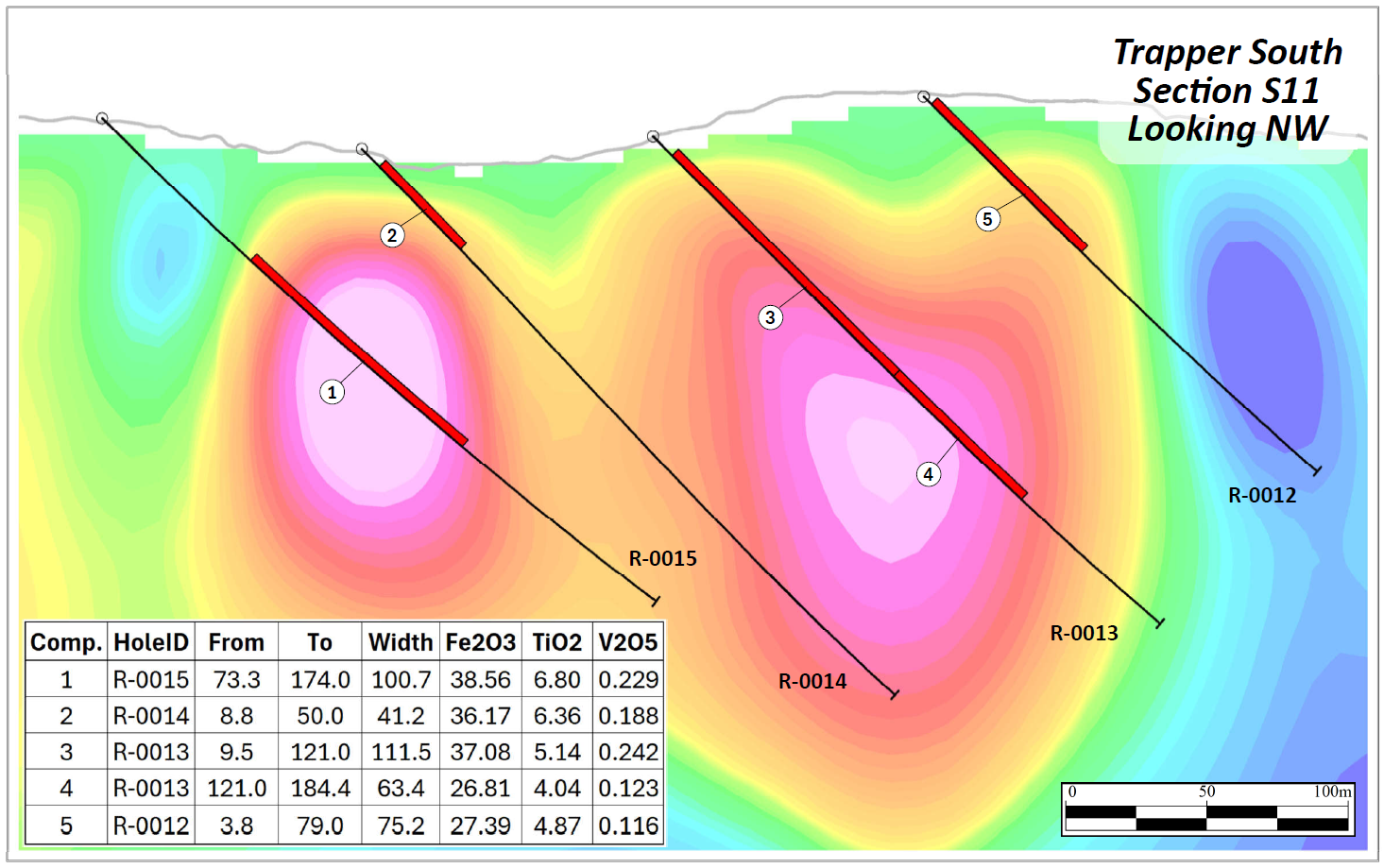
Core Viewpoint - SAGA Metals Corp. has reported exceptional assay results from its drilling program at the Trapper Zone, indicating high grades of titanium, vanadium, and iron across all completed drill holes, which supports the potential for a robust mineral resource definition in the area [1][12]. Group 1: Drilling Results - The company completed a total of eight drill holes in the Trapper Zone, with four in Trapper South, yielding significant oxide-rich intercepts [1][6]. - Notable assay results include: - R-0015: 100.70 m grading 38.56% Fe2O3, 6.80% TiO2, and 0.229% V2O5 [5][6]. - R-0014: 41.20 m grading 36.17% Fe2O3, 6.36% TiO2, and 0.188% V2O5 [5][6]. - R-0013: 111.50 m grading 37.08% Fe2O3, 5.14% TiO2, and 0.242% V2O5 [5][6]. - R-0012: 75.20 m grading 27.39% Fe2O3, 4.87% TiO2, and 0.116% V2O5 [5][6]. Group 2: Geological Insights - The Trapper Zone exhibits a continuous oxide layering trend extending over 16 km, with consistent mineralization patterns observed between the Trapper and Hawkeye Zones [8][10]. - The geological team has identified significant oxide concentrations in cross-sections S8 and S7, indicating the potential for additional high-grade oxide layering throughout the Trapper Zone [9][12]. Group 3: Project Overview - The Radar Titanium-Vanadium-Iron property spans 24,175 hectares and is strategically located near Cartwright, Labrador, with access to infrastructure such as roads and a deep-water port [19][20]. - The project is positioned as a potential strategic supplier of titanium, vanadium, and iron to North American markets, comparable to global Fe–Ti–V systems [20][25].
Five baby Vedantas will step into stock exchanges in May, three to bear most debt load
MINT· 2026-01-29 17:11
Core Viewpoint - Vedanta Ltd is set to undergo a significant demerger into five independent companies, with the aim of listing them on stock exchanges by May 2024, following the approval from the National Company Law Tribunal [2][3]. Group 1: Demerger Details - The demerger will create five distinct entities: Vedanta Aluminium, Vedanta Oil & Gas, Vedanta Power, Vedanta Iron and Steel, and Vedanta Ltd, which will manage the zinc and silver businesses [3][4]. - The demerger is scheduled to take effect on April 1, 2024, with shares expected to be listed by May or before the end of June [2][3]. Group 2: Debt Allocation - Vedanta's total net debt is approximately ₹60,624 crore (around $6.7 billion), which will be distributed among the new companies based on their asset values and cash generation capabilities [4][5]. - Vedanta Aluminium is expected to carry the largest portion of the debt, while Vedanta Oil & Gas and Vedanta Iron and Steel will have minimal to no debt assigned to them [6][7]. Group 3: Financial Performance - Vedanta reported a record quarterly profit of ₹7,807 crore for Q3, marking a 60% increase year-on-year, with revenues reaching ₹45,899 crore, a nearly 20% rise from the previous year [8][9]. - The company's EBITDA also reached a record high of ₹15,171 crore, reflecting a 33% increase compared to the previous year [8][9]. - The aluminium segment achieved its highest EBITDA margin of $1,268 per ton, driven by record production levels [10].