JAKA Mini系列协作机器人

Search documents
可协作、可部署、可复制,节卡具身家族正在打通工厂柔性协作的“最后一米”
机器人大讲堂· 2025-08-26 11:56
Core Insights - The article discusses the advancements in embodied intelligence through the development of a ping pong robot by DeepMind, which achieved a 44% win rate against human players, marking a significant milestone in robotics and AI integration [1] - The rise of embodied intelligence is highlighted as a convergence of AI and robotics, enabling machines to understand their environment and make autonomous decisions [6][7] - The article emphasizes the potential applications of embodied intelligence across various sectors, including industrial manufacturing, service industries, and education [10][14] Group 1: Technological Advancements - DeepMind's ping pong robot demonstrates the ability to compete at an amateur level, showcasing the complexities of real-time decision-making and physical coordination required in sports [1] - The concept of embodied intelligence is defined as the integration of AI's cognitive capabilities with the physical attributes of robots, allowing for enhanced interaction with the physical world [6] - Key technological breakthroughs enabling embodied intelligence include multi-modal perception, physical interaction control, and the integration of large language models for improved decision-making [7] Group 2: Industry Applications - Embodied intelligence is being applied in various fields such as industrial sorting, smart retail, assembly, and educational settings, significantly improving efficiency and addressing labor shortages [10][14] - In industrial manufacturing, embodied intelligence is expected to penetrate processes with high human involvement, potentially reaching a 70.3% integration rate in certain tasks [10] - The JAKA Lumi platform exemplifies a one-stop solution for embodied intelligence, designed to facilitate rapid deployment and flexible operations across multiple sectors [15] Group 3: Company Positioning - JAKA Robotics is positioned as a leading player in the embodied intelligence space, leveraging its expertise in collaborative robots to develop a diverse product matrix [8][19] - The company is set to unveil an industrial embodied intelligence platform that will enhance data collection, model training, and application deployment capabilities [20] - JAKA's product offerings, including the JAKA K1 series, are designed to meet the demands of various operational environments, showcasing adaptability and precision [10][11]

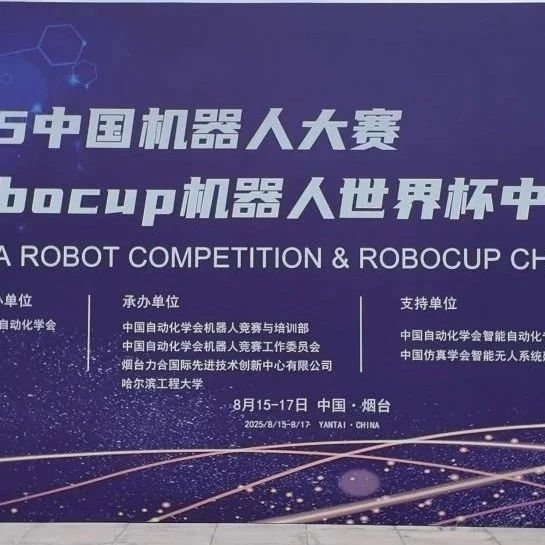
国家级大赛!2025中国机器人大赛乒乓球机器人专项赛圆满落幕
机器人大讲堂· 2025-08-22 04:27
Core Viewpoint - The article highlights the successful conclusion of the Second China Robot Competition and RoboCup China Tournament Table Tennis Special Event, showcasing advancements in robotics and artificial intelligence through competitive platforms [1][2]. Group 1: Event Overview - The event took place on August 17 at Harbin Engineering University, featuring over 110 teams competing for a chance to advance to the national competition [1]. - The China Robot Competition is recognized as a prestigious event in the robotics field, akin to a "Nobel Prize" for robotics, and has been awarded a five-star rating in the latest university robotics competition index [1]. Group 2: Competition Details - The table tennis robot competition focused on areas such as machine learning, kinematic planning, dynamic planning, AI decision-making, and human-robot interaction, with three rounds of events assessing participants' skills in perception, decision-making, and execution [2]. - Changes in the competition rules this year included a new gate frame device in the static hitting segment, which tested teams' precision in controlling robotic arms to hit the ball accurately [2]. Group 3: Technological Integration - The event aims to foster the integration of new technologies, standards, and talent development in the industrial sector, promoting collaboration between education and industry [4]. - The JAKA Mini series collaborative robots were used as the foundational equipment for the competition, recognized for their flexibility, ease of use, and strong human-robot collaboration capabilities [4]. Group 4: Participation and Training - The competition attracted over 490 teams, with 110 teams reaching the final event, representing more than 40 universities and involving over 600 students and faculty from various disciplines [5]. - Pre-competition training was conducted by Jieke Robotics, reaching over 500 participants through online and offline sessions to enhance teams' understanding of scoring criteria and technical skills [5]. Group 5: Future Initiatives - Jieke Robotics plans to continue collaborating with industry partners to promote various national-level competitions and enhance the synergy between educational resources and industry needs [5].