LexisNexis

Search documents
Relx should deal with the ‘Claude Crash' by buying back shares – and then buy more | nils pratley
The Guardian· 2026-02-12 18:19
Core Viewpoint - The recent launch of AI products by Anthropic has triggered a significant decline in the share prices of major UK companies in the data sector, despite the overall FTSE 100 index nearing all-time highs [1][2]. Company Performance - Relx, a prominent player in the data sector, saw its share price rise from £5 in 2012 to £41 in May last year, valuing the company at approximately £70 billion [3]. - Following the introduction of AI tools, Relx's share price has halved, with market sentiment shifting from viewing it as an AI winner to fearing a collapse in its profit margins [4]. - In its latest full-year results, Relx reported a 7% increase in revenues to £9.6 billion and a 9% rise in operating profits to £3.3 billion, alongside a forecast for strong growth in 2026 and a 7% increase in dividends [5]. AI Impact and Strategy - The CEO of Relx, Erik Engström, emphasized that AI will continue to drive customer value and growth for the company in the long term [6]. - Relx operates in a niche market that relies on comprehensive and reliable information, which may be public or proprietary, and AI tools are seen as a means to enhance the value of this information [7]. - The company retains the option to engage in limited licensing deals with AI firms while maintaining its proprietary information, which is central to its business value [8]. Market Reaction and Future Outlook - Despite a slight 2% bounce in share price following the positive earnings report, market concerns about the future of AI and Relx's competitive position remain [9]. - Relx plans to continue its share buy-back program, which has increased to £2.25 billion, representing 6% of its equity base, potentially boosting earnings per share if business projections hold true [10].



Software Stocks Slide Again as AI Threats Rattle Investors
Yahoo Finance· 2026-02-04 12:40
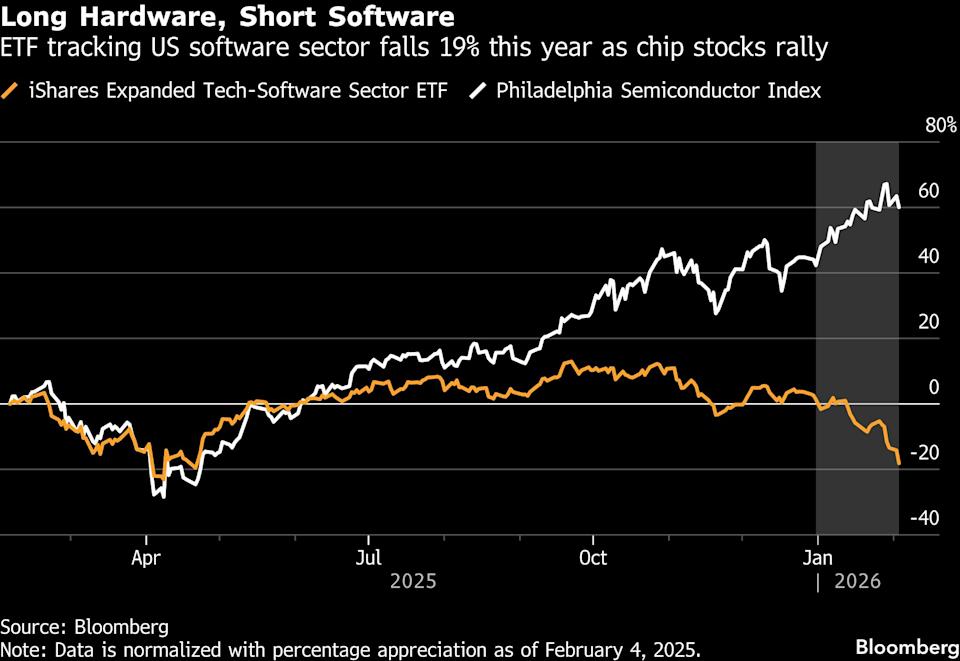
Core Insights - The software, advertising, and investment sectors are experiencing significant selling pressure due to investor concerns over the risks posed by advanced artificial intelligence tools [3][4][5] - Major companies like SAP SE and Relx Plc have seen notable declines in their stock prices, indicating a broader trend of investor apprehension in the software industry [3][4] Group 1: Market Reactions - SAP SE's stock fell by 3.4%, reaching its lowest point in two years, while Relx Plc dropped by 2.5% [3] - Other companies such as Publicis Groupe SA, Rightmove Plc, and EQT AB also faced declines, reflecting a widespread negative sentiment in the market [3] Group 2: AI Impact - The introduction of new AI products like Claude Code and Cowork from Anthropic PBC has heightened concerns about the potential disruption to traditional business models [4] - The shift from web-based chatbots to more sophisticated algorithms capable of automating enterprise workflows is contributing to investor anxiety [4] Group 3: Investment Trends - Investors are increasingly moving away from technology stocks and favoring sectors with tangible assets, such as chemicals, telecommunications, and automobiles, which performed well in the Stoxx 600 index [6] - The appetite for technology investments remains low, with many investors having reduced their holdings over the past 12 to 18 months [6] Group 4: Market Sentiment - The current market environment is characterized by a lack of confidence in the software sector, with companies being viewed as "guilty until proven innocent" [7] - Positive earnings results are no longer sufficient to reassure investors, indicating a shift in market expectations [7]