Luxury Cars

Search documents
Shell and Ferrari sign long-term green power supply deal
Reuters· 2025-11-25 08:04
Core Insights - Shell has entered into a long-term agreement to supply renewable energy to Ferrari until the end of 2034, aimed at assisting the luxury car manufacturer in reducing its carbon emissions [1] Company Summary - Shell will provide renewable energy to Ferrari, indicating a strategic partnership focused on sustainability [1] - The deal is set to last until the end of 2034, highlighting a long-term commitment to renewable energy supply [1] Industry Summary - The agreement reflects a growing trend in the automotive industry towards sustainability and reducing carbon footprints [1] - Collaborations between energy companies and automotive manufacturers are becoming increasingly important in the transition to greener energy solutions [1]


Retirement Spending: 9 Things Even Spendthrifts Don’t Waste Money On
Yahoo Finance· 2025-10-27 14:12
Core Insights - Many retirees, despite having a fixed income, find ways to manage their spending, with some having more flexibility in their budgets [1][2] Spending Habits of Retirees - Extended warranties and optional insurance products are often avoided by retirees, as they evaluate the cost versus actual risk and find them not cost-effective [3] - Luxury cars, which can cost between $80,000 to $100,000, are generally skipped due to rapid depreciation and high maintenance costs, leading retirees to prefer more economical vehicles [4] - Retirees tend to avoid the latest gadgets, opting for technology that meets essential needs rather than frequently upgrading to new models, thus preventing rapid depreciation [5] - Timeshares and vacation memberships are also commonly avoided due to high fees and the difficulty associated with exiting these agreements [6]
Jaguar Land Rover Seeks £2 Billion Lifeline to Tide Over Cyberattack
Insurance Journal· 2025-09-29 09:58
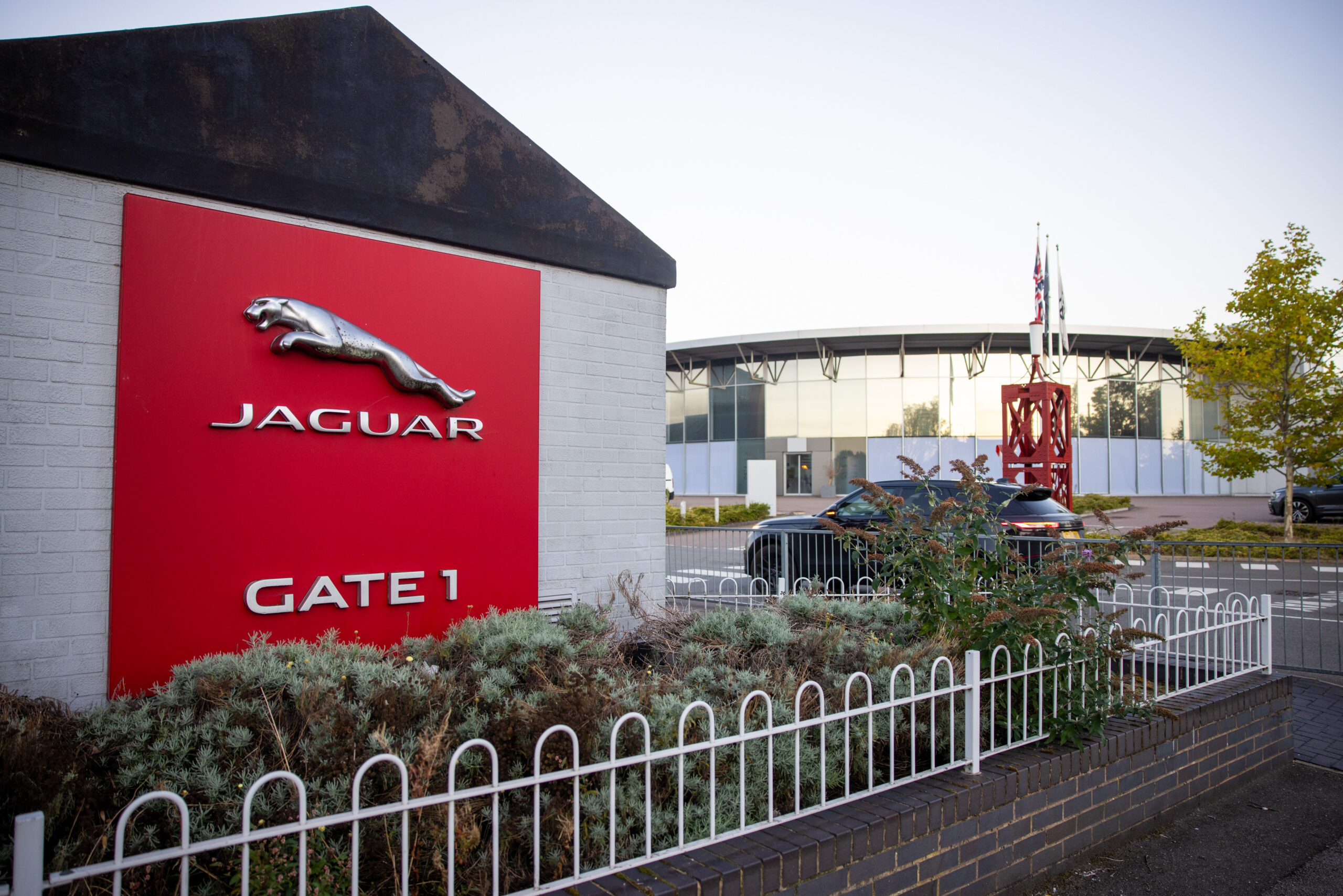
Core Viewpoint - Jaguar Land Rover (JLR), owned by Tata Motors, is raising £2 billion ($2.7 billion) in loans from global banks to alleviate financial strain caused by a cyberattack that halted production [1][3]. Group 1: Funding Details - The foreign currency facility will be priced at approximately 110 basis points over the secured overnight funding rate (SOFR) [2]. - Citigroup, Mitsubishi UFJ Financial Group, and Standard Chartered Bank have agreed to provide the 18-month credit facility, with potential syndication to more banks later [2]. - This funding comes in addition to a £1.5 billion loan guarantee from the UK government to support cash reserves and the supply chain affected by the cyberattack [6]. Group 2: Operational Impact - The cyberattack has severely disrupted operations at JLR, affecting plants in the UK, Slovakia, Brazil, and India, leading to chaos in the auto supply chain [7]. - JLR is currently working to clear a backlog of payments owed to suppliers as it navigates through the operational challenges [7]. - Some systems have been restored, allowing JLR to process supplier invoices and expedite parts distribution, with plans to restart some manufacturing operations on October 1 [8]. Group 3: Financial Context - The funding requirement arises just months after JLR achieved its goal of becoming net debt-free, indicating a significant shift in financial strategy due to unforeseen circumstances [4]. - Automotive suppliers typically operate on thin margins and require high working capital, making them vulnerable to disruptions like the one JLR is facing [4].

Ferrari Says Tariffs May Reduce Profits—Joining These Companies Warning Of Tariff Impacts
Forbes· 2025-05-06 13:24
Core Insights - The luxury car maker Ferrari has indicated that U.S. tariffs pose a potential risk to its profitability, reflecting broader concerns among various companies regarding the impact of tariffs on earnings and financial forecasts [1][2] Company-Specific Summaries - **Ferrari**: The company noted a potential risk of a 50 basis points reduction to earnings in 2025 due to the introduction of import tariffs on European cars into the U.S. [2] - **Mattel**: The CEO expressed uncertainty about the evolving tariff situation and announced a pause on full-year guidance, indicating potential price increases for toys if necessary [3] - **Ford**: The automaker expects tariffs to reduce its earnings before interest and taxes by approximately $1.5 billion in 2025 and has suspended its full-year guidance due to potential supply chain disruptions [3] - **Cummins**: The company withdrew its 2025 forecast, citing growing economic uncertainty driven by tariffs [4] - **Apple**: The company anticipates a $900 million hit to its bottom line in the second quarter due to tariffs, complicating future predictions [4] - **Amazon**: The company stated that its future results are "inherently unpredictable" due to global economic conditions and tariff policies [5] - **General Motors**: The company lowered its earnings forecast for 2025 to between $10 billion and $12.5 billion, down from $13.7 billion to $15.7 billion, adjusting to the new trade policy environment [6] - **McDonald's**: Reported a 3.6% decline in U.S. same-store sales in the first quarter of 2025, the largest decrease since 2020, attributing it to consumer uncertainty [6] - **Stellantis**: Suspended its full-year financial guidance for 2025 due to tariff-related uncertainties [6] - **Mercedes**: Pulled its full-year outlook for 2025, citing high volatility regarding tariff policies [6] - **UPS**: Withdrew its full-year guidance after previously forecasting revenue of $89 billion for 2025, citing macroeconomic uncertainty [6] - **Kraft Heinz**: Lowered its full-year outlook due to a volatile operating environment influenced by tariffs and inflation [7] - **JetBlue**: Pulled its full-year outlook for 2025 due to macroeconomic uncertainty [7] - **Snap**: Declined to issue guidance for its second quarter, citing uncertainty in macroeconomic conditions affecting advertising demand [8] - **Volvo**: Warned that 2025 would be challenging due to macroeconomic and geopolitical developments, including tariffs [9] - **PepsiCo**: Lowered its earnings forecast for 2025, expecting more volatility and higher supply chain costs due to tariffs [9] - **Procter & Gamble**: Lowered its sales growth projections for the year, citing a challenging consumer and geopolitical environment [9] - **American Airlines**: Took a cautious approach to growth after pulling its full-year guidance, citing significant weakness in demand due to economic uncertainty [9] - **Skechers**: Withdrew its full-year outlook, attributing it to macroeconomic uncertainty from global trade policies [9] - **Thermo Fisher Scientific**: Withdrew its full-year profit forecast, expecting a $400 million hit in sales to China due to tariffs [10] - **Chipotle**: Lowered its full-year same-store sales growth expectations, anticipating reduced consumer spending due to economic concerns [11] - **Alaska Airlines**: Pulled its full-year 2025 guidance due to recent economic uncertainty [11] - **Southwest Airlines**: Withdrew guidance for 2025, citing macroeconomic uncertainty [11] - **United Airlines**: Held its full-year forecast but issued a lower earnings guidance for 2025 due to unpredictable economic conditions [11] - **Logitech**: Withdrew its outlook for the 2026 fiscal year due to ongoing tariff uncertainty [11] - **Walmart**: Announced it would pull forecasts for operating income, citing a growing range of outcomes due to tariffs [11] - **Delta**: Pulled its full-year guidance due to broad macro uncertainty [12]