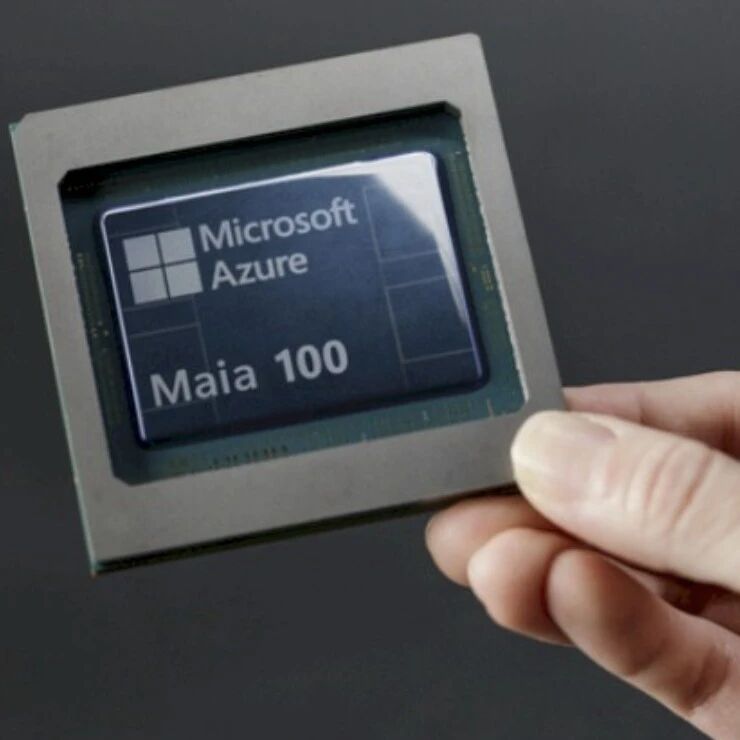
Maia AI加速器

Search documents
微软这颗芯片,撼动英伟达?
半导体行业观察· 2026-01-29 01:15
Core Insights - Microsoft is the largest user of OpenAI models and has completed the development of its Maia AI accelerator, which aims to enhance AI capabilities [2] - Major cloud service providers and GenAI model developers are creating custom AI XPUs to reduce the cost of GenAI inference workloads [2] - Nvidia currently dominates the AI training market, while AI inference computing power is expected to be an order of magnitude higher than training, presenting opportunities for over a hundred AI computing startups [2] Group 1: Microsoft and AI Hardware Development - Microsoft aims to control its hardware resources while deploying AI-driven systems, balancing the use of third-party GPUs and CPUs with its own developed computing engines [3] - The Maia 100 XPU, announced in November 2023, is designed to support AI training and inference, specifically for OpenAI's GPT models, although its performance has been questioned [4][12] - The upcoming Maia 200 XPU, set for release in January 2026, is designed specifically for AI inference, simplifying its architecture [5] Group 2: Technical Specifications of Maia Chips - The Maia 100 chip features 64 cores, approximately 500MB of total L1 and L2 cache, and a total of 105 billion transistors, with a clock speed of around 2.86GHz [12][14] - The Maia 200 chip will utilize TSMC's N3P process, increasing transistor count to 144 billion and improving clock speed to 3.1GHz, while also enhancing memory capacity and bandwidth significantly [21][22] - The Maia 200 chip's tensor units are expected to deliver 10.15 petaflops at FP4 precision and 5.07 petaflops at FP8 precision, with a total power consumption of 750W [24] Group 3: Deployment and Future Plans - The Maia 200 computing engines will be used to support OpenAI's GPT-5.2 model and will drive Microsoft's Foundry AI platform and Office 365 Copilot [26] - Currently, there is no information on when Azure will offer VM instances based on the Maia 200, which would allow testing of various AI models [26]


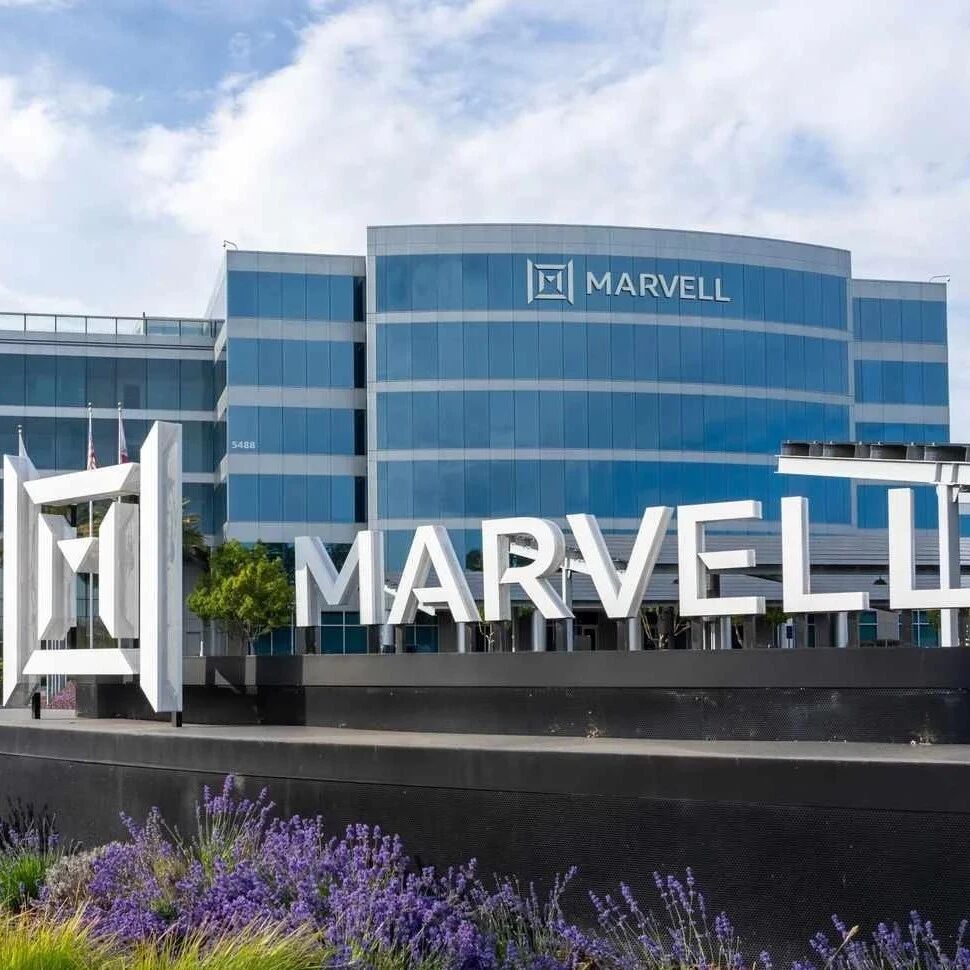
Marvell股价暴跌
半导体行业观察· 2025-12-09 01:50
Core Viewpoint - Marvell Technology's competitive position has become a focal point of discussion on Wall Street, with investors showing increasing pessimism regarding the company's collaboration with Amazon and Microsoft [2][3]. Group 1: Stock Performance and Analyst Ratings - Marvell's stock price fell by 6.99% on Monday, reflecting market concerns about its business with Amazon and Microsoft [2]. - Benchmark analyst Cody Acree downgraded Marvell's stock rating from "Buy" to "Hold," citing a high level of confidence that the company has lost design contracts for Amazon's Trainium 3 and Trainium 4, which may shift to Alchip [2][3]. - Acree suggested that investors should take profits, as the market may have been overly optimistic about recent signals from Amazon regarding stability [2]. Group 2: Revenue Outlook and Client Relationships - Acree acknowledged that the downgrade is controversial, especially since Marvell emphasized during its earnings call that it does not expect a revenue "cliff" from Amazon next year [3]. - Amazon is Marvell's largest customer for XPU (custom chips), and Marvell previously indicated high visibility for future orders, which could drive annual revenue [3]. - Acree believes that Marvell's revenue growth guidance from Amazon is sincere but primarily relies on continued shipments of Trainium 2 and the Kuiper low-orbit satellite project, rather than a successful transition to Trainium 3 [3]. Group 3: Future Prospects and New Clients - Marvell anticipates that its XPU business will see a resurgence in fiscal year 2028, driven by a new large-scale cloud customer, with incremental growth expected in subsequent years [4]. - Marvell's CEO, Matt Murphy, stated that data center revenue for fiscal year 2028 could accelerate significantly compared to the previous year [4]. - TD Cowen analyst Joshua Buchalter noted that Marvell's outlook for 2028, along with the acquisition of Celestial AI, provides bullish arguments, with speculation that the new customer could be Microsoft for its Maia AI accelerator [4].