Microsoft 365 Commercial

Search documents
Down 28% From Its Highs, Is Microsoft Stock a Buy?
The Motley Fool· 2026-02-06 02:46
Core Viewpoint - Microsoft is experiencing a significant stock decline despite strong underlying business performance, raising questions about whether this presents a buying opportunity for investors [1][2]. Financial Performance - Microsoft's fiscal second-quarter revenue increased by 17% year over year, or 15% on a constant-currency basis, with operating income rising 21% year over year to $38.3 billion [4]. - The productivity and business processes segment revenue grew 16% year over year to $34.1 billion, while the intelligent cloud segment saw a 29% year-over-year revenue increase to $32.9 billion, with Azure and other cloud services revenue climbing 39% [5][6]. - The "more personal computing" segment experienced a slight revenue decline of 3% year over year, contributing $14.3 billion during the period [7]. Growth Potential - Microsoft reported a commercial remaining performance obligation (RPO) of $625 billion, reflecting a 110% year-over-year increase, indicating strong future growth potential, particularly in cloud computing [8]. - The company anticipates that approximately 25% of this backlog, around $156 billion, will be recognized as revenue in the next 12 months, with 45% of the RPO balance linked to OpenAI [9]. Investment Considerations - The current price-to-earnings ratio of about 25 suggests that shares are not overvalued, but the significant capital expenditures of $37.5 billion, up 66% year over year, indicate heavy investment in AI infrastructure [10][11]. - Given the ongoing investment cycle, shares may be more suitable as a hold rather than a buy, although long-term investors in AI may find this a good entry point [12].



ETFs to Buy as Microsoft's Shares Slump Despite Q2 Earnings Beat
ZACKS· 2026-01-30 15:16
Core Insights - Microsoft shares fell 10% despite exceeding analysts' expectations for Q2 fiscal 2026 earnings and revenues, primarily due to higher-than-expected capital expenditures and slowing cloud growth expectations [1][10] Financial Performance - In Q2, Microsoft's adjusted earnings per share (EPS) surpassed the Zacks Consensus Estimate by 6.7%, and revenues exceeded the consensus by 1.3%, with both metrics showing double-digit year-over-year growth [5] - Revenue from Azure and other cloud services grew by 39%, while Microsoft 365 Commercial products and cloud services revenues increased by 16%, and Microsoft 365 Consumer products and services revenue rose by 27% [6] - LinkedIn revenues increased by 11% due to growth in Marketing Solutions [6] Future Outlook - Microsoft anticipates revenues between $80.65 billion and $81.75 billion for Q3, exceeding the Zacks Consensus Estimate of $80.47 billion, driven by strong growth in commercial businesses [7] - The company expects a decline in Microsoft Cloud gross margin percentage to approximately 65% year-over-year due to ongoing investments in AI, and Xbox content and services revenues are projected to decline in the mid-single digits in Q3 [8] Analyst Reactions - JPMorgan analyst Mark Murphy maintained an Overweight rating but reduced the price target from $575 to $550, citing concerns over CPU supply constraints affecting Azure growth [9] - Goldman Sachs analyst Gabriela Borges maintained a Buy rating and lowered the price target from $655 to $600 [11] Investment Opportunities - Investors optimistic about Microsoft's cloud growth may consider ETFs with significant exposure to Microsoft, such as: - iShares Dow Jones US Technology ETF (IYW), which has $21.06 billion in net assets and a 12.32% allocation to Microsoft, with a 25.9% increase over the past year [12][13] - iShares Top 20 U.S. Stocks ETF (TOPT), with $486.3 million in net assets and an 11.23% allocation to Microsoft, showing a 17% increase over the past year [14][15] - Select Sector SPDR Technology ETF (XLK), with $94.07 billion in assets and an 11.38% allocation to Microsoft, which has rallied 26.5% over the past year [16][17] - Vanguard Information Technology ETF (VGT), with $112.8 billion in net assets and a 12.19% allocation to Microsoft, which has soared 22.8% over the past year [18][19]
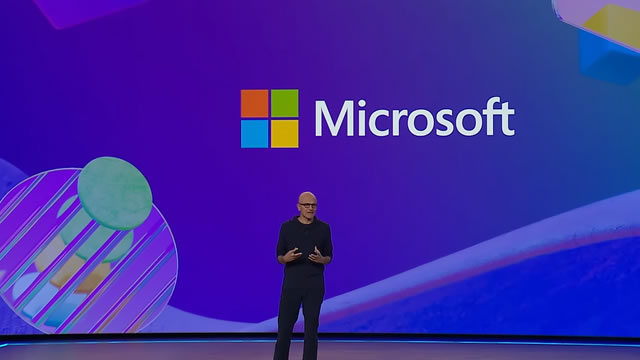
What You Need To Know Ahead of Microsoft's Earnings Release
Yahoo Finance· 2025-10-09 07:08
Core Insights - Microsoft Corporation is the largest software company globally, holding over 80% market share in PC operating systems and a market cap of $3.9 trillion [1] - The company is expected to report a profit of $3.66 per share for Q1, reflecting a 10.9% increase from the previous year [2] - Analysts project an EPS of $15.41 for fiscal 2026, a 13% increase from fiscal 2025, and a further 16% increase to $17.88 in fiscal 2027 [3] Stock Performance - Microsoft stock has increased by 26.6% over the past 52 weeks, slightly underperforming the Technology Select Sector SPDR Fund's 27.5% rise but outperforming the S&P 500 Index's 17.4% gain [4] - Following the release of Q4 results, Microsoft stock gained nearly 4%, driven by strong contributions from Cloud and Microsoft 365 Commercial products [5] Financial Metrics - The company's Q4 topline grew 18.1% year-over-year to $76.4 billion, exceeding consensus estimates by 3.7% [5] - Despite a slight drop in gross margins, a notable decline in operating expenses as a percentage of revenues resulted in a 23.6% increase in net income to $27.2 billion, with EPS of $3.65 surpassing expectations by 9% [6] Analyst Ratings - The consensus rating for Microsoft remains highly optimistic, with 40 "Strong Buys," five "Moderate Buys," and three "Holds" among 48 analysts [7] - The mean price target of $627.15 indicates a potential upside of 19.5% from current price levels [7]
CRWV Witnesses Healthy Growth Across Healthcare and Finance Sectors
ZACKS· 2025-08-29 16:20
Core Insights - CoreWeave, Inc. (CRWV) is experiencing significant growth in healthcare and finance sectors, transitioning from pilot projects to full-scale deployments, with a contracted backlog of $30.1 billion at the end of Q2 2025, an increase of $4 billion from Q1 and doubling year-to-date [1][8] - The company has secured partnerships with notable clients such as Hippocratic AI in healthcare and major banks like Morgan Stanley and Goldman Sachs in finance, indicating a diverse customer base [2][8] - CoreWeave's VFX cloud service, Conductor, saw usage increase more than fourfold in the first half of 2025, highlighting its impact in media and entertainment [3] Industry Demand and Infrastructure - The demand for CoreWeave's cloud solutions is rapidly increasing across various industries, driven by the need for high-performance infrastructure for AI training and inference [4] - The company has deployed NVIDIA's GB200 NVL72 and HGX B200 at scale, integrated into its Mission Control system, which is crucial for automated lifecycle management and reliability [4] - CoreWeave has expanded its object storage portfolio and introduced new solutions, including the CoreWeave–Weights & Biases Inference service, compatible with leading open-source models [5] Financial Outlook - Management has raised the 2025 revenue guidance to $5.15–$5.35 billion, up from the previous estimate of $4.9 billion to $5.1 billion, reflecting strong demand and a robust customer pipeline [6][8] - For Q3 2025, CRWV projects revenues between $1.26 billion and $1.3 billion, indicating continued growth [6] Competitive Landscape - CoreWeave faces competition from companies like Nebius Group N.V. and Microsoft Corporation, both of which are also expanding their AI cloud services [6][10] - Nebius reported a ninefold increase in AI cloud infrastructure revenues year-over-year, showcasing the competitive environment in the AI sector [7] Stock Performance and Valuation - CoreWeave's shares have increased by 152.3% over the past six months, significantly outperforming the Internet Software industry, which grew by 12.6% [11] - The company's shares are trading at a Price/Book ratio of 17.72X, considerably higher than the industry average of 6.57X, indicating a premium valuation [12]


Microsoft Rides ‘AI Infrastructure Wave' as Cloud Services Demand Jumps
PYMNTS.com· 2025-07-31 01:46
Core Insights - Microsoft has expanded its data center footprint to over 400 sites in 70 regions and introduced a sovereign cloud offering, expecting to spend $30 billion in capital expenditures in Q1 to meet AI infrastructure demand [1][8][14] - Azure revenue reached a record $75 billion for the year, with a 34% increase in annual revenue, driven by demand for cloud and AI services [2][4][5] Financial Performance - Microsoft reported higher-than-expected revenue and earnings growth in its fiscal fourth quarter, with net income of $27.2 billion, or $3.65 per share, a 24% increase year-over-year [9][10] - Total revenue for the fiscal year was $281.7 billion, up 15%, with net income of $101.8 billion and earnings per share of $13.64, a 16% increase [14] Business Unit Growth - Nearly all business units experienced double-digit percentage growth, with productivity and business processes revenue rising 16% to $33.1 billion [4][12] - Microsoft 365 Commercial cloud revenue increased by 18%, and the company added a record number of new Copilot customers during the quarter [12] Cloud and AI Services - Microsoft's cloud revenues, including Azure and other services, totaled $168 billion for the year, up 23% year-over-year [5] - Azure AI remains a key priority, with 57% of CIOs expecting to use Azure OpenAI Services and 31% planning to use GitHub Copilot in the next 12 months [7] Market Position and Future Outlook - Morgan Stanley analysts predict continued robust growth for Azure, with 52% of CIOs indicating their application workloads are in Azure [6] - Microsoft expects continued double-digit growth in revenue and operating income in fiscal 2026, supported by strong demand for cloud and AI [14]

Should Investors Buy Microsoft Stock Ahead of Q4 Earnings Release?
ZACKS· 2025-07-25 15:25
Core Viewpoint - Microsoft is expected to report strong fourth-quarter fiscal 2025 results, with projected revenues of $73.71 billion, reflecting a year-over-year growth of 13.88% driven by AI infrastructure investments and cloud adoption [2][23]. Revenue Projections - The Zacks Consensus Estimate for Microsoft’s revenues is $73.71 billion, indicating a growth of 13.88% from the previous year [2]. - In the Productivity and Business Processes segment, revenues are projected between $32.05 billion and $32.35 billion, with an estimated growth of 12.2% year-over-year [7]. - The Intelligent Cloud segment is expected to generate revenues between $28.75 billion and $29.05 billion, indicating a growth of 21.5% from the previous year [10]. Earnings Estimates - The consensus estimate for earnings per share is $3.35, suggesting a year-over-year growth of 13.56% [2]. - Microsoft has an Earnings ESP of -0.64% and a Zacks Rank of 2 (Buy) [5][4]. Growth Drivers - Continued investments in AI infrastructure, totaling $80 billion, are expected to provide a competitive advantage and support growth in cloud services [11][23]. - Azure cloud growth is projected to be between 34% and 35% in constant currency, contributing significantly to the Intelligent Cloud segment [10][6]. Competitive Positioning - Microsoft’s Build 2025 conference announcements, including new AI capabilities, reinforce its leadership in enterprise AI adoption [12][9]. - The company is well-positioned for sustained growth momentum into fiscal 2026 due to strategic platform expansions and product launches [6][24]. Segment Performance - The More Personal Computing segment is projected to generate revenues between $12.35 billion and $12.85 billion, indicating a growth of 1% year-over-year [13]. - In Gaming, revenues are expected to grow in mid-single digits, with Xbox content and services revenues anticipated to grow in high single digits [16]. Market Performance - Microsoft shares have gained 21.2% year-to-date, outperforming the broader Zacks Computer & Technology sector, which increased by 10.8% [17]. - The company is trading at a forward 12-month P/S ratio of 11.99X, compared to the industry average of 8.93X, indicating a premium valuation [19][21]. Investment Thesis - Microsoft presents a compelling investment opportunity with strong fundamentals driven by AI leadership and cloud dominance, despite a premium valuation [23][24].