
Mini LED背光技术

Search documents
群智咨询:Mini LED与OLED在车载显示领域的“竞合关系”将成为未来发展主线
Zhi Tong Cai Jing· 2025-10-17 12:55
Core Insights - The competitive relationship between Mini LED and OLED in the automotive display sector will be a key focus for future development, with both technologies evolving to better suit automotive applications [1][8] - Mini LED is expected to penetrate the market for vehicles priced above 200,000 yuan, with a significant increase in adoption projected for 2026 compared to 2025 [1][8] Product Technology Upgrades - The automotive display panel market is shifting towards a "differentiated breakthrough" in technology, characterized by a multi-faceted landscape of "Mini LED explosion, stable OLED, and traditional LCD maintaining the base" [2] - Mini LED technology is anticipated to experience explosive growth in 2025, with a projected increase in shipments from 800,000 units in 2023 to 3 million units in 2025, representing a year-on-year growth of 150% [3][4] Mini LED Growth Dynamics - The growth of Mini LED is driven by both technological advancements and market demand, with improved yield rates and cost reductions enabling its adoption in mainstream vehicle segments priced between 200,000 to 300,000 yuan [4] - Mini LED's technical features, such as high brightness and wide temperature tolerance, make it well-suited for automotive environments, creating a positive feedback loop of demand and supply [4] OLED Market Position - OLED technology has established a foothold in the high-end market, with applications in luxury vehicles, but its growth remains steady rather than explosive, focusing on high-end models priced above 500,000 yuan [5][6] - The shipment volume of OLED panels is expected to grow from 600,000 units in 2022 to 3.1 million units in 2025, reflecting a 25% year-on-year increase, although this growth rate is slower than that of Mini LED [5][6] Traditional LCD's Role - Despite the rise of Mini LED and OLED, traditional LCD technology continues to dominate the automotive display market, accounting for over 95% of shipments, primarily in vehicles priced below 200,000 yuan [7] - The strategy for traditional LCD in 2025 focuses on optimizing user experience and controlling costs through improved brightness and color optimization [7] Future Outlook - The competitive dynamics between Mini LED and OLED will drive rapid technological iterations, with both technologies expected to adapt to automotive needs [8][9] - Companies will need to balance current display performance and costs while anticipating future technological advancements, ensuring a diversified approach to production capacity for both Mini LED and OLED [9]
搭载隆利Mini LED背光技术,蔚来全新ES8发布
WitsView睿智显示· 2025-08-26 09:31
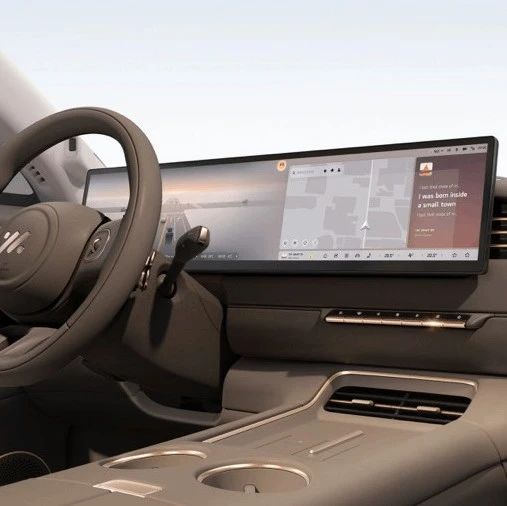
Core Viewpoint - NIO has launched the new ES8 model with a price range of 308,800 to 456,800 yuan, showcasing advanced display technology in its interior [1]. Group 1: Product Features - The ES8 features a 1.4-meter long SKYLine dual 24-inch digital skyline screen, utilizing Longli Technology's latest Mini LED backlight technology, with 1610 zones, 5K resolution, 1200 nits brightness, a contrast ratio of 1,000,000:1, and 10-bit color depth, achieving 100% DCI-P3 color gamut coverage [2]. - Additionally, the ES8 is equipped with a 21.4-inch large entertainment ceiling screen, also using Longli Technology's Mini LED backlight technology, featuring 1914 zones, 3K resolution, 1000 nits brightness, a contrast ratio of 1,000,000:1, and 100% DCI-P3 color gamut coverage [5]. Group 2: Industry Context - Longli Technology specializes in overall backlight display module solutions, with core businesses in consumer electronics and rapidly growing automotive display sectors. The company reported a revenue of 710 million yuan in the first half of the year, marking a 14.46% year-on-year increase, driven by the growth in automotive display sales [8].



完成认购37.42万股曹操出行股份,晶科电子董事长肖国伟:将深度融入粤港澳大湾区
Zheng Quan Shi Bao Wang· 2025-07-15 15:15
Core Insights - Jinko Electronics' Chairman, Xiao Guowei, emphasized Hong Kong's role as a "super connector" in linking global capital with Chinese technological innovation, advocating for the integration of Hong Kong with the Greater Bay Area while maintaining its international advantages in research and finance [1][2] - The company has successfully leveraged the supply chain and industrial synergy advantages of the Greater Bay Area, ensuring efficient operations and rapid response capabilities through strategic locations in Guangzhou and Hong Kong [2][3] - Jinko Electronics is committed to sustainable development through continuous investment in green technologies, focusing on energy-efficient LED solutions and advocating for Hong Kong's role in green finance and ESG disclosures [2][3] Company Strategy - The company has established a "dual-engine" strategy by building a headquarters in Nansha, Guangzhou, and a technology R&D platform in Hong Kong, balancing national strategy with global development [2] - Jinko Electronics plans to enhance its technological R&D and innovation investments while exploring opportunities in Southeast Asia to provide efficient delivery and technical support to global clients [3] - The company has completed an investment in Cao Cao Travel, acquiring 374,200 shares at a price of HKD 41.94 per share, totaling approximately HKD 16 million, to strengthen its collaboration with Geely Group in the smart automotive ecosystem [3][4] Investment Principles - Jinko Electronics adheres to investment principles that focus on empowering the industrial chain and maintaining controllable risks, targeting companies with technological innovation capabilities and advantageous business models [4] - The company aims to deepen vertical integration and core technology positioning through strategic investments, enhancing both capital appreciation and industrial competitiveness [4]