Mortgage bonds

Search documents
Global Markets React to Trump’s Policy Signals Amid Geopolitical Tensions
Stock Market News· 2026-01-27 23:38
Geopolitical Developments - The Trump administration has escalated military tensions with Iran by deploying a "massive armada," including the USS Abraham Lincoln carrier strike group and F-15E Strike Eagle fighter jets, to promote regional security [3][7] - This military posture is a response to internal unrest in Iran, with President Trump indicating a preference for diplomatic negotiations [3] U.S. Monetary Policy - President Trump is expected to announce his choice for the next Federal Reserve Chair soon, with a focus on lower interest rates, which has already led to a decline in the U.S. dollar to its weakest level in nearly four years [4][7] - The Federal Reserve is anticipated to maintain its key short-term interest rate at 3.50%-3.75% in early 2026, following three consecutive cuts in late 2025, amidst political scrutiny [5] Housing Market Initiatives - The Trump administration is directing Fannie Mae and Freddie Mac to purchase $200 billion in mortgage bonds to lower borrowing costs, with potential increases in bond holdings to $225 billion [6][7] - Proposed measures include banning large institutional investors from buying single-family homes and introducing 50-year mortgages, though there are concerns about their long-term impact on housing affordability [6] Market Performance - The S&P/ASX 200 Index in Australia rose by 0.9% to 8,941.6, reaching a three-month high, driven by strong performance in materials and financial sectors [7][9] - Mining stocks increased by 1.4%, while gold stocks rose 0.4% to an all-time high, benefiting from higher commodity prices [9] E15 Gasoline Legislation - President Trump expressed intent to sign a bill for year-round E15 gasoline blend sales, but recent legislative efforts have stalled, leading to the establishment of a council to study the issue [8]


Lower Mortgage Rates, Higher Prices? How Trump’s Plan Affects First-Time Buyers
Yahoo Finance· 2026-01-27 17:12
Core Insights - The American housing market in the early 2020s is characterized by high prices and limited supply, with a new development in 2026 where mortgage rates are decreasing while home prices remain high, leading to increased competition [1] - President Trump's housing agenda may exacerbate the situation by increasing demand without addressing supply constraints, potentially driving home prices higher [2] Mortgage Rates and Home Prices - The average 30-year fixed mortgage rate is currently around 6%, the lowest in several years, partly due to Trump's push for Fannie Mae and Freddie Mac to purchase up to $200 billion in mortgage bonds to keep borrowing costs low [3] - Lower mortgage rates can enhance a buyer's purchasing power by reducing monthly payments, which may lead to increased demand in a constrained supply market [3] Risks of Trump's Housing Plan - The potential risk of Trump's plan is that increased buying power could exert upward pressure on home prices in a low inventory market, with experts warning that even slight decreases in borrowing costs can lead to price increases under these conditions [4] - Trump's housing plan also includes executive actions to limit large investors' ability to purchase single-family homes, aiming to make homes more affordable for families rather than businesses [5] Expert Opinions on Supply and Demand - Real estate experts express skepticism about the effectiveness of Trump's demand-side strategies, arguing that without significant increases in housing supply, these measures are unlikely to lower prices and may instead heighten competition for limited starter homes [6] Affordability Challenges - For first-time buyers, the interplay of lower mortgage rates and higher home prices complicates affordability, indicating that financing costs are not the sole factor, but rather a mix of market dynamics influenced by politics, policy, supply limitations, and competition [7]
From $40 billion to $225 billion: Inside the Trump housing plan to radically change the mortgage bond buying plan
Fortune· 2026-01-24 13:59
Core Viewpoint - The Federal Housing Finance Agency (FHFA) has granted Fannie Mae and Freddie Mac the authority to nearly double their mortgage bond purchases, raising the cap from $40 billion to $225 billion each, which could introduce new risks for these government-backed lenders [1][2][4]. Group 1: Changes in Bond Purchase Authority - The FHFA's email to Fannie Mae and Freddie Mac eliminated previous caps, allowing each lender to hold up to $225 billion in mortgage bonds, effectively increasing their purchasing capacity by approximately $170 billion beyond the initial $200 billion directive from President Trump [2][3]. - This change reverses nearly two decades of bipartisan consensus on limiting the risk exposure of these lenders following their bailout during the 2008-09 financial crisis [4][12]. Group 2: Political and Economic Implications - Some Congressional members have expressed concerns that the benefits of increased mortgage bond purchases will be short-lived unless the housing supply is also increased, warning that lower interest rates could lead to higher home prices [5]. - Critics, including Senator Elizabeth Warren, argue that the new bond purchasing authority raises questions about the risks to Fannie Mae and Freddie Mac and may not effectively lower mortgage interest rates in the long term [6]. Group 3: Historical Context and Risk Management - Fannie Mae and Freddie Mac were created to stabilize the mortgage market, but their government affiliation allows them to borrow at lower costs while also exposing them to regulatory scrutiny [10][11]. - The FHFA had previously enforced strict limits on the mortgage investment portfolios of these lenders, which were capped at $450 billion, and had reduced their purchasing capacity to as low as $25 billion earlier this year [13][14]. Group 4: Future Outlook and Market Reactions - Analysts suggest that while the new authority could boost earnings ahead of potential initial public offerings, both companies may lack sufficient cash or liquid assets to execute the full $225 billion purchase without incurring debt [16]. - The political motivations behind these changes are evident, as mortgage interest rates have become a liability for the Trump administration ahead of the midterm elections [18].

Will mortgage rates fall ahead of January's Fed meeting?
Yahoo Finance· 2026-01-23 17:46
Core Viewpoint - The Federal Reserve is expected to maintain current interest rates, while mortgage rates are influenced by President Trump's housing affordability initiatives rather than Fed actions [1][2]. Mortgage Rates and Applications - Mortgage rates have recently declined, leading to a significant increase in refinance applications, which reached the highest level since September 2025, with a 14% increase in loan applications and a 20% rise in refinancing from the previous week [3]. - The 30-year fixed-rate loans saw a slight increase of three basis points from a three-year low of 6.06% [4]. Impact of Trump's Initiatives - Since the announcement of housing affordability initiatives on January 7, 30-year mortgage rates dropped from 6.16% to 6.06%, before slightly rebounding to 6.09% [5]. - Some lenders are now offering mortgage rates below 6%, indicating a competitive lending environment [5]. Future Fed Rate Expectations - The Federal Reserve is anticipated to make one or two interest rate cuts in 2026, although there are uncertainties regarding the labor market and inflation trends [6]. - J.P. Morgan predicts a potential rate hike in the third quarter of 2027, influenced by expected inflation declines and a tightening labor market [7]. Presidential Actions on Housing - President Trump has implemented several measures aimed at increasing housing affordability, including a ban on institutional investment in single-family housing and a directive for Fannie Mae and Freddie Mac to purchase $200 billion in mortgage bonds [8]. - An initiative was also proposed to allow 401(k) participants to use retirement savings for home down payments, although details remain vague [8]. Market Reactions and Predictions - With the Fed's current stance, mortgage rates are expected to fluctuate, and there may not be sustainable downward movements in the short term [9]. - Economists are monitoring 10-year Treasury yields, which are settling in the 4.2% to 4.3% range, as these will impact mortgage rates [9][10].
Trump pushes for lower rates and ban on investor home purchases in bid to make homes more affordable
Yahoo Finance· 2026-01-21 18:59
Core Viewpoint - President Trump's administration is focusing on policies aimed at making homeownership more affordable for Americans, particularly through lowering interest rates and restricting institutional investors from purchasing single-family homes [1][2]. Group 1: Policy Proposals - Trump outlined four key policies during his address at the World Economic Forum, which are part of a broader initiative to tackle housing affordability ahead of the midterm elections [2]. - The administration aims to lower interest rates on home loans and credit cards to enhance financial flexibility for potential homebuyers [4]. Group 2: Current Housing Market Conditions - The U.S. housing market has been experiencing a sales slump since 2022, attributed to rising mortgage rates, high home prices, and a significant shortage of available homes [3]. - Sales of previously occupied homes in the U.S. remained at 30-year lows, indicating a challenging environment for aspiring homeowners [3]. Group 3: Government Actions - The federal government has been directed to purchase $200 billion in mortgage bonds, which Trump claims will help reduce mortgage rates [4]. - Fannie Mae and Freddie Mac reportedly have $200 billion in cash available for buying mortgage bonds, although economists suggest this may have a limited effect on mortgage rates [4]. Group 4: Federal Reserve Considerations - Trump has been advocating for the Federal Reserve to lower interest rates and plans to announce a new Fed chair to replace Jerome Powell [5]. - Historical context indicates that Fed rate cuts do not always lead to lower mortgage rates, as seen in the fall of 2024 when mortgage rates increased despite a rate cut by the Fed [6].
JPMorgan's Jamie Dimon warns Trump's 10% credit card cap would cause ‘economic disaster'
New York Post· 2026-01-21 15:04
Core Viewpoint - JPMorgan Chase CEO Jamie Dimon warns that President Trump's proposed 10% cap on credit card interest rates could lead to significant reductions in credit availability for most Americans, potentially harming the economy [1][5]. Group 1: Impact on Consumers and Credit Availability - Dimon estimates that the interest rate cap could result in 80% of Americans losing access to credit [2]. - Banking groups caution that such government-imposed limits would restrict credit approvals to consumers with high incomes and excellent credit scores, and could dismantle popular rewards programs funded by interest income and fees [7]. - Proponents of the cap argue it would provide substantial relief to consumers burdened by inflation [9]. Group 2: Industry Response - JPMorgan plans to conduct a "real analysis" on the effects of the proposed cap to present to the government, indicating that initial thoughts have already been shared [8]. - Other financial executives, including Bank of America CEO Brian Moynihan and leaders from Citigroup and Wells Fargo, have expressed concerns about the negative implications of a 10% cap on credit card rates [8]. Group 3: Political Context - The credit card cap proposal is largely supported by Democrats, with Trump suggesting that its effects should be tested in states like Vermont and Massachusetts [2]. - Trump argues that the cap would benefit consumers who have been overcharged by credit card companies, which typically charge rates between 20% to 30% [3][7]. Group 4: Market Reactions - New York-based startup Bilt has introduced credit cards with a 10% APR for the next 12 months, responding to Trump's call, while Wall Street expresses concerns that such a cap could reduce spending and transaction volumes [4].


US ‘will not become a nation of renters’: Trump
Yahoo Finance· 2026-01-21 14:56
Core Viewpoint - Rental housing providers are considered essential partners in addressing the housing affordability challenges in the U.S. [1][6] Group 1: Institutional Investors and Housing Market - As of 2022, mega-landlords owned approximately 3% of the single-family rental (SFR) housing stock, with significant regional variations, such as 25% in Atlanta, 21% in Jacksonville, and 18% in Charlotte [2] - Trump's executive order aims to prevent large institutional investors from purchasing single-family homes, which he argues should be available for families [4][3] - Concerns have been raised regarding whether institutional investors can still build single-family homes for rent, with interpretations of the executive order being crucial [7] Group 2: Economic Factors Affecting Homeownership - Trump highlighted the inability to claim depreciation on personal homes as a disadvantage compared to corporations, which can deduct property value loss from taxes [8] - Debt was identified as a significant barrier to homeownership, with Trump proposing a cap on credit card interest rates at 10% to assist Americans in saving for homes [9] - The banking industry has criticized the proposal to cap credit card interest rates, indicating potential challenges in passing such legislation [10] Group 3: Government Actions and Market Impact - Trump announced plans for government-backed institutions to purchase up to $200 billion in mortgage bonds to lower interest rates [11] - The appointment of a new Federal Reserve chair is anticipated, which may influence monetary policy and housing finance [11]
2026 Mortgage Rates May Drop Because of This Trump Proposal — Will It Help You Buy a House?
Yahoo Finance· 2026-01-14 15:00
Core Viewpoint - American mortgage rates are decreasing, with the average 30-year fixed mortgage rate settling just above 6%, following a peak above 7% in 2025, potentially creating a favorable environment for home buying in 2026 [1] Group 1: Mortgage Rate Trends - The average 30-year fixed mortgage rate has decreased to just above 6%, marking a near-historic low [1] - President Donald Trump has proposed a plan to further lower mortgage rates by directing Fannie Mae and Freddie Mac to purchase up to $200 billion in mortgage bonds [2] Group 2: Impact of Trump's Proposal - The large-scale purchase of mortgage bonds by Fannie Mae and Freddie Mac could theoretically reduce the yield investors demand, leading lenders to offer lower mortgage rates [3] - The overall impact of this proposal remains uncertain, as historical data suggests that tightening mortgage spreads has only resulted in modest reductions in mortgage costs [4] Group 3: Housing Affordability Considerations - A significant drop in mortgage rates is not expected, as housing affordability is influenced by various factors, including local market conditions and home prices [5] - The bond-buying initiative may lead to a modest decrease in rates, which could provide a financial advantage for potential homebuyers in 2026 [5]
A top economist thinks Trump's big affordability push will do more harm than good
Business Insider· 2026-01-13 19:08
Core Viewpoint - President Trump's proposals to lower mortgage rates and cap credit card interest rates may not effectively improve affordability for consumers and could potentially lead to adverse economic consequences [1][2]. Mortgage Rates - Trump plans to direct representatives to purchase $200 billion of mortgage bonds to lower mortgage rates [2]. - Following the announcement, fixed mortgage rates have decreased by 10 to 20 basis points, which could increase housing demand but also drive home prices up due to a severe housing shortage [6][7]. - The economist Mark Zandi warns that while lower rates may seem beneficial, they will not make homebuying more affordable as higher demand will lead to increased home prices [7]. Credit Card Interest Rates - Trump's proposal includes capping credit card interest rates at 10% for one year, which Zandi believes may face legal challenges and could limit credit availability for many borrowers [9]. - Zandi argues that only consumers with high credit scores would maintain their credit lines, as lenders would struggle to profitably extend credit at the proposed rate [9]. - Analysts at UBS and hedge fund manager Bill Ackman share concerns that capping credit card interest rates could negatively impact lower-income consumers and overall economic spending [10].
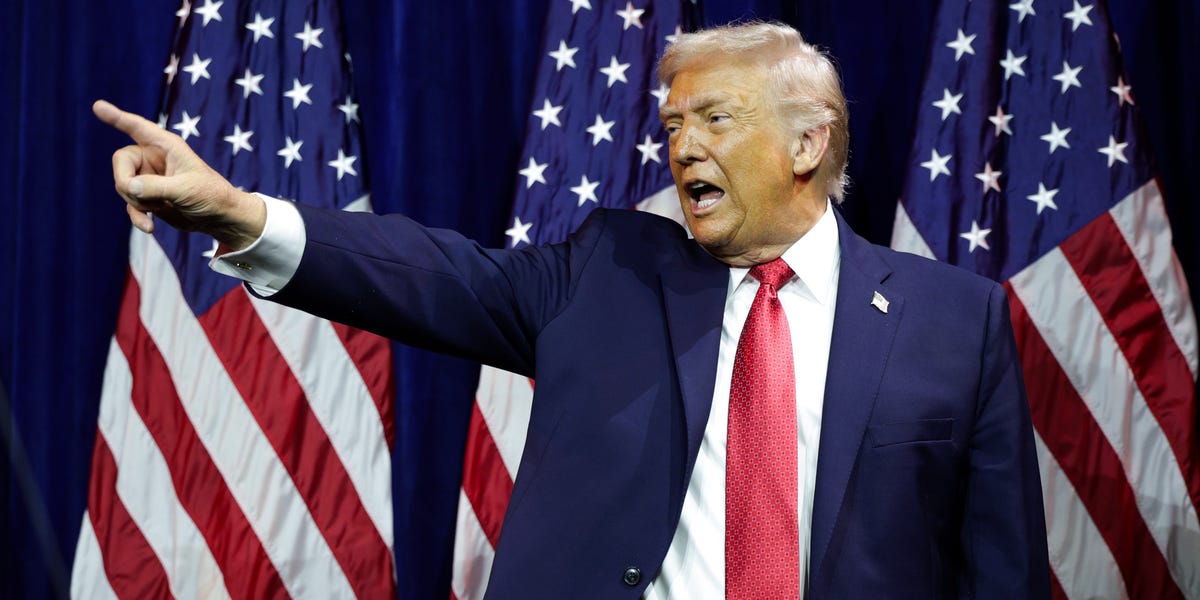
Mortgage rates fall below 6% for first time since 2023 after Trump orders $200B bond buying
New York Post· 2026-01-12 18:21
Core Viewpoint - Mortgage rates have fallen below 6% for the first time since February 2023, primarily due to President Trump's directive to purchase $200 billion in mortgage bonds to address the housing crisis [1][4]. Mortgage Rates - The average rate for a 30-year fixed residential mortgage decreased to 5.87% on Monday, down from 5.99% on Friday [1][8]. - The interest rate for a 15-year fixed mortgage also fell to 5.25% [3]. Government Actions - President Trump announced the purchase of $200 billion in mortgage bonds, stating this would lower mortgage rates and make homeownership more affordable [4]. - Federal Housing Finance Authority Director Bill Pulte confirmed that Fannie Mae and Freddie Mac would execute these purchases, with an initial $3 billion already allocated [4]. Impact on Lenders and Borrowers - The bond purchases are expected to increase the liquidity available to lenders, allowing them to offer more loans to homebuyers, which could lead to lower interest rates [5]. - UBS analysts predict that this bond buying could reduce 30-year fixed mortgage rates by more than a fifth of a percent [6]. Market Context - The average rate of outstanding US residential mortgages is currently at 4.4%, which is significantly lower than the new mortgage rates, potentially discouraging homeowners from selling [6]. - Trump's bond buying initiative represents about 1.4% of the $14.5 trillion mortgage market, indicating a limited overall impact on the market [6]. Housing Market Dynamics - Analysts express skepticism regarding the significant impact of Trump's initiatives on the housing market, including a proposed ban on institutional investors buying single-family homes [7]. - Large investors and private-equity firms have acquired a substantial number of single-family homes, but they only control about 2% of the nation's housing stock [8].