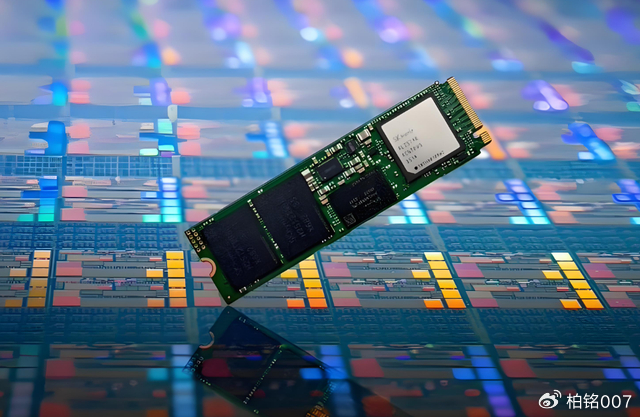
NAND flash存储芯片

Search documents
韩国芯片赢麻了,利润增长两倍多,净利过万亿,被质疑联手涨价
Sou Hu Cai Jing· 2026-01-14 16:56
Core Viewpoint - The profits of South Korea's two major memory chip companies are expected to surge significantly by 2025, reversing the profit decline trend of the country's largest smartphone manufacturer, indicating a strong performance in the memory chip sector [1][3]. Group 1: Profit Forecast - The two major South Korean memory chip companies are projected to earn over 300 trillion Korean won (approximately 1.4 trillion RMB) in profits by 2025, which is 75% higher than the annual revenue of China's largest tech company and over 20 times its net profit [3]. - One company is expected to see a profit increase of 2.5 times, while the other is projected to grow by 2.2 times [1]. Group 2: Price Surge and Market Dynamics - The significant profit increase in 2025 is attributed to a sharp rise in memory chip prices, particularly DRAM, with the price of a 16GB memory module increasing from 400 RMB to 1000 RMB, a rise of 1.5 times [3]. - The price surge is driven by the demand for HBM chips used in AI applications, which has diverted production capacity away from DRAM chips, leading to a tightening supply and skyrocketing prices [3]. Group 3: Competitive Landscape - There are speculations that the price increase may be influenced by a coordinated effort among U.S., South Korean, and Japanese memory chip companies, reminiscent of past price-fixing allegations against South Korean firms [5]. - As global memory chip prices rise, Chinese memory chip companies are also benefiting, reversing their previous losses and potentially allowing for increased investment in R&D to catch up technologically with U.S. and South Korean firms [5]. Group 4: Impact on Consumer Electronics - The surge in memory chip prices is expected to negatively impact the smartphone and PC industries, with estimates suggesting a significant reduction in memory capacity for Chinese smartphones, particularly in the mid-range segment, which may revert to 4GB from the previously common 12GB [5]. - This reduction in memory capacity, combined with the use of outdated processors in low-end smartphones, may lead to decreased sales, pushing consumers towards flagship or second-hand models instead [7].

美韩芯片联合抬价,意外让中国存储芯片大赚80亿,国产芯片崛起了
Xin Lang Cai Jing· 2026-01-01 00:24
Core Viewpoint - Chinese memory chip companies are expected to achieve profits exceeding 2 billion yuan this year, a significant turnaround from a loss of nearly 6 billion yuan in the previous three quarters, primarily due to price increases driven by a collaboration between American and South Korean chip manufacturers [1] Group 1: Market Dynamics - The global memory chip market is dominated by the US and South Korea, with Japanese company Kioxia holding a secondary position in NAND flash storage, while US and South Korean companies monopolize the DRAM market [3] - The collaboration between US and South Korean chip manufacturers has historically led to price manipulation, resulting in substantial profits, as evidenced by past penalties imposed on them for such practices [3] Group 2: Impact of AI and Production Shifts - The rise of NVIDIA's dominance in AI chips has significantly impacted the memory chip market, as NVIDIA's demand for high-bandwidth memory (HBM) has led many manufacturers to shift production towards HBM chips, causing a sharp decline in DRAM production capacity [5] - As DRAM production capacity decreased, prices for DRAM memory modules nearly doubled, resulting in substantial profits for US and South Korean memory chip companies, while also benefiting Chinese memory chip firms, which are projected to achieve profitability for the first time since their establishment in 2016 [5] Group 3: Development of Chinese Memory Chip Industry - The Chinese memory chip industry has faced challenges since its inception in 2016, with one company facing lawsuits from US chip firms, while the other two have successfully developed their technologies [7] - Chinese NAND flash memory companies have focused on building their technology and patents from the ground up, achieving significant milestones such as mass production of 128-layer NAND flash chips and being the first to produce 232-layer NAND flash chips [7] - Despite facing obstacles due to restrictions on advanced chip equipment and materials from the US and its allies, Chinese memory chip companies have invested heavily, amounting to approximately 46 billion yuan, and are now beginning to see returns on their investments, moving towards independence from foreign memory chip reliance [9]