AI芯片

Search documents
光伏铜浆产业链更新
2026-04-01 09:59
Summary of Key Points from the Conference Call Industry Overview - The conference call focuses on the photovoltaic (PV) industry, specifically the transition from silver paste to copper paste in solar cell manufacturing, highlighting advancements in technology and market potential [1][2]. Core Insights and Arguments - **Reliability Issues Resolved**: The reliability issues associated with copper paste have been successfully addressed, leading to a significant reduction in silver content in silver-coated copper paste. This positions pure copper paste for large-scale application soon [1][2]. - **Market Potential**: The demand for copper powder is projected to be between 30-50 tons per gigawatt (GW) of solar capacity. With the current PV industry capacity at approximately 600 GW, the theoretical market demand for copper powder could reach 20,000 to 30,000 tons [1][3]. - **Key Players**: Longi plans to trial copper paste in its GW-level production lines in the first half of 2026, marking a significant step towards the de-silvering process in solar cells [1][4]. - **Impact on Supply Chain**: The shift to copper paste is expected to create substantial market elasticity and alter the supplier landscape, particularly if leading manufacturers can replace silver paste in their production lines [2][3]. Company-Specific Developments - **Bojin New Materials**: The company is the only global supplier capable of mass-producing 80nm nickel powder, which is in high demand due to increased power consumption in AI chips. Their production capacity has expanded from 3,000 tons to 4,800 tons, with full production expected by January 2026 [1][4][5]. - **Financial Projections**: Bojin's revenue is anticipated to grow from approximately 200 million yuan in 2025 to 600 million yuan in 2026, primarily driven by the AI nickel powder business, with additional contributions expected from the copper powder segment [1][5][6]. Additional Important Insights - **Technological Advancements**: The PVD method used by Bojin for producing metal powders is particularly suited for high-performance applications, which could significantly benefit from the anticipated growth in the copper powder market [3][4]. - **Future Growth**: The company expects to maintain a growth rate of over 30% in the AI sector, with ongoing demand for high-end products like the 80nm nickel powder. The introduction of a new 60nm nickel powder product is also in the certification phase, indicating continued technological leadership [6]. This summary encapsulates the key points discussed in the conference call, providing insights into the photovoltaic industry's transition to copper paste, the implications for market demand, and the strategic positioning of Bojin New Materials within this evolving landscape.

理想这次入选的ISCA Industry Track门槛真挺高的
理想TOP2· 2026-03-30 08:31
Core Viewpoint - The article emphasizes the significance of the ISCA Industry Track for companies like Li Auto, highlighting the rigorous selection process and the importance of producing high-quality research papers for industry recognition [1]. Group 1: ISCA Industry Track Overview - The ISCA Industry Track has a stringent acceptance rate, admitting only 4-6 papers annually since 2020, requiring the first author to be from the industry and to present real or near-production results [1]. - In contrast, the ICCV conference accepts 2,000-3,000 papers each year, making it easier for companies to publish multiple papers if they are committed to quality research [1]. Group 2: Previous ISCA Industry Track Papers - IBM presented a paper on the Data Compression Accelerator on IBM POWER9 and z15 processors, which significantly reduced enterprise storage costs and improved efficiency in handling massive data [3]. - Centaur's paper discussed integrating a high-performance deep learning coprocessor into x86 SoCs, exploring the path for deep integration of AI capabilities in traditional processors [3]. - Samsung reviewed the evolution of its Exynos series CPU microarchitecture, enhancing the competitive performance of mobile SoCs [3]. - Alibaba introduced the Xuantie-910, a high-performance 64-bit RISC-V processor, marking a milestone for the RISC-V ecosystem and demonstrating its competitiveness in high-performance computing [3]. Group 3: 2022 ISCA Industry Track Highlights - SimpleMachines explored the commercial viability of non-Von Neumann architectures optimized for AI tasks through their Mozart dataflow processor [6]. - Meta's paper on software-hardware co-design for large-scale embedding tables directly influenced the development of its self-developed AI chip, MTIA [6]. - IBM detailed the AI accelerator in the Telum processor, enabling real-time fraud detection and other AI inference tasks [6]. - Alibaba's Fidas system enhanced the security and overall performance of its cloud infrastructure through FPGA-based offloading for intrusion detection [6]. Group 4: 2023 ISCA Industry Track Highlights - Google introduced TPU v4, an optically reconfigurable supercomputer optimized for embedding tasks, solidifying its leadership in computational power for the embedding era [8]. - AMD reflected on its decade-long journey in exascale computing research, providing a roadmap for the industry to reach exascale levels [8]. - Meta launched its first-generation AI inference chip, MTIA, tailored for recommendation systems, marking its entry into self-developed chip territory [8]. - Microsoft shared advancements in low-bit computation formats through shared microexponents technology, promoting standardization in AI arithmetic operations [8].


真正的杀招来了!英伟达联手韩国,黄仁勋直言次品卖给中国
Xin Lang Cai Jing· 2026-03-28 22:53
Core Viewpoint - Nvidia's CEO Jensen Huang indicated that the company will prioritize the domestic U.S. market for its next-generation AI chip, Vera Rubin, before considering exporting the current generation, Blackwell, to China, which is currently banned for export [1]. Group 1: Nvidia's Strategy and Market Position - Nvidia has previously released "special edition" chips for the Chinese market, such as H100, H800, and H20, which have been modified to reduce performance as per U.S. requirements [3]. - Starting from October 2025, Nvidia will supply 260,000 complete Blackwell chips to South Korea to help build a national AI computing infrastructure, indicating a strategic partnership to strengthen U.S. allies against China [3][5]. - The U.S. Department of Commerce supports the collaboration with South Korea, viewing it as a key strategy to consolidate alliances and counterbalance China [5]. Group 2: Implications for Chinese Companies - Chinese companies are encouraged to enhance their independent innovation capabilities in response to Nvidia's reduced-performance chips, as historical experiences show that persistent R&D can break foreign technology monopolies [5]. - The success of domestic products, such as "Beitaqiang," which significantly reduced costs and gained market acceptance, illustrates the potential for similar achievements in the AI chip sector [5][7]. - Chinese firms are allowed to import lower-specification chips for non-sensitive commercial use, which can help expand their computing power and accelerate the iteration and commercialization of large models [7]. Group 3: Nvidia's Internal Challenges - Nvidia faces significant internal challenges, particularly regarding power consumption, as the new generation of chips has a power requirement of 1200-1500 watts per unit, exceeding traditional server standards [7]. - The demand for electricity in U.S. data centers is projected to reach 75.8 GW by 2026, while the annual average of newly installed capacity is only 50 GW, leading to a substantial power shortfall [9]. - To address the power shortage, Nvidia may need to sacrifice high performance by introducing low-power versions of its chips, which could also be seen as a strategic move to maintain its market presence in China [9].

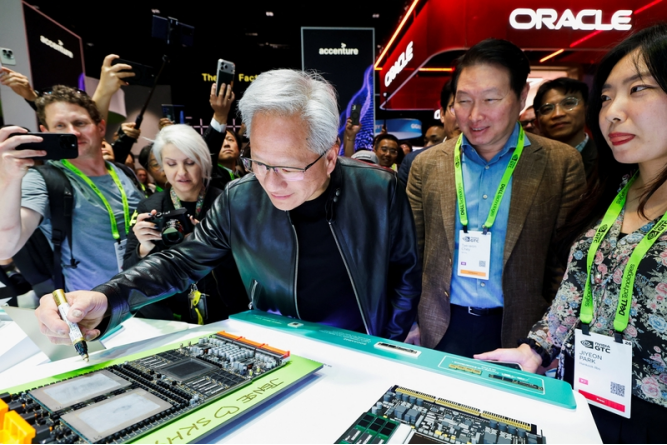
3月26日最新议程发布!从生态建设到应用落地:Chiplet与先进封装产业协同论坛即将开启!
半导体芯闻· 2026-03-25 10:49
Core Viewpoint - The article discusses the collaboration and integration within the advanced packaging industry, emphasizing the importance of ecosystem development and the role of chiplet technology in driving innovation and opportunities in the semiconductor sector [1][2]. Group 1: Event Overview - The "Chiplet and Advanced Packaging Industry Collaboration Forum" is scheduled for March 26, 2023, at the Kerry Hotel in Shanghai, focusing on the current status and trends in advanced packaging and AI chip-related industries [3][5]. - The agenda includes various expert presentations on topics such as the establishment of innovation centers in the Greater Bay Area, heterogeneous integration technologies, and advancements in key equipment and core technologies for advanced packaging [5][6]. Group 2: Key Presentations - Notable speakers include Li Shaoping from China Resources Microelectronics, who will discuss the current state and trends of advanced packaging and AI chips [5]. - Zhang Zhengbin from Inspur Cloud will address global ecological opportunities for the semiconductor supply chain [6]. - The forum will also feature discussions on EDA solutions for advanced packaging based on typical applications, presented by Zhao Yi, founder and CEO of Silicon Chip Technology [6]. Group 3: Industry Insights - The article highlights the significance of heterogeneous integration technology in enabling MEMS stacking and 3D IC innovation, as discussed by Jin Wenchao from China Resources Microelectronics [6]. - The development path of advanced packaging in large-scale AI chip domains will be explored by Xie Jianyou, Chairman and General Manager of Qili Semiconductor [6]. - A roundtable dialogue will focus on the unprecedented collaboration driven by advanced packaging, transitioning from deepening division of labor to collaborative upgrades [6]. Group 4: Company Profile - Zhuhai Silicon Chip Technology Co., Ltd. specializes in the research and industrialization of EDA software design for next-generation 2.5D/3D stacked chips, aiming to enhance performance, integration, reliability, and energy efficiency in chip systems [11]. - The company seeks to bridge the gap in domestic chip EDA software and support the upgrade of the domestic chip design industry, promoting the development of various chip and terminal application fields, including RISC-V, AI, GPU, CPU, and NPU [11].

SemiAnalysis:GTC 2026深度解读,推理王国全面扩张
傅里叶的猫· 2026-03-24 08:33
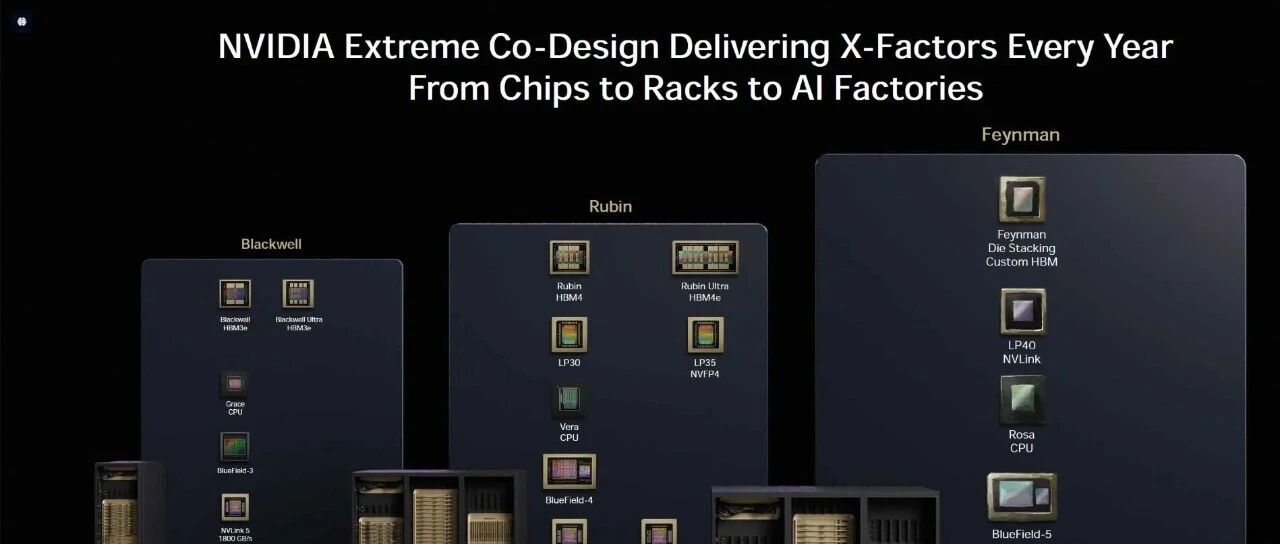
Core Insights - The article provides a detailed review of GTC 2026, focusing on Groq's LPU architecture, supply chain considerations, and the latest innovations in AI processing technology [1][3]. Groq LPU Architecture - Groq's core product, the LPU, is designed specifically for language model inference, emphasizing ultra-low latency compared to NVIDIA's GPUs, which focus on high throughput [3]. - The LPU architecture features distinct functional "slices" for various operations, enhancing efficiency in processing [3][4]. - A key innovation is the use of single-level SRAM instead of traditional multi-level caches, which allows for more predictable hardware execution and reduced latency [4]. Development History of LPU - The first-generation LPU utilized GlobalFoundries' 14nm process, achieving 750 TFLOPs of INT8 performance with 230MB of SRAM [5]. - The second generation faced technical issues with Samsung's SF4X process, preventing mass production [5][6]. - The third generation, LP30, also uses Samsung's SF4 process, doubling SRAM to 500MB and achieving 1.2 PFLOPs FP8 performance [6]. SRAM Advantages and Disadvantages - SRAM provides extremely low latency and high bandwidth but comes with high costs and low density, limiting total throughput due to capacity constraints [9][10]. Attention-FFN Separation Technology - The article discusses the innovative Attention-FFN separation technology (AFD), which optimally allocates tasks between GPUs and LPUs based on their performance characteristics [15][17]. - AFD allows GPUs to handle attention operations while LPUs manage FFN tasks, improving overall efficiency and throughput [18][19]. LPX Rack System Design - The LPX rack system features 32 LPU compute trays and is designed for high-density interconnectivity, with significant improvements over previous models [26][28]. - Each compute tray includes multiple components, including LPU, FPGA, and CPU, facilitating efficient data processing and communication [32][33]. Kyber Rack Updates - The Kyber rack has undergone significant updates, doubling the density of compute blades while halving the number of chassis, optimizing system design [36][37]. CPO Roadmap - NVIDIA has introduced a roadmap for CPO (Co-Packaged Optics), focusing on larger-scale computing systems rather than just within the Rubin Ultra Kyber rack [45][46]. Supply Chain Insights - The article highlights the strategic partnerships and supply chain dynamics, including the role of AlphaWave in providing SerDes IP and the challenges faced by suppliers [64][65]. Ecosystem Strategy - NVIDIA's strategy emphasizes a comprehensive ecosystem that integrates hardware, software, and networking solutions, positioning itself as a platform company rather than just a chip manufacturer [67][68].
华为昇腾950PR芯片发布,英伟达中国AI市场份额归零
Xin Lang Cai Jing· 2026-03-23 12:32
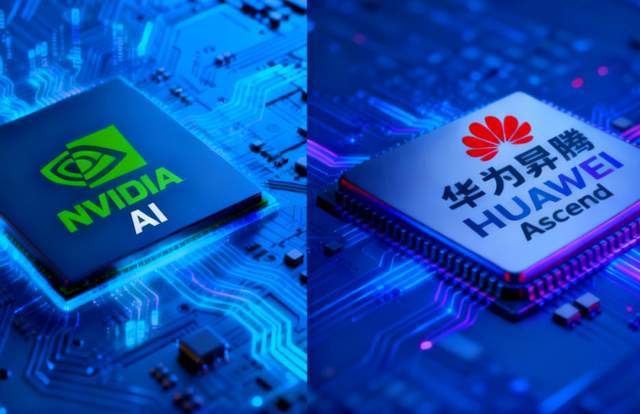
Core Viewpoint - The market share of Nvidia in China's AI chip market has dramatically dropped from 95% to 0% due to U.S. export restrictions and a lack of orders from Chinese manufacturers [1][3]. Group 1: Market Dynamics - U.S. restrictions on Nvidia's AI chip sales to China have tightened, although some bans have been lifted recently, such as for the H20 and H200 models [1]. - Despite the lifting of some restrictions, Chinese manufacturers have not placed orders for Nvidia's chips, leading to a complete loss of market share for the company in China [3]. Group 2: Competitive Landscape - Huawei has introduced the Atlas 350 AI accelerator card, which utilizes the new Ascend 950PR processor, marking a significant advancement in performance compared to previous chips [5]. - The Atlas 350 boasts a FP4 precision computing power of 1.56P, a bandwidth of 1.4TB/s, and a power consumption of 600W, achieving 2.87 times the single-card computing power of Nvidia's H20 [7]. Group 3: Implications for Nvidia - The introduction of the Atlas 350 and the support from numerous partners indicates Huawei's serious intent to challenge Nvidia's dominance in the AI chip market [7]. - Nvidia may face significant challenges in regaining its market share in China, which represents a $50 billion market, especially with Huawei's strong influence and competitive product offerings [8].
一台吹风机,吹开全球最大英伟达芯片走私案
Xin Lang Cai Jing· 2026-03-20 17:24
Core Viewpoint - The arrest of Wally Liaw, co-founder of Supermicro, highlights a significant case of smuggling involving $2.5 billion worth of NVIDIA AI chip servers to China, marking it as the largest AI chip smuggling case in history [3][11]. Group 1: Arrest and Charges - Wally Liaw was arrested in California and is charged with smuggling NVIDIA AI chip servers valued at $2.5 billion through a shell company in Southeast Asia to China, facing a maximum sentence of 20 years [3][11]. - The case is characterized by elaborate schemes, including the creation of thousands of fake servers to deceive compliance teams and auditors [4][6][7]. Group 2: Smuggling Operations - Liaw orchestrated a smuggling operation that involved confirming demand from Chinese buyers, applying for chip quotas from NVIDIA under the guise of self-use, and then shipping the servers to Southeast Asia before sending them to China [12][14]. - The operation saw a peak in activity just before new U.S. export regulations were set to take effect, with $510 million worth of servers shipped in a three-week period [15][18]. Group 3: Company Response and Compliance Issues - Following the news of Liaw's arrest, Supermicro's stock dropped by 13%, and the company stated that Liaw has been suspended while another involved individual was terminated [8][9]. - Supermicro claims to have a robust compliance system, although this is not the first time the company's compliance has been called into question [9][10]. Group 4: Industry Context and Trends - The smuggling case reflects a broader trend in the semiconductor industry, where smuggling operations have evolved from small-scale individual efforts to sophisticated schemes involving corporate executives [19][20][26]. - The demand for NVIDIA chips in China remains high, with over 60% of leading AI models relying on NVIDIA hardware, creating a strong incentive for smuggling despite regulatory risks [27][28].
“反英伟达联盟”正在变强,4.4万亿美元芯片帝国遭遇“四面围猎”
3 6 Ke· 2026-03-20 05:22
Core Insights - Nvidia has dominated the AI chip market for the past decade, achieving $147.8 billion in chip sales from February to October 2025, a 62% increase from $91 billion the previous year [3] - The company became the first in the world to surpass a market capitalization of $4 trillion and briefly approached $5 trillion [3] - However, Nvidia faces increasing competition from various players, including custom chip manufacturers, large cloud service providers, and traditional chip rivals [3][4] Group 1: Major Competitors - Broadcom leads the custom chip (ASIC) market, with a 106% year-over-year increase in AI revenue to $8.4 billion, and is expected to control 60% of the custom AI chip market by next year [3][11] - Google has developed its seventh-generation TPU, Ironwood, which has a peak performance of 4.6 petaFLOPS and is being rented out to other companies, indicating a shift from being a customer to a competitor [5][6] - Amazon's AWS has introduced Trainium chips for model training, with Anthropic using 500,000 of these chips, and plans for a data center cluster with over a million chips [6][9] Group 2: Traditional Chip Rivals - AMD's MI300X accelerator has been deployed on Microsoft Azure for ChatGPT inference, with significant orders from OpenAI and Oracle, and is expected to deliver around 327,000 units in 2024 [14] - Intel's Gaudi 3 accelerator is priced significantly lower than Nvidia's H100, with claims of being 1.5 times faster in certain training tasks and having a lower power consumption [19][20] Group 3: Emerging Startups - Startups like Groq and Cerebras are gaining traction, with Groq focusing on inference chips and Cerebras signing a $10 billion deal with OpenAI for its CS-3 chip, which claims to be 20 times faster than Nvidia's offerings [20][22] - The shift from training to inference in AI computing is expected to dominate future demand, with inference tasks being more cost-sensitive and latency-sensitive [20] Group 4: Market Dynamics and Challenges - The CPU market is experiencing a resurgence, with Nvidia acknowledging that CPUs are becoming a bottleneck in AI workflows, leading to increased demand and supply constraints [25][26] - Nvidia's B200 GPU has a power consumption of 1200 watts, raising concerns about data center power supply capabilities, as 72% of surveyed data center executives see power supply as a significant challenge [29][32] - The competition is expected to evolve into a dual-market structure, with Nvidia maintaining its lead in training and high-performance computing while other companies capture market share in inference and customized applications [35]

外媒:德国大众考虑弃用英伟达转而押注中国 AI 车用芯片生态
Xin Lang Cai Jing· 2026-03-19 12:34
Group 1 - Volkswagen is planning to shift towards local Chinese chip suppliers to reduce reliance on Nvidia amid fierce competition in the Chinese electric vehicle market [2] - Thomas Ulbrich, Volkswagen's Chief Technology Officer, stated that with advancements in local Chinese chip technology, there is no reason to continue depending on Nvidia [2] - Although there is no direct evidence that Volkswagen has fully transitioned to Chinese chip manufacturers, the strategy aligns with the progress in Chinese chip technology, potentially providing cost and speed advantages in the EV competition [2] Group 2 - Global demand for AI chips remains strong for Nvidia, but automakers like Volkswagen may prioritize local suppliers to meet the needs of the Chinese market [2] - Other industry trends indicate a diversification of demand, with AMD exploring Samsung's foundry for advanced chip production, and Chinese companies like Horizon planning to develop high-performance driving chips for upcoming auto exhibitions [2] - These developments support Volkswagen's strategy to leverage China's increasingly mature chip supply chain to close the competitive gap with local electric vehicle manufacturers while avoiding Nvidia's high prices and export restrictions [2]

“反英伟达联盟”变强,4.4万亿美元帝国遭遇“四面围猎”
3 6 Ke· 2026-03-19 07:06
Core Insights - Nvidia has dominated the AI chip market for the past decade, achieving $147.8 billion in chip sales from February to October 2025, a 62% increase from $91 billion the previous year [4] - However, Nvidia faces increasing competition from various players, including custom chip manufacturers, large cloud service providers, and traditional chip rivals [5][16] Group 1: Customer Shift to In-House Chip Development - Major clients like Google and Amazon are moving towards developing their own chips, with Google renting out its TPU and Amazon launching Trainium chips for model training [7][8] - Google's seventh-generation TPU, Ironwood, has a peak performance of 4.6 petaFLOPS, slightly surpassing Nvidia's B200 while consuming less power [7] - Amazon's AWS is utilizing Trainium chips for model training, with plans to build a data center cluster with over a million chips [8][11] Group 2: Custom Chip Assault - Broadcom leads the custom chip (ASIC) market, with a 50% share, and has significant contracts with Google, Meta, and OpenAI for custom AI accelerators [13][15] - Broadcom's AI revenue reached $8.4 billion last quarter, a 106% year-over-year increase, and is expected to control 60% of the custom AI chip market next year [5][15] - Meta has announced a roadmap for its MTIA chips, targeting AI inference, with Broadcom assisting in their development [13] Group 3: Traditional Competitors' Counterattack - AMD's MI300X accelerator has been deployed on Microsoft Azure for ChatGPT inference, with significant orders from OpenAI and Oracle [16] - Intel's Gaudi 3 accelerator is priced lower than Nvidia's H100 and offers competitive performance, with a focus on low power consumption [20][21] Group 4: Emergence of Startups - Startups like Groq and Cerebras are gaining traction, with Groq focusing on inference chips and Cerebras recently signing a $10 billion deal with OpenAI [22][24] - Cerebras claims its CS-3 chip is 20 times faster than Nvidia's H series at a fraction of the cost [24] Group 5: Underlying Threats - The resurgence of CPUs poses a challenge to Nvidia, as AI agents require orchestration tasks that GPUs cannot efficiently handle [27] - Nvidia's B200 GPU has a power consumption of 1200 watts, raising concerns about data center power supply capabilities [28][31] - A Deloitte survey indicates that 72% of data center executives view power supply as a significant challenge for AI infrastructure [32] Group 6: The CUDA Advantage - Nvidia's CUDA platform remains a strong competitive advantage, but competitors like AMD are closing the performance gap with their ROCm software stack [36][37] - The market is shifting towards inference, where specialized chips have inherent advantages, indicating a potential change in market dynamics [38]