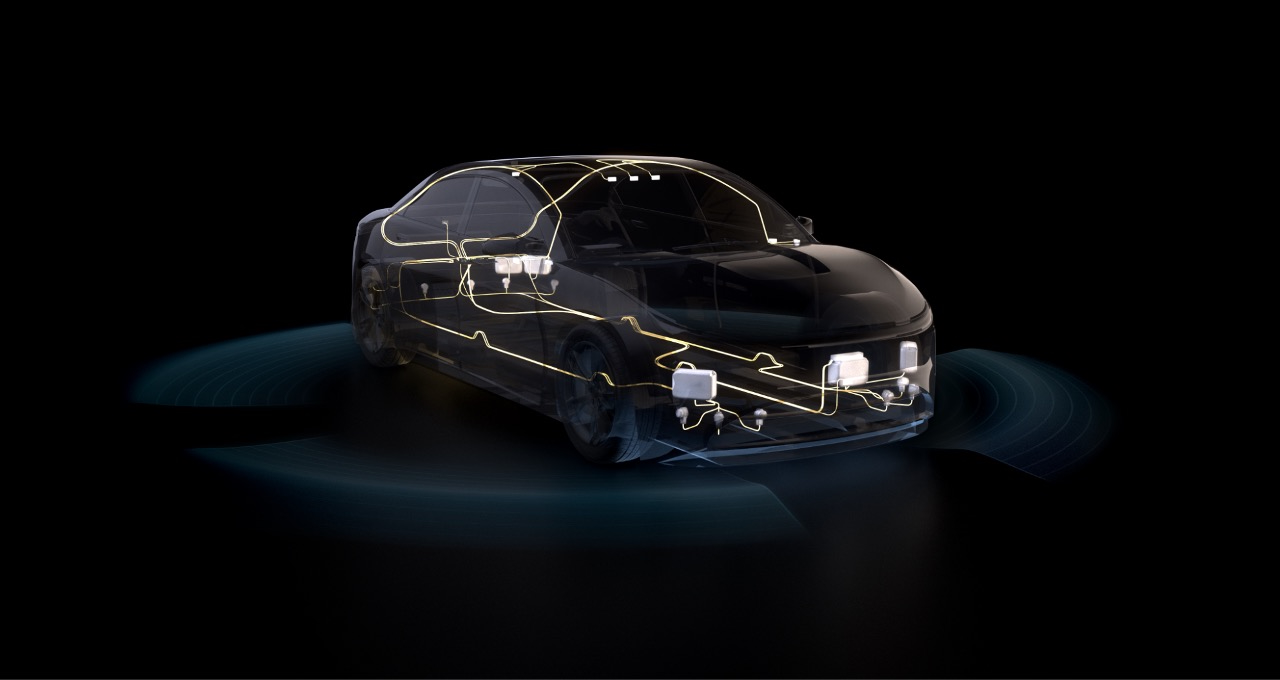
NVIDIA DRIVE Hyperion

Search documents
Nissan Teams Up With Wayve and Uber to Develop Robotaxis
ZACKS· 2026-03-17 13:45
Core Insights - Nissan Motor Co., Ltd., Wayve, and Uber Technologies, Inc. have signed a memorandum of understanding to jointly develop robotaxis and initiate efforts towards launching autonomous ride services, with a pilot rollout planned in Tokyo by late 2026 [1][7] Group 1: Vehicle Development - Nissan is designing vehicles with fully redundant systems suitable for robotaxi use, aiming to accelerate the creation of a scalable autonomous vehicle platform through collaboration with Wayve [2] - The vehicle utilizes NVIDIA Corporation's DRIVE Hyperion reference architecture, supporting Level 4 autonomy with dual NVIDIA DRIVE AGX Thor processors for real-time advanced AI model processing while ensuring automotive safety [3] Group 2: Integration and Operation - The initiative focuses on integrating Wayve's end-to-end autonomous driving system into Nissan vehicles, ensuring compatibility with Uber's ride-hailing network to match passengers with robotaxis [4] - In the initial phase, vehicles will operate on Uber's platform with a trained safety operator onboard, allowing passengers to experience robotaxi services during their daily travel [4][5] Group 3: Technology and Market Adaptation - The Wayve AI Driver is designed to learn from real-world driving data and adapt to new environments without relying on high-definition maps, facilitating expansion into global markets and operation in complex urban settings like Tokyo [6][7]


港股异动丨汽车股走强,吉利汽车涨超5%,英伟达与比亚迪吉利等车企合作打造L4级自动驾驶汽车
Ge Long Hui A P P· 2026-03-17 04:07
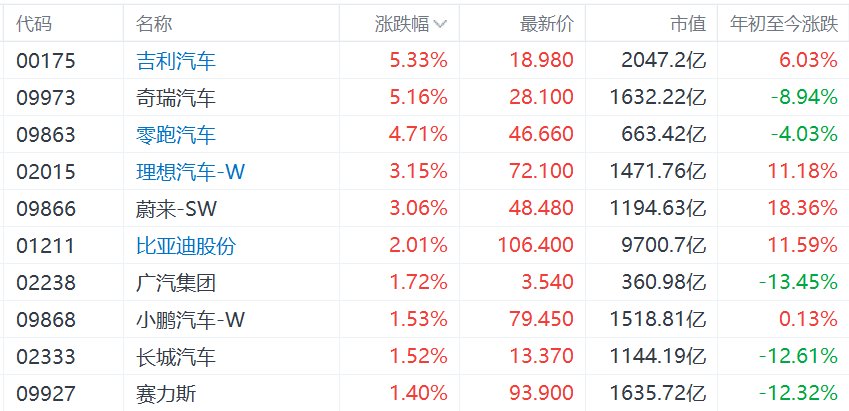
Group 1 - The Hong Kong stock market saw a strong performance in the automotive sector, with companies like Geely Auto and Chery Auto rising over 5%, and Li Auto and NIO increasing by over 3% [1] - NVIDIA announced collaborations with several automakers, including BYD, Geely, Hyundai, and Nissan, to develop L4 autonomous vehicles using the NVIDIA DRIVE Hyperion platform [1] - BYD, Geely, and Nissan are working on next-generation L4 passenger vehicle projects that will feature advanced autonomous capabilities for complex urban road scenarios [1] Group 2 - The stock performance of key automotive companies includes: - Geely Auto: up 5.33% to HKD 18.980, market cap of HKD 204.72 billion, year-to-date increase of 6.03% [2] - Chery Auto: up 5.16% to HKD 28.100, market cap of HKD 163.22 billion, year-to-date decrease of 8.94% [2] - Li Auto: up 3.15% to HKD 72.100, market cap of HKD 147.18 billion, year-to-date increase of 11.18% [2] - NIO: up 3.06% to HKD 48.480, market cap of HKD 119.46 billion, year-to-date increase of 18.36% [2] - BYD: up 2.01% to HKD 106.400, market cap of HKD 970.07 billion, year-to-date increase of 11.59% [2]


金融界财经早餐:国务院总理李强部署六大经济方向;三部门发声,氢能迎真金白银利好;北交所IPO创单月新高;房地产融资迎新模式;阿里成立Token Hub事业群、英伟达宣布AI芯片万亿目标(3月17日)
Jin Rong Jie· 2026-03-17 01:03
Economic Policy and Industry Development - The State Council, led by Premier Li Qiang, emphasized the importance of advancing the national unified market, enhancing service industry capacity, accelerating the development of intelligent manufacturing, and investing more in infrastructure and public services [1] - The Ministry of Industry and Information Technology (MIIT) highlighted the need to cultivate emerging industries such as integrated circuits, aerospace, and biomedicine, and to promote the digital transformation of manufacturing [2] - A joint notice from MIIT, the Ministry of Finance, and the National Development and Reform Commission announced plans for hydrogen energy application trials, aiming for a hydrogen price below 25 yuan per kilogram by 2030 [2] Capital Market Developments - The Financial Regulatory Bureau released interim measures for the regulatory rating of wealth management companies, assessing them on governance, asset management capabilities, risk management, and investor protection [4] - Ant Group's public fund sales reached 1,017.8 billion yuan, marking a 23.68% increase [4] - The Beijing Stock Exchange has seen a record number of IPOs in March, with 12 companies scheduled for meetings, indicating improved review efficiency [4] Industry Highlights - The establishment of a national satellite internet standardization committee was approved, reflecting the growing applications of satellite internet in various sectors [8] - The Financial Regulatory Bureau emphasized the need to mitigate risks in the real estate sector and support financing platforms to prevent defaults [8] - Alibaba launched a new division focused on AI, aiming to enhance its AI strategy and develop a B-end AI native work platform [8] Company News - Gao Ling Information is planning to acquire control of Kai Rui Xing Tong, with the transaction expected to be a significant asset restructuring [11] - Wan Hua Chemical aims for a revenue of 203.235 billion yuan in 2025, representing an 11.62% year-on-year growth [11] - Watson Bio is considering issuing A-shares, which may lead to a change in control [11] - ST Keli Da and its chairman are under investigation for alleged information disclosure violations, but operations remain normal [12] - Nvidia announced significant advancements in AI technology and partnerships for autonomous driving projects with major automotive companies [13][14]
WeRide Showcases Robotaxi GXR Powered by NVIDIA DRIVE Hyperion Platform at NVIDIA GTC 2026, Accelerating Southeast Asia Expansion and Beyond
Globenewswire· 2026-03-17 01:00
Core Viewpoint - WeRide is expanding its Robotaxi GXR model in Southeast Asia, leveraging a partnership with Grab to enhance its market presence and operational capabilities [1][4][7]. Group 1: Product and Technology - The Robotaxi GXR is designed for complex urban environments and utilizes the NVIDIA DRIVE Hyperion platform, which integrates advanced computing and safety systems, reducing autonomous driving suite costs by 50% and total cost of ownership by 84% [2][4]. - The vehicle is manufactured by Geely's Zhejiang Farizon New Energy Commercial Vehicle Group, with plans to deliver 2,000 upgraded models by 2026, potentially reducing vehicle costs by an additional 15% as fleet size increases [9][10]. Group 2: Market Strategy and Operations - WeRide and Grab have initiated autonomous vehicle trial operations in Singapore, with public service expected to commence on April 1, 2026, marking a significant step in their collaboration [3][5]. - The company aims to have over 2,600 active Robotaxis globally by 2026 and tens of thousands by 2030, indicating a strong growth trajectory in the autonomous driving sector [7][8]. Group 3: Industry Position and Recognition - WeRide is recognized as a global leader in autonomous driving, having tested or operated vehicles in over 40 cities across 11 countries, and is the first publicly traded Robotaxi company [12]. - The company has received autonomous driving permits in eight markets, showcasing its regulatory compliance and operational readiness [12].


黄仁勋抢吃龙虾:英伟达新核弹10倍算力提升,OpenClaw自由了
3 6 Ke· 2026-03-17 00:16
Core Insights - NVIDIA's GTC conference highlighted a significant transformation in computing, likening it to the personal computer and internet revolutions, with a projected market growth to $1 trillion between 2025 and 2027, primarily driven by large-scale cloud computing [3][5]. Group 1: AI and Computing Transformation - NVIDIA's CEO Jensen Huang emphasized that AI has reached an "inference inflection point," marking a shift from training to reasoning and generation, indicating a surge in demand for computational power [5][6]. - The new Vera Rubin architecture, specifically the NVL72 system, is designed to optimize AI inference tasks, achieving a 50-fold increase in token performance per watt compared to previous architectures [6][13]. - The data center's role is evolving from mere file storage to becoming factories for generating tokens, with inference workloads becoming the new commodity [10][12]. Group 2: Vera Rubin Architecture - The Vera Rubin NVL72 system integrates 72 Rubin GPUs and 36 Vera CPUs, achieving a tenfold increase in inference throughput while reducing the cost per token to one-tenth of previous systems [13][14]. - The architecture is tailored for large-scale AI factories, allowing seamless expansion with Quantum-X800 InfiniBand and Spectrum-X Ethernet, enhancing GPU cluster utilization and reducing overall ownership costs [15][20]. - The upcoming Vera Rubin Ultra NVL576 will connect multiple NVL racks, enabling developers to scale up to 576 GPUs, showcasing NVIDIA's commitment to high-performance computing [16][18]. Group 3: Language Processing Unit (LPU) - The introduction of the LPU, developed in collaboration with Groq, aims to enhance low-latency inference and token decoding efficiency, addressing challenges faced by traditional GPU servers [21][22]. - The Groq LPX architecture, optimized for trillion-parameter models, can potentially increase inference throughput by up to 35 times, unlocking significant revenue potential for AI service providers [21][22]. - The LPX rack features a fully liquid-cooled design and is built on the MGX infrastructure, allowing for seamless integration into the next-generation Vera Rubin AI factory [24]. Group 4: NemoClaw and OpenClaw - NVIDIA introduced NemoClaw, a secure enterprise-level platform built on OpenClaw, designed to facilitate the deployment of AI agents while ensuring data security [29][31]. - NemoClaw allows for the integration of local and cloud-based models, providing a robust framework for AI agents to operate under privacy and security constraints [33][35]. - The platform supports various coding agents and is designed to enhance the capabilities of AI agents in executing complex tasks efficiently [31][35]. Group 5: Physical AI and Robotics - NVIDIA showcased advancements in physical AI, partnering with major automotive manufacturers to implement NVIDIA DRIVE Hyperion technology for L4 autonomous vehicles [38][40]. - The company plans to launch a fully autonomous fleet powered by NVIDIA DRIVE AV software in 28 cities by 2028, indicating a significant step towards widespread adoption of AI in transportation [40]. - NVIDIA's new Isaac simulation framework and Cosmos models aim to enhance the development and deployment of next-generation intelligent robots, further solidifying its position in the physical AI landscape [38][40].
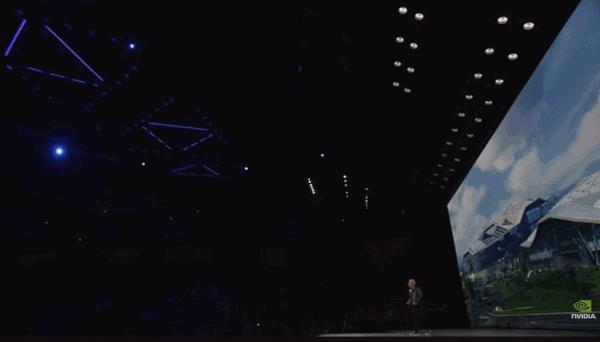
黄仁勋抢吃龙虾:英伟达新核弹10倍算力提升,OpenClaw自由了
机器之心· 2026-03-16 22:59
Core Viewpoint - The keynote by NVIDIA's CEO Jensen Huang at the GTC conference emphasizes a significant transformation in computing, likening it to the personal computer and internet revolutions, with a projected market growth to $1 trillion between 2025 and 2027, primarily driven by large-scale cloud computing [4][6]. Group 1: AI Computing and Infrastructure - NVIDIA's new Vera Rubin architecture represents a complex AI computing system, with the NVL72 model achieving a 50-fold increase in token performance per watt, significantly exceeding Moore's Law [10][18]. - The Vera Rubin NVL72 system integrates 72 Rubin GPUs and 36 Vera CPUs, achieving a tenfold increase in inference throughput while reducing token costs to one-tenth compared to previous architectures [18][19]. - The introduction of the Vera Rubin Ultra NVL576 allows for vertical scaling of up to 576 GPUs, enhancing the efficiency of large-scale AI factories [21][22]. Group 2: AI Processing Units - The new Language Processing Unit (LPU) architecture, developed in collaboration with Groq, optimizes inference pipelines and enhances performance, achieving up to 35 times higher throughput per megawatt [31][34]. - The LPX architecture is designed for trillion-parameter models, balancing power consumption, memory, and computational efficiency, with the potential for significant revenue growth for AI service providers [41][34]. Group 3: AI Deployment and Security - NVIDIA's NemoClaw platform enhances the OpenClaw framework by providing enterprise-level security, enabling safe deployment of AI agents in corporate environments [46][49]. - The integration of local and cloud models within NemoClaw allows for continuous learning and capability expansion while adhering to privacy and security protocols [53][56]. Group 4: Physical AI and Robotics - NVIDIA is expanding its AI capabilities into the physical world, partnering with major automotive manufacturers to develop L4 autonomous vehicles using NVIDIA DRIVE Hyperion technology [60][62]. - The introduction of the NVIDIA Isaac simulation framework and new open models aims to facilitate the development and deployment of next-generation intelligent robots [60].
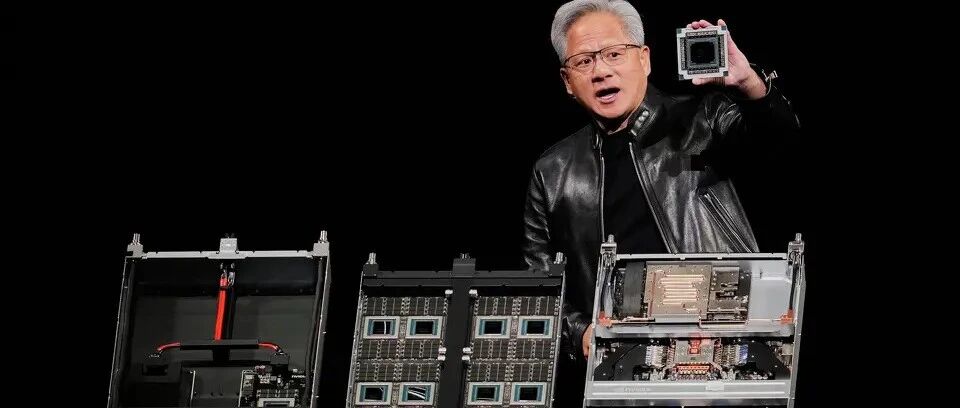
Hyundai Motor, Kia and NVIDIA Expand Strategic Partnership for Next-Generation Autonomous Driving Technology
Globenewswire· 2026-03-16 20:39
Core Viewpoint - NVIDIA and Hyundai Motor Group have expanded their collaboration to enhance next-generation autonomous driving technologies using the NVIDIA DRIVE Hyperion platform [1][11]. Group 1: Collaboration Details - The partnership combines Hyundai's software-defined vehicle capabilities and global fleet with NVIDIA's AI infrastructure and autonomous driving software to develop scalable, data-driven systems [2][15]. - Hyundai plans to integrate NVIDIA's autonomous driving technologies into select vehicles, supporting level 2 and above systems for improved safety and intelligent driving [3][5]. Group 2: Future Mobility Vision - NVIDIA emphasizes that the future of mobility will rely on AI and software, merging Hyundai's vehicle engineering expertise with NVIDIA's computing power to create safe, intelligent autonomous systems [4][5]. - The collaboration aims to develop a scalable autonomous driving stack that supports capabilities from advanced driver assistance to level 4 robotaxi services [5][15]. Group 3: Data-Driven Development - By leveraging Hyundai's large-scale fleet data and SDV development capabilities alongside NVIDIA's AI platform, the companies intend to accelerate a continuous development cycle involving real-world data collection, AI model training, and system validation [6][7]. - This approach will enhance the training of advanced AI models and facilitate ongoing improvements in autonomous driving technologies based on real-world conditions [7].
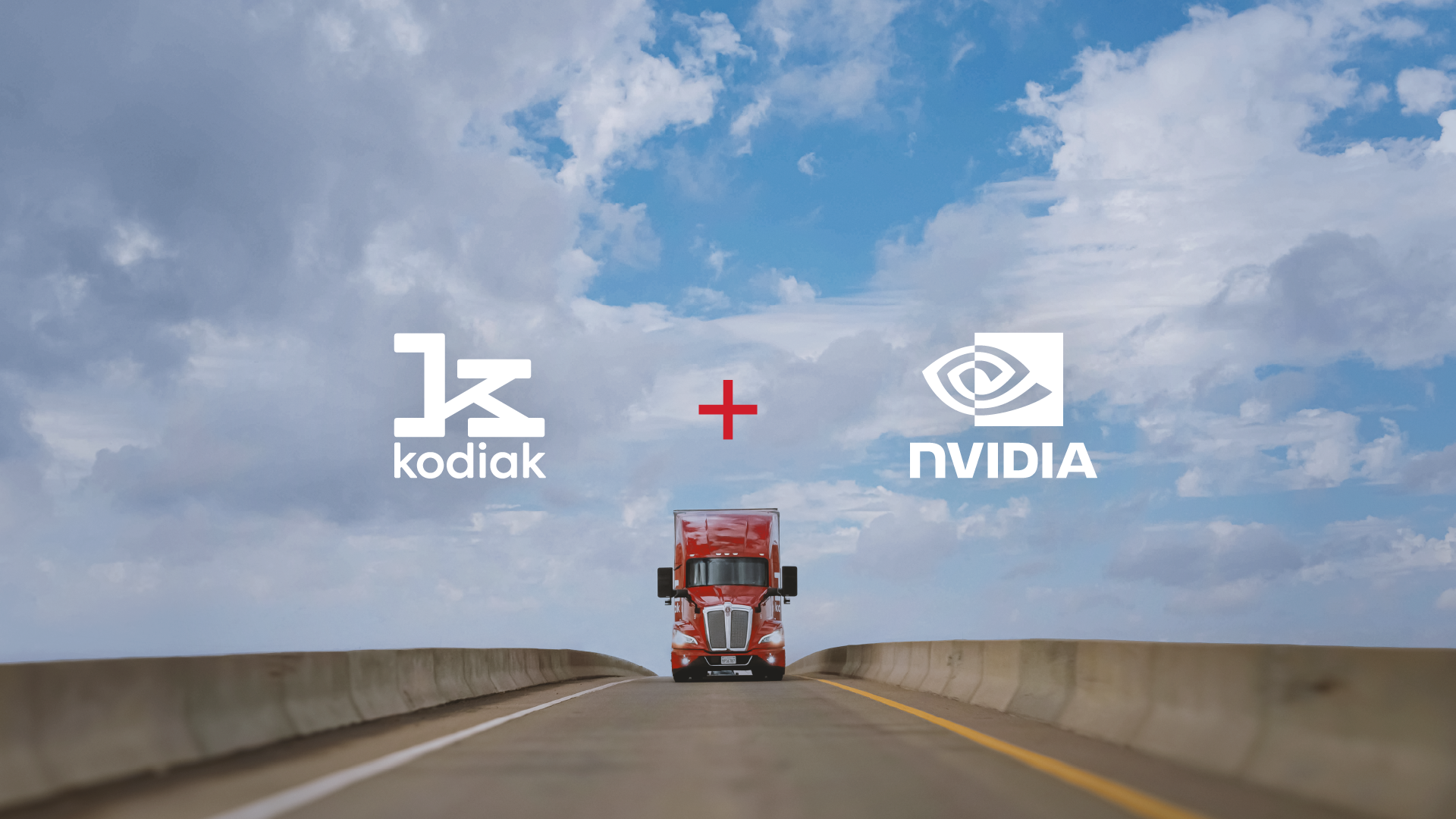
Kodiak AI Scales Autonomous Driving with NVIDIA DRIVE Hyperion
Globenewswire· 2026-03-16 20:30
Core Insights - Kodiak AI, Inc. is collaborating with NVIDIA to enhance its next-generation autonomous driving solutions using the NVIDIA DRIVE Hyperion architecture, which is designed for scalability and safety in autonomous vehicle deployment [1][2][5] Group 1: Technology and Innovation - The NVIDIA DRIVE Hyperion architecture will support Kodiak's driverless vehicles, featuring two NVIDIA DRIVE AGX Thor centralized computers that provide up to 1,000 INT8 TOPS and 2,000 FP4 TFLOPS of AI compute power, optimized for real-time interpretation of complex driving conditions [2][3] - Kodiak's virtual driver, the Kodiak Driver, integrates advanced AI software with modular, vehicle-agnostic hardware, ensuring adaptability and performance across various platforms [4] Group 2: Market Position and Achievements - Kodiak is recognized as a leader in autonomous trucking, having deployed the Kodiak Driver in 20 trucks by the end of 2025, marking it as the only company providing driverless service on customer-owned Class 8 trucks without human operators [3][4] - The company aims to address supply chain challenges through its driverless solutions, positioning itself as a trusted leader in autonomous ground transportation [5]
BYD, Geely, Isuzu and Nissan Adopt NVIDIA DRIVE Hyperion for Level 4 Vehicles
Globenewswire· 2026-03-16 20:24
Core Insights - NVIDIA's DRIVE Hyperion platform is experiencing significant adoption among global automakers and mobility providers, indicating a strong shift towards safe and scalable autonomous vehicle development [1][21] - The platform's standardization allows partners to accelerate validation cycles and streamline deployment strategies, enhancing global scaling of autonomous fleets [2][22] Group 1: Partnerships and Collaborations - Major automakers such as BYD, Geely, Isuzu, and Nissan are developing next-generation Level 4 autonomous vehicle programs using the NVIDIA DRIVE Hyperion platform [3][21] - Isuzu and TIER IV are collaborating on Level 4 autonomous bus development utilizing the NVIDIA DRIVE AGX Thor system-on-a-chip [4] - Uber is expanding its partnership with NVIDIA to create a fleet of autonomous vehicles powered by NVIDIA DRIVE Hyperion across 28 cities by 2028, starting with Los Angeles and San Francisco in 2027 [5][6] Group 2: Technological Advancements - NVIDIA Halos OS provides a unified safety architecture for AI-driven vehicles, establishing a production-ready safety foundation for Level 4 autonomy [8][22] - The introduction of NVIDIA Alpamayo 1.5 enhances the open portfolio of AI models for building safe, reasoning-based autonomous vehicles, allowing for more effective learning from complex scenarios [11][14] - NVIDIA Omniverse NuRec technology enables high-fidelity simulation for testing reasoning-based autonomous vehicles, facilitating the development of robust AV systems [16][18] Group 3: Industry Momentum - Other mobility leaders like Bolt, Grab, and Lyft are also leveraging NVIDIA DRIVE Hyperion to advance their autonomous mobility initiatives, reflecting broader industry momentum towards software-defined robotaxi fleets [7][22] - The collaboration with various companies in the NVIDIA Halos AI Systems Inspection Lab aims to continuously validate and support the autonomous vehicle safety ecosystem [10]
Mercedes, NVIDIA and Uber Team Up to Build S-Class Robotaxis
ZACKS· 2026-01-30 16:06
Core Insights - Mercedes-Benz Group AG, NVIDIA Corporation, and Uber Technologies are collaborating to launch robotaxi services in major cities, utilizing the Mercedes S-Class sedan as the foundation for their global autonomous-driving platform [1][7] Group 1: Technology and Integration - The next-generation S-Class will feature Mercedes-Benz's MB.OS, integrating NVIDIA DRIVE Hyperion hardware and full-stack NVIDIA DRIVE AV Level 4 software, focusing on safety-first autonomy through NVIDIA's Halos system [2] - NVIDIA DRIVE AV equips the S-Class with a comprehensive automated-driving system capable of handling rare and complex driving scenarios within a safety-centric architecture, validated through high-fidelity simulations [4] - The technology is built on NVIDIA's AI foundation, enabling real-time analysis of complex environments and the selection of the safest driving actions [5] Group 2: Market Strategy and Collaboration - The S-Class aims to provide a premium, chauffeur-style autonomous experience, with plans to offer these vehicles through Uber's mobility network, showcasing collaboration between established automakers and AI leaders [3] - The companies have not disclosed a timeline for the robotaxi service launch, although Mercedes-Benz has previously partnered with Bosch and Momenta on autonomous-driving initiatives [6]