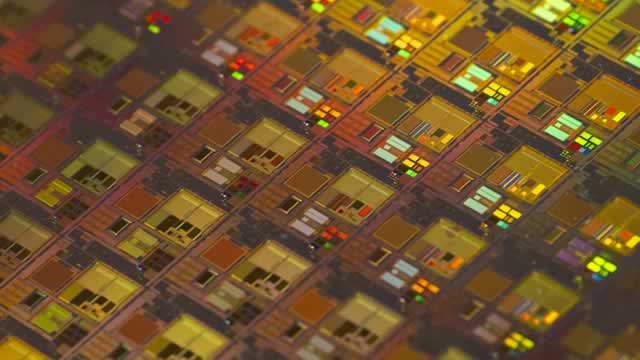
Nvidia H200 chip

Search documents
Wall Street Breakfast Podcast: ASML Trims The Ranks
Seeking Alpha· 2026-01-28 11:36
Company Updates - ASML Holding plans to cut approximately 1,700 jobs, primarily in technology and IT, representing about 4% of its workforce [5][6] - The job reductions will mainly occur in the Netherlands, with some in the U.S., affecting management and leadership roles [6] - ASML reported record Q4 bookings of €13.2 billion, significantly exceeding the average analyst estimate of €6.85 billion, and total net sales for 2025 reached €32.7 billion, a 16% increase from 2024 [7] - ASML anticipates total net sales for 2026 to be between €34 billion and €39 billion, higher than previous guidance [7] Industry Developments - C3.ai's stock rose by 16% following reports of a potential merger with Automation Anywhere, which would involve Automation Anywhere acquiring C3.ai and going public [8] - C3.ai has faced a nearly 62% decline in share price over the past year due to worsening financial performance and uncertainty regarding its strategy and leadership [8] - Amazon is shifting its grocery strategy by closing Amazon Fresh and Amazon Go stores to focus on expanding its Whole Foods Market brand, with plans to open over 100 new stores and enhance same-day delivery services by 2026 [10][11]




Trump’s Market Mania: A Rollercoaster of Tweets, Tariffs, and Greenland Deals
Stock Market News· 2026-01-24 06:00
Core Insights - The stock market has experienced significant volatility due to rapid policy changes and tariff threats from President Trump, particularly regarding trade with European nations and the acquisition of Greenland [2][12][14] Market Reactions - On January 17, President Trump threatened a 10% tariff on several European countries, which led to a market decline, erasing nearly all gains for 2026 in a single day [2] - The Dow Jones Industrial Average dropped 871 points on January 21, reflecting investor anxiety over geopolitical uncertainty [3] - Following Trump's backtrack on tariff threats on January 22, major indices rebounded, with the S&P 500 rising 0.54%, Nasdaq gaining 0.91%, and Dow increasing 0.63% [3][12] Individual Stock Performance - NVIDIA (NVDA) closed at $187.67 on January 23, despite facing a new 25% semiconductor tariff, indicating resilience amid market fluctuations [13] - Tesla (TSLA) rebounded 4.15% on January 22, closing at $445.31, while Intel (INTC) saw a 17% drop due to a soft outlook [13] - Safe-haven assets like gold and silver reached all-time highs, with gold at $4,980 per ounce and silver at $102.60 per ounce, reflecting ongoing investor nervousness [13] Policy Implications - Trump's administration has introduced a 25% tariff on certain semiconductors critical to AI, while simultaneously announcing no tariffs on processed critical minerals, showcasing a contradictory trade approach [6][8] - The EU suspended its trade agreement with the U.S. in response to initial tariff threats but welcomed the subsequent easing of tensions, indicating a complex diplomatic landscape [5] Investor Sentiment - Analysts suggest that while volatility is expected, the case for a continued bull market remains strong due to robust consumer spending and declining interest rates [10] - Long-term investors are advised to remain steady and not react impulsively to short-term market noise driven by Trump's announcements [11]


Nvidia H200 chip parts suppliers halt output after China blocks shipments, FT reports
Yahoo Finance· 2026-01-17 01:41
Core Viewpoint - Nvidia's H200 AI processors face shipment blocks to China due to directives from Chinese customs officials, impacting production and anticipated orders from Chinese clients [1][2][4] Group 1: Shipment and Production Impact - Suppliers of parts for Nvidia's H200 have paused production following the blockage of shipments by Chinese customs [1] - Nvidia had anticipated over 1 million orders from Chinese clients, with suppliers prepared for shipping as early as March [2] - Chinese customs authorities have informed agents that Nvidia's H200 chips are not allowed to enter the country [2] Group 2: Government Directives and Industry Response - Chinese government officials have warned domestic tech firms against purchasing the H200 chips unless absolutely necessary [2] - Authorities have not provided reasons for the shipment block and it remains unclear if this is a formal ban or a temporary measure [3] Group 3: Geopolitical Context - The H200 chip is a significant point of contention in U.S.-China relations, with strong demand from Chinese firms [4] - Uncertainty exists regarding whether Beijing intends to ban the chip to support domestic chip companies or if it is using the situation as a bargaining tactic in negotiations with the U.S. [4]
Trump administration clears way for Nvidia H200 chip sales to China with a 25% surcharge
CNBC· 2026-01-14 21:38
Core Viewpoint - The U.S. government will approve sales of Nvidia's H200 chip to China, imposing a 25% tax on these sales, as stated by President Trump following the release of new regulations [1][3]. Group 1: Nvidia's H200 Chip - The H200 chip is part of Nvidia's Hopper generation and is available in the U.S. and other markets, unlike its predecessor, the H20, which was specifically designed for China [2]. - The performance of the H200 chip has been surpassed by Nvidia's newer Blackwell and Rubin AI chips currently in production [2]. Group 2: Market Potential and Financial Implications - The Chinese market for Nvidia's chips could potentially be worth $50 billion annually, indicating significant revenue opportunities [3]. - The U.S. will receive 25% of the sales value from the H200 chip exports to China, which suggests a substantial revenue stream for the U.S. government [3]. Group 3: Regulatory Requirements - The Department of Commerce has set requirements for exporters, including the need to certify sufficient supply of H200 chips in the U.S. and ensure that these chips do not utilize global foundry capacity needed for more advanced AI chips destined for the U.S. [4].
US gives green light to Nvidia H200 chip exports to China
Reuters· 2026-01-13 21:28
Core Viewpoint - The Trump administration has approved sales of Nvidia's H200 AI chips to China, which is expected to boost shipments significantly [1] Group 1: Regulatory Changes - The approval allows for the export of Nvidia's second most powerful AI chips, indicating a shift in U.S. policy towards technology sales to China [1] - This regulatory change is likely to facilitate the resumption of shipments that had been previously restricted [1] Group 2: Market Impact - The decision is anticipated to enhance Nvidia's market position and revenue potential in the AI sector, particularly in relation to Chinese demand [1] - Increased shipments of the H200 chips could lead to a competitive advantage for Nvidia in the rapidly growing AI market [1]

Nvidia’s $4 trillion stock rally faces more threats than ever
Yahoo Finance· 2026-01-06 14:33
Core Viewpoint - Nvidia is poised for significant growth with the upcoming release of its next-generation chips, Rubin, and remains a strong investment opportunity despite increasing competition and market fluctuations [1][4]. Company Performance - Nvidia is projected to achieve a 57% profit growth alongside a 53% increase in sales for the fiscal year ending January 2027, contrasting sharply with Apple's expected gains of around 10% [2]. - The stock has experienced a notable decline, losing approximately $460 billion in market value recently, yet it has still gained nearly 1,200% over the past three years [5][6]. Market Position - Nvidia commands over 90% of the AI accelerator market, but faces rising competition from companies like Advanced Micro Devices Inc. and major clients such as Alphabet and Amazon, who are developing their own chips [7][8]. - Despite the competition, demand for Nvidia's chips remains robust, with significant capital expenditures projected from major tech companies, totaling over $400 billion in 2026 [13]. Profit Margins and Valuation - Nvidia's gross margin is projected to be 71.2% for fiscal 2026, down from the mid-70s in previous years, but expected to recover to around 75% in fiscal 2027 [15]. - The stock is currently trading at 25 times expected profits over the next 12 months, which is a discount compared to many of its peers in the tech sector [16][17].
Nvidia stock gains on Trump chip export review, sparking rally in chipmakers
Yahoo Finance· 2025-12-19 16:04
Core Viewpoint - Nvidia's stock experienced a significant increase following reports of the Trump administration reviewing its H200 chip exports to China and the clearance of its $5 billion investment in Intel by US antitrust agencies [1][2][6] Group 1: Nvidia's Stock Movement - Nvidia stock rose by as much as 3.7% in early trading, indicating positive investor sentiment [1] - The stock is on track for a weekly gain, reflecting optimism regarding potential chip exports to China [2] Group 2: Government Review and Export Licenses - The US Commerce Department has sent license applications for Nvidia's advanced chip sales to relevant government departments, which will provide feedback within 30 days [3] - Nvidia has been advocating for the approval of its chip exports to China, which is crucial for expanding its market access [3] Group 3: Market Reactions and Broader Impact - The news of potential chip export approvals led to a rally among other chipmakers, with notable stock increases in companies like AMD (up 5.6%), Broadcom (up 2.5%), and Micron (up 6%) [6] - The Federal Trade Commission's clearance of Nvidia's investment in Intel also contributed to positive market reactions, boosting Intel's shares by 3% [6] Group 4: Challenges and Concerns - Despite the positive developments, there are concerns regarding national security and the potential risks of granting China access to advanced US chip technology [4] - Previous export bans and China's reluctance to purchase Nvidia's chips due to national security issues highlight ongoing challenges in this area [5]
Trump’s Market Magic: A Volatility Vaudeville
Stock Market News· 2025-12-13 18:00
Market Dynamics - The stock market in 2025 is heavily influenced by the unpredictable actions of former President Trump, leading to significant volatility and market reactions [1][10] - Trump's tariff announcements have historically caused immediate market disruptions, such as the 25% tariffs on goods from Mexico and Canada in February 2025, which resulted in a 600-point drop in the Dow Jones Industrial Average [2][10] Tariff Impacts - Recent tariff threats on Indian rice and Canadian fertilizer led to substantial declines in shares of companies like Kohinoor Foods, which fell nearly 10% [2] - Analysts estimate that the potential impact of these tariffs could be between $50-70 million for the affected sector [2] - The market's reaction to tariff announcements often includes initial panic followed by recovery, as seen when the Dow only lost 123 points after a significant drop [2][10] Trade Relations - A unique trade dispute involving water between the U.S. and Mexico was temporarily resolved, showcasing the unpredictable nature of Trump's trade policies [3] - Trump's decision to lift restrictions on Nvidia's chip sales to China, while imposing a 25% revenue-sharing fee, initially boosted Nvidia's stock but later led to a decline due to concerns over Chinese restrictions [4][5] Foreign Policy Effects - Trump's foreign policy statements, such as threats against Iran and Venezuela, contribute to market anxiety, affecting sectors like oil and defense [8][9] - The geopolitical landscape remains uncertain, with events like the ceasefire agreement between Thailand and Cambodia being disputed, adding to market volatility [7] Economic Indicators - The S&P 500 experienced a significant intra-month decline of -12.1% in April 2025, followed by a +9.5% recovery, highlighting the market's volatility [10] - Despite initial shocks from tariffs wiping $9.5 trillion off global markets, the MSCI AC World index managed an 18.3% increase from April to December 2025, indicating market resilience [11] Analyst Perspectives - Analysts express concerns that Trump's policies may exacerbate inflation and slow economic growth, with some suggesting a recession might already be underway [11] - The U.S. dollar remains strong due to expectations that Trump's policies will be pro-growth and inflationary, keeping yields elevated [12]
AI is powering Trump’s economy, but American voters are getting worried
Fortune· 2025-12-12 15:35
Core Insights - President Trump is focusing on promoting artificial intelligence (AI) as a key component of his agenda leading into the 2026 election, despite growing voter skepticism about its implications [1][3] - The AI sector is seen as crucial for economic growth, with significant investments and projects being announced, yet local opposition is rising due to concerns over electricity costs and job displacement [2][5][9] Industry Developments - The Trump administration is actively supporting AI initiatives, including signing an order to prevent states from imposing restrictions on AI, emphasizing the need for the U.S. to maintain technological leadership [3][16] - Major tech companies are significantly increasing their capital expenditures, with projections suggesting spending could exceed $500 billion in 2026, indicating strong confidence in AI's potential [18] Economic Impact - Analysts estimate that the AI boom contributed to over half of U.S. GDP growth in the first half of 2025, highlighting its importance to the economy [17] - The Department of Labor is investing in skills training to prepare the workforce for AI-related jobs, aiming to mitigate fears of job losses due to automation [8] Local Opposition and Political Ramifications - There is a notable increase in local opposition to data center projects, with $98 billion in investments reportedly blocked or delayed in the second quarter of 2023, reflecting grassroots concerns about rising utility costs [9][10] - Political dynamics are shifting, with recent Democratic victories in Virginia and New Jersey attributed to voter concerns over the economic impact of AI and data centers [4][21] Future Outlook - The White House plans to release an executive order aimed at expanding the U.S. electric grid, which is expected to address the anticipated increase in energy consumption from data centers [22][23] - Both political parties recognize the need for more comprehensive AI strategies, but currently lack cohesive plans, indicating a potential area for future policy development [20]
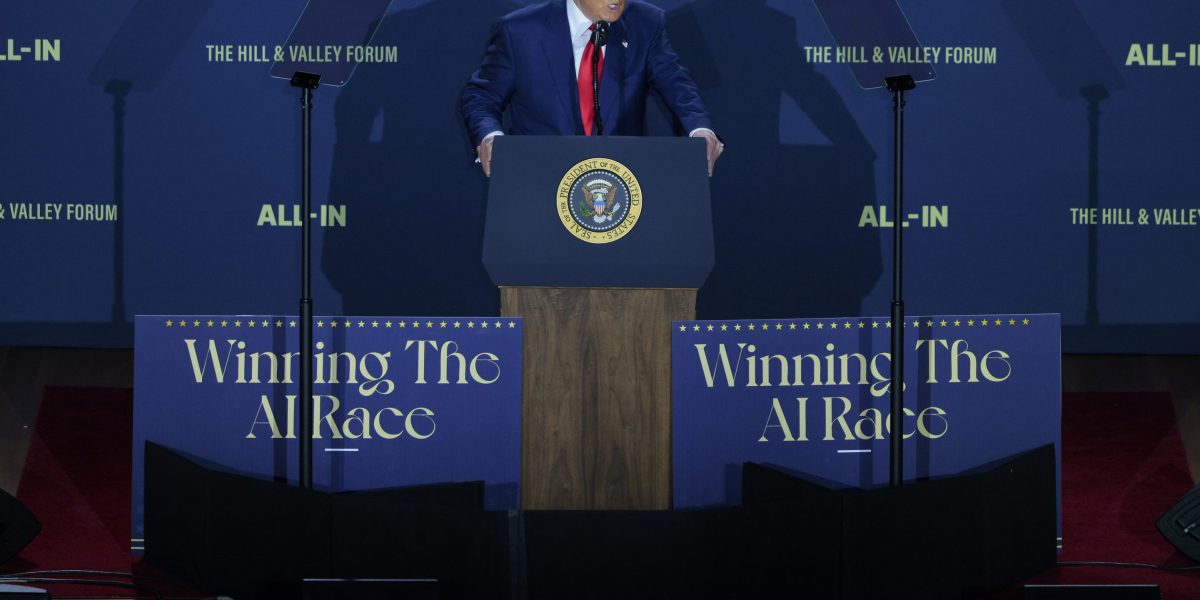
Prominent Senate Republicans express concerns over Nvidia's H200 chip sales to China
Youtube· 2025-12-10 16:21
Core Viewpoint - The potential sale of Nvidia's chips to China has sparked controversy among U.S. lawmakers, particularly following a policy shift from the Trump administration, raising concerns about maintaining U.S. dominance in AI technology [1][2]. Group 1: Legislative Concerns - A recent Senate vote included a provision to ban H20 chips from being sold to China, although this provision has since been removed from the larger package [1]. - Some lawmakers express concern that allowing chip sales to China could enhance its military capabilities, leading to opposition against such sales [3][4]. - There is a divide among lawmakers, with some viewing the sale of H20 chips as a risk, while others believe it is essential for global AI development [5][6]. Group 2: Diverging Opinions - Senator Mike Brown supports the sale of H20 chips to China, arguing that it is important for developers worldwide to build AI using U.S. technology [5]. - Nvidia's CEO Jensen Huang has made similar arguments to lawmakers, emphasizing the importance of global collaboration in AI development [5]. - Some lawmakers are actively seeking ways to implement export controls to ensure the U.S. maintains its lead in AI technology, indicating ongoing discussions about the future of chip sales [6].