PC(聚碳酸酯)

Search documents
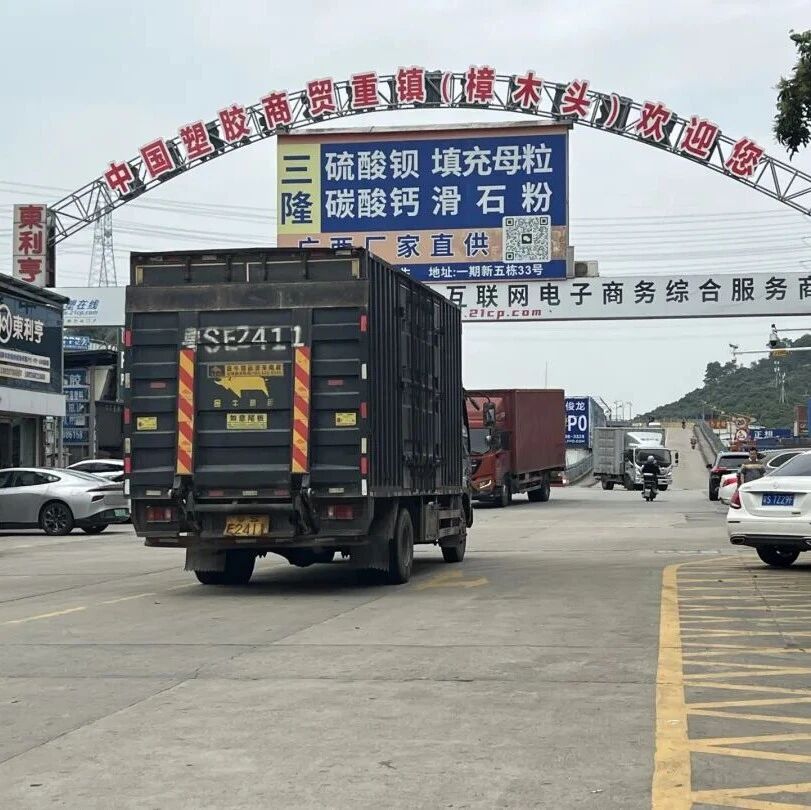
“见过抢米抢面,没见过抢塑料”,中东开战,东莞一个小镇大堵车
凤凰网财经· 2026-03-10 13:53
Core Viewpoint - The article discusses the recent surge in plastic raw material prices in Dongguan's Zhangmutou, driven by geopolitical tensions in the Middle East, leading to a phenomenon termed the "plastic rush" [2][4][6]. Group 1: The "Plastic Rush" - The "plastic rush" in Zhangmutou has resulted in significant traffic congestion and a dramatic increase in plastic product prices, with some prices rising by 40% to 60% in just a week [4][6]. - Despite the apparent frenzy, industry insiders suggest that the price hikes are largely speculative and do not reflect actual demand from end-users, as the downstream market operates on thin margins [4][11]. - The congestion was exacerbated by the concentration of warehouses and logistics centers in the area, which, combined with increased demand for plastic materials, led to significant delays in transportation [9][10]. Group 2: Market Dynamics and Speculation - The article highlights a shift in market behavior, where traders, accustomed to low demand, are now scrambling to stock up on materials due to fears of supply shortages caused by the Middle East conflict [11][12]. - Traders are engaging in speculative pricing, with some quotes not reflecting actual transactions, leading to a cycle of price increases driven by perceived scarcity rather than real demand [13][14]. - The current market situation is characterized as a "virtual prosperity," where goods are merely transferred within warehouses without reaching end-users, raising concerns about potential financial risks for traders [17][18]. Group 3: Price Increases and Industry Response - The article notes that upstream raw materials related to plastics, such as styrene and acrylonitrile, have also seen price increases, which are expected to impact downstream manufacturing costs [18][19]. - Major chemical companies have begun issuing price increase notices, with some products seeing price hikes of 5% to 20%, indicating a broader trend of rising costs across the industry [19][20]. - Companies like Kingfa Technology are attempting to manage these cost pressures through transparent pricing strategies and commitments to maintain supply for key customers [22][23]. Group 4: Industry Evolution in Zhangmutou - Zhangmutou is undergoing a transformation from a trading hub to a center for high-end manufacturing and technology development, with significant investments in new materials and production capabilities [24][25]. - The local industry is adapting to changing market conditions, with a focus on developing specialized materials that meet high-end manufacturing needs, reflecting a shift in the competitive landscape [27][28]. - The establishment of new projects aimed at high-end plastic production indicates a long-term strategy to enhance the region's industrial capabilities and market position [27].

苯酚丙酮、纤维素——大宗商品热点解读
2025-12-12 02:19
Summary of Key Points from Conference Call Records Industry Overview - The records primarily discuss the phenol-acetone and cellulose industries, highlighting the importance of extending the industrial chain to enhance companies' risk resistance capabilities. For instance, Guangxi Huayi is expanding downstream, while Sinopec, Shenghong, and Hengli Petrochemical are extending between refining and chemical sectors [1][2]. Core Insights and Arguments - **Industrial Chain Extension**: Companies with longer industrial chains exhibit stronger profit risk capabilities. Sinopec's strategy of shutting down old facilities and launching new ones exemplifies this trend [1][2]. - **Anti-Competition Measures**: The industry is implementing anti-competition strategies through the elimination of outdated capacities, low-cost suppliers servicing high-cost companies, and enhancing production capabilities to reduce import space [3]. - **Downstream Demand**: The demand for epoxy resins and polycarbonate (PC) supports profits in these sectors, with PC sales growth projected at 7%-10%. However, this demand does not fully translate to upstream raw materials like phenol and acetone, leading to weaker upstream profits [5]. - **Market Dynamics**: In the acetone downstream market, Bisphenol A accounts for over 30%, with methyl isobutyl ketone (MIBK) at 25%, isopropanol at 13%, and dimethyl sulfoxide (DMSO) at 5%. Bisphenol A has stable operations but low profits, while domestic supply of methyl paper has increased due to favorable export conditions last year [8]. Import and Export Trends - **Acetone Imports**: In 2025, acetone imports are expected to rise by 50%, primarily due to the expiration of anti-dumping measures and increased exports from Japan, Singapore, South Korea, and Taiwan, driven by their own weak downstream demand [9]. - **Cellulose Exports**: From 2021 to 2025, cellulose exports have shown a narrow growth trend, with a significant increase in demand from emerging markets. The total cellulose export volume for the first ten months of 2025 reached 17.3 million tons, a 15.45% increase year-on-year [15][23]. Profitability and Market Conditions - **Profit Trends**: The years 2020 to 2025 show high-profit years concentrated around 2021, correlating with rapid growth in the wind power sector. However, upstream raw materials like phenol and acetone have seen weaker profits [6]. - **Cost and Price Dynamics**: The cost structure for cellulose ethers includes raw materials like refined cotton and caustic soda. Prices for HPMC in different regions range from 13,500 to 28,000 yuan per ton, with market conditions leading to a downward trend in prices due to weak demand and high inventory levels [17][18]. Future Outlook - **Capacity Expansion**: The cellulose ether industry is expected to continue expanding, with an estimated additional capacity of 113,000 tons by the end of 2026. The industry is gradually shifting towards high-end applications in pharmaceuticals and food [19][20]. - **Challenges Ahead**: The cellulose market faces challenges such as weak end-market demand and high inventory levels. The industry is expected to see increased concentration as smaller players may be eliminated due to low profitability [21][23]. - **Emerging Markets**: Future growth in the cellulose sector is anticipated to be driven by high-end product demand in pharmaceuticals and food, with leading companies accelerating their strategic adjustments [20][23]. Conclusion - The phenol-acetone and cellulose industries are navigating a complex landscape characterized by capacity expansions, shifting demand dynamics, and competitive pressures. Companies are focusing on enhancing their industrial chains and adapting to market conditions to maintain profitability and growth.

沧州大化2024年增收不增利,拟向特定对象定增募资不超3亿元
Xin Lang Cai Jing· 2025-04-22 09:16
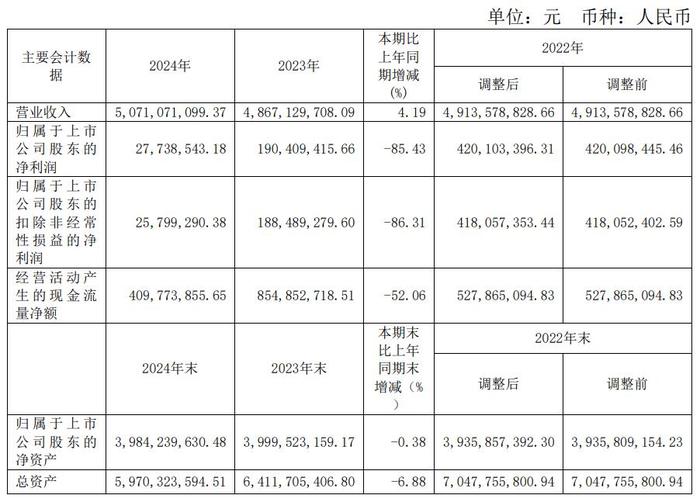
Core Viewpoint - Cangzhou Dahua (600230.SH) has recently held board and supervisory meetings to approve several important proposals, including the company's 2024 performance, profit distribution plan, and 2025 private placement plan [1][10]. Financial Performance - In 2024, Cangzhou Dahua achieved operating revenue of 5.071 billion yuan, a year-on-year increase of 4.19%, while net profit attributable to shareholders was 27.7385 million yuan, a decrease of 85.43% year-on-year [1][2]. - The company's non-recurring net profit was 25.7993 million yuan, down 86.31% year-on-year [1]. Main Products and Revenue - The main products of Cangzhou Dahua are TDI (Toluene Diisocyanate) and PC (Polycarbonate). In 2024, TDI revenue was 2.156 billion yuan, down 12.96% year-on-year, while PC revenue was 1.395 billion yuan, up 7.94% year-on-year [2][4]. - The average selling price of TDI in 2024 was 12,703.52 yuan/ton, a decrease of 17.41% from 15,381.68 yuan/ton in 2023. The average selling price of PC was 12,486.79 yuan/ton, down 1.64% from 12,695.60 yuan/ton in 2023 [5][6]. Cost and Margin Analysis - The cost of TDI in 2024 was 2.099 billion yuan, down 2.66% year-on-year, resulting in a gross margin of 2.64%, a decrease of 10.30% year-on-year. For PC, the cost was 1.234 billion yuan, up 6.27% year-on-year, with a gross margin of 11.52%, an increase of 1.39% year-on-year [2][4]. - The average procurement price of key raw materials in 2024 showed mixed results: Toluene at 6,131.80 yuan/ton (down 6.81%), Phenol at 7,164.12 yuan/ton (up 0.96%), and Acetone at 6,297.35 yuan/ton (up 10.26%) [6]. Profit Distribution and Dividend - Cangzhou Dahua plans to distribute a cash dividend of 0.21 yuan per share (including tax), totaling 8.6932 million yuan, which represents 31.34% of the net profit attributable to shareholders [8][9]. - The company has seen a decreasing trend in cash dividends over the past three years, with total dividends of 126 million yuan, 57.428 million yuan, and 8.6932 million yuan for 2022 to 2024, respectively [9]. Future Financing Plans - Cangzhou Dahua is planning a private placement to raise up to 300 million yuan, not exceeding 20% of the net assets as of the end of the previous year. The funds will be used for main business projects and to supplement working capital [10].