PCS产品

Search documents
宁王与华为数能收购传闻生变,但对交流侧技术仍虎视眈眈
2 1 Shi Ji Jing Ji Bao Dao· 2026-02-06 08:42
Core Viewpoint - Recent rumors regarding CATL's acquisition of Huawei Digital Energy have shifted, with indications that CATL may seek to acquire a 20% stake rather than a full acquisition due to high overall costs and valuation disagreements [1] Group 1: Acquisition Rumors and Negotiations - Initial reports suggested that Huawei Digital Energy was valued at approximately 400 billion yuan, while CATL was only willing to offer 150 billion yuan, leading to significant valuation discrepancies [1] - Internal communications indicated that Huawei Digital Energy employees were informed on February 5 that the company would no longer pursue a sale [1] Group 2: Huawei Digital Energy's Performance - Huawei Digital Energy achieved a revenue growth of 24.4% in 2024, reaching 68.678 billion yuan, surpassing many independent energy companies [2] - The revenue of Huawei Digital Energy is compared to Sungrow Power, which reported a revenue of 77.857 billion yuan in 2024, reflecting a year-on-year growth of 7.76% [2] Group 3: CATL's Strategic Positioning - CATL aims to become a leader in the energy storage market, with a projected battery output of over 500 GWh by 2025, capturing more than 30% of the global market share [3] - The company faces intense competition in the battery sector and is exploring energy storage as a strategic growth avenue [3] - Despite advancements in battery cell production, CATL's energy storage systems have not yet ranked among the top ten globally, indicating challenges in the market [3] Group 4: Potential Benefits of Collaboration - A partnership between CATL and Huawei Digital Energy could enhance CATL's ability to provide comprehensive energy storage solutions, increasing product value and customer loyalty [4] - This collaboration would allow CATL to quickly enter high-value global energy storage markets, particularly in Europe and the U.S., while avoiding the lengthy development cycles and high R&D costs associated with building systems and software capabilities from scratch [4]

宁王与华为数能收购传闻生变 但对交流侧技术仍虎视眈眈
2 1 Shi Ji Jing Ji Bao Dao· 2026-02-06 08:38
Group 1 - The core point of the article revolves around the changing rumors regarding CATL's acquisition of Huawei Digital Energy, with initial reports suggesting a full acquisition, but later clarifications indicating a potential 20% stake acquisition instead [2][3] - Previous negotiations between CATL and Huawei Digital Energy faced significant disagreements, particularly regarding the valuation of the business, with Huawei quoting approximately 400 billion yuan and CATL only willing to offer 150 billion yuan, leading to stalled discussions [3] - Huawei Digital Energy's business is substantial, with a reported revenue growth of 24.4% in 2024, reaching 68.678 billion yuan, surpassing many independent energy companies [5] Group 2 - CATL, as the global leader in power battery supply, aims to enhance its image as a zero-carbon energy ecosystem builder, especially in light of increasing competition and market saturation in the battery industry [6] - The strategic focus on energy storage is seen as a key opportunity for CATL, which has begun mass production of next-generation energy storage cells, although it still faces challenges in the AC side capabilities [6][7] - A partnership with Huawei Digital Energy could enable CATL to create a complete energy storage ecosystem, transitioning from merely selling battery cells to providing comprehensive energy storage solutions, thereby increasing product value and customer loyalty [7]

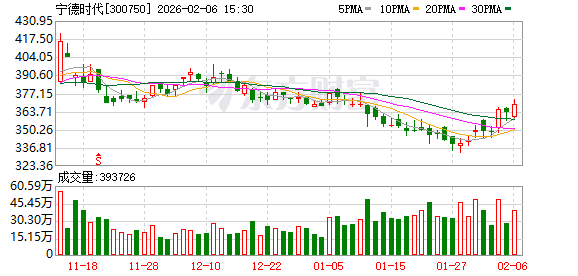
无锡杀出60亿储能黑马,成立6年冲刺港股IPO,毛利率腰斩
2 1 Shi Ji Jing Ji Bao Dao· 2025-12-03 06:45
Core Viewpoint - The article highlights the emergence of Guoxia Technology as a "quasi-unicorn" in the competitive energy storage sector, achieving a valuation of 6 billion yuan and annual revenue of 1 billion yuan within just six years of establishment [1][4]. Company Overview - Guoxia Technology has seen its revenue grow from 142 million yuan in 2022 to 691 million yuan in the first half of 2025, marking an almost fivefold expansion [5]. - The company operates under a light asset model, focusing on ecological collaboration to reduce costs and avoid heavy capital investments [7]. Financial Performance - Despite significant revenue growth, Guoxia Technology's gross margin has nearly halved, dropping from 25.1% in 2022 to 12.5% in the first half of 2025 [5]. - Net profit growth has lagged behind revenue growth, with a net profit of 5.575 million yuan in the first half of 2025, reflecting a mere 13.5% increase [5]. Market Dynamics - The energy storage sector is experiencing intense price competition, with average bidding prices for domestic storage systems expected to drop from 1.6 yuan/Wh in 2022 to as low as 0.65 yuan/Wh by 2025 [4]. - The competition has extended internationally, with companies reducing prices by up to 30% for large projects in Europe and the Middle East [4]. Business Model and Strategy - Guoxia Technology's strategy involves acting as a system integrator without owning factories or manufacturing cells, relying on partnerships with companies like Keli Yuan and Zhongchuang Innovation to secure resources [8]. - The company’s revenue from projects, such as the 240MWh project in Huai'an, contributed significantly to its income, although the gross margin for similar projects was only 9.7% in the first half of 2025 [8]. Industry Trends - The article discusses three distinct business models in the energy storage sector: Guoxia Technology's light asset model, Haibo Shichuang's combination of light and heavy assets, and Ningde Times' full industry chain approach [10][11]. - The ongoing low-price competition is seen as a necessary phase for industry transformation, driven by overcapacity and technology homogenization [11].
海博思创(688411):受益于储能需求增长,海外业务持续推进
Huaxin Securities· 2025-06-30 08:42
Investment Rating - The report assigns a "Buy" investment rating for the company, marking its first coverage [2][7]. Core Insights - The company is a leading provider of electrochemical energy storage systems in China, benefiting from industry growth and increasing demand for energy storage solutions [5]. - The company has a higher gross margin than the industry average due to its focus on technology cost reduction and strategic procurement [5]. - The company is expanding its overseas business, with significant contributions expected from Europe and Southeast Asia [6]. - Revenue forecasts for 2025-2027 are projected at 103.41 billion, 123.89 billion, and 142.33 billion yuan, respectively, with corresponding EPS of 4.52, 5.56, and 6.67 yuan [7][10]. Summary by Sections Company Overview - The company specializes in providing comprehensive energy storage solutions for various sectors, including traditional and renewable energy generation [5]. - The company has established a strong presence in major global markets, including the US, Germany, and Australia, with certifications for its products [6]. Financial Performance - The company’s revenue for 2024 is expected to be 82.7 billion yuan, with a growth rate of 18.4% [10]. - The net profit for 2024 is projected at 648 million yuan, with a growth rate of 12.1% [10]. - The company’s gross margin is expected to remain stable at around 18.2% over the forecast period [11]. Market Position - The company is well-positioned to benefit from the increasing demand for energy storage systems, particularly in light of regulatory changes that encourage the integration of storage with renewable energy sources [5][6]. - The company aims to achieve parity in revenue between its domestic and overseas operations within the next 3-5 years [6].
非美市场起量!海博思创等透露重要信息
行家说储能· 2025-05-07 06:24
Core Viewpoint - The article discusses the recent developments in the energy storage industry, highlighting the performance and strategies of key companies in response to market changes and regulatory impacts, particularly focusing on the upcoming "Document 136" and its implications for the sector [2][17][18]. Company Performance and Strategies - **Trina Solar**: Aims for a storage shipment target of 8-10 GWh in 2025, with a 2024 shipment of 4.3 GWh, indicating a focus on overseas markets, especially Europe, and a significant increase in orders [2][3]. - **Canadian Solar**: Reported a Q1 storage shipment of 0.79 GWh, with a full-year target of 6.5 GWh, reflecting over 500% year-on-year growth. Despite challenges from U.S. tariffs, the company maintained profitability with a net profit of 87.3 million yuan in Q1 [4]. - **Hibos Technology**: Achieved nearly 3 GWh in sales in Q1 2025, with a focus on expanding overseas projects in Europe, North America, and Southeast Asia. The company aims for overseas revenue to match domestic levels within 3-5 years [5]. - **Southern Power Grid Technology**: Reported over 1 billion yuan in storage revenue in Q1, despite a 37.5% year-on-year decline due to project timelines. The company has a robust order backlog of approximately 9.5 billion yuan [6][7]. Market Trends and Regulatory Impact - The recent large-scale power outages in Southern Europe have increased the demand for energy storage solutions, emphasizing their importance in stabilizing power systems during extreme weather events [9]. - Companies are adapting to U.S. tariff barriers by exploring non-U.S. markets and enhancing supply chain flexibility. Trina Solar and Canadian Solar are both actively assessing the impact of tariffs on their operations and adjusting strategies accordingly [10][13][14]. - The implementation of "Document 136" is expected to disrupt the storage market in the short term by removing mandatory storage requirements, but it may lead to long-term growth and a more competitive landscape, favoring companies with technological and cost advantages [17][18].