PHEV(插电式混合动力车)

Search documents
【重磅深度】乘用车全球化策略:从全面扩张走向分市场/分主体的结构性出海
东吴汽车黄细里团队· 2026-01-08 14:45
Group 1 - The article predicts that Europe, Latin America, and Southeast Asia will continue to contribute significantly to the growth of new energy vehicle (NEV) penetration rates, with Europe expected to exceed previous forecasts due to the release of affordable models and the reintroduction of some subsidies [2][18] - In Southeast Asia, the NEV penetration rate is projected to reach 19% by 2026, driven by contributions from Chinese automakers and local firms like VinFast, despite tightening import incentives [2][18] - Latin America's NEV penetration is expected to increase to 5% by 2026, but the growth will be limited due to a focus on local industrial protection and tax adjustments rather than direct demand stimulation [3][18] Group 2 - The article outlines that the total market size accessible to Chinese automakers is approximately 27 million vehicles, with an export potential market of about 9.08 million vehicles [5][20] - The export market analysis indicates that the share of NEV exports in total exports is expected to rise to 42% by 2025, with BYD being a major contributor to this growth [5][20] - The methodology for assessing market entry potential includes filtering based on trade barriers, bilateral relations, and external uncertainties, leading to the exclusion of markets like North America, Japan, and India [6][22] Group 3 - The article discusses the competitive landscape for Chinese automakers, highlighting that regions like Oceania, the Middle East, Central Asia, and Africa are more favorable for vehicle exports due to less stringent regulatory environments [8][25] - It emphasizes the importance of local production and supply chain investments in Southeast Asia and Latin America, where local market conditions are evolving [8][25] - The analysis of company strategies reveals that BYD has developed a replicable global operation model, while Chery and Great Wall have adopted different approaches to expand their market presence [9][24][27] Group 4 - The article concludes that companies with a strong overseas presence and proven execution capabilities, such as BYD, Great Wall, and Chery, should be prioritized for investment [12][13] - It highlights the need for companies to adapt to local market conditions and regulatory frameworks to ensure sustainable growth in international markets [12][13] - The overall export volume for Chinese automakers is projected to increase significantly, with NEV exports expected to reach 362,000 units by 2026 [30][37]





日经BP精选:本田式PHEV技术在中国成为主角
日经中文网· 2025-10-21 03:01
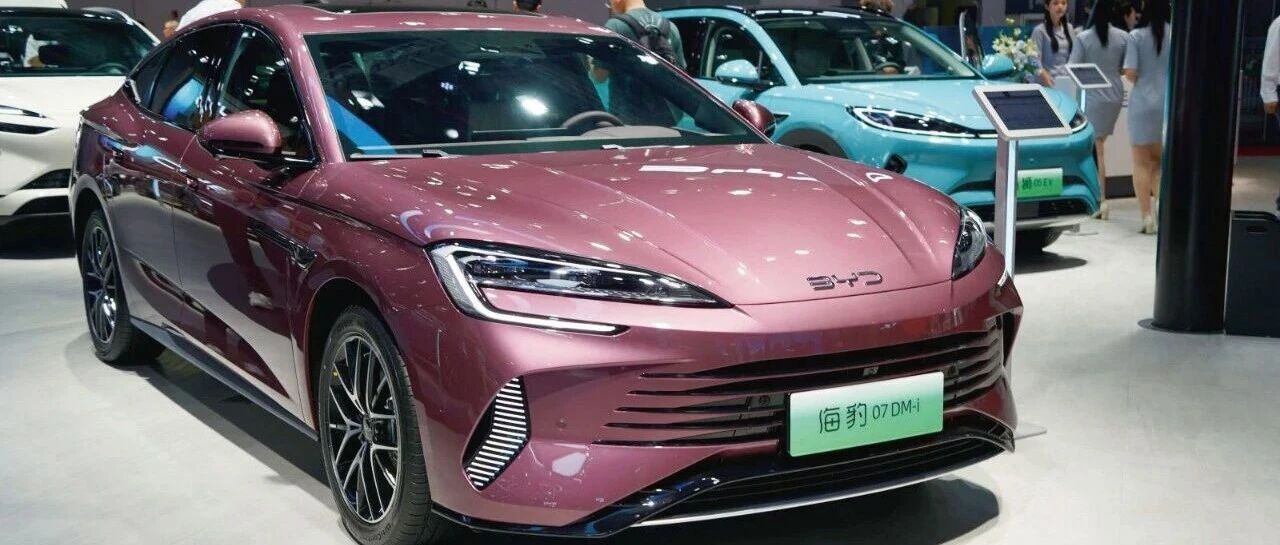
Core Insights - The article discusses the rise of Plug-in Hybrid Electric Vehicles (PHEVs) in China, highlighting the dominance of Chinese companies like BYD and Geely in the global PHEV market [3] - It contrasts the PHEV technology of Chinese manufacturers with Toyota's Hybrid Electric Vehicle (HEV) technology, suggesting that Toyota's advantage may diminish in the PHEV sector [3] - The article emphasizes the current mainstream use of series PHEV configurations in Chinese vehicles, which primarily rely on electric motors for propulsion [3][4] Group 1 - The article notes that PHEVs are gaining traction in China, with BYD and Geely leading the global market [3] - It points out that the series configuration of PHEVs, where the engine is used solely for generating electricity, is prevalent among Chinese manufacturers [3] - The article mentions that Nissan is also utilizing a similar series approach in its vehicles [3] Group 2 - The article identifies a significant challenge for series PHEVs, which perform well at low to medium speeds but experience efficiency drops at high speeds [4] - It highlights the need for improved high-speed fuel efficiency in PHEVs due to China's vast geography and the demand for long-distance travel [4] - The article discusses Honda's e:HEV technology, which combines series and parallel configurations to enhance performance [4]