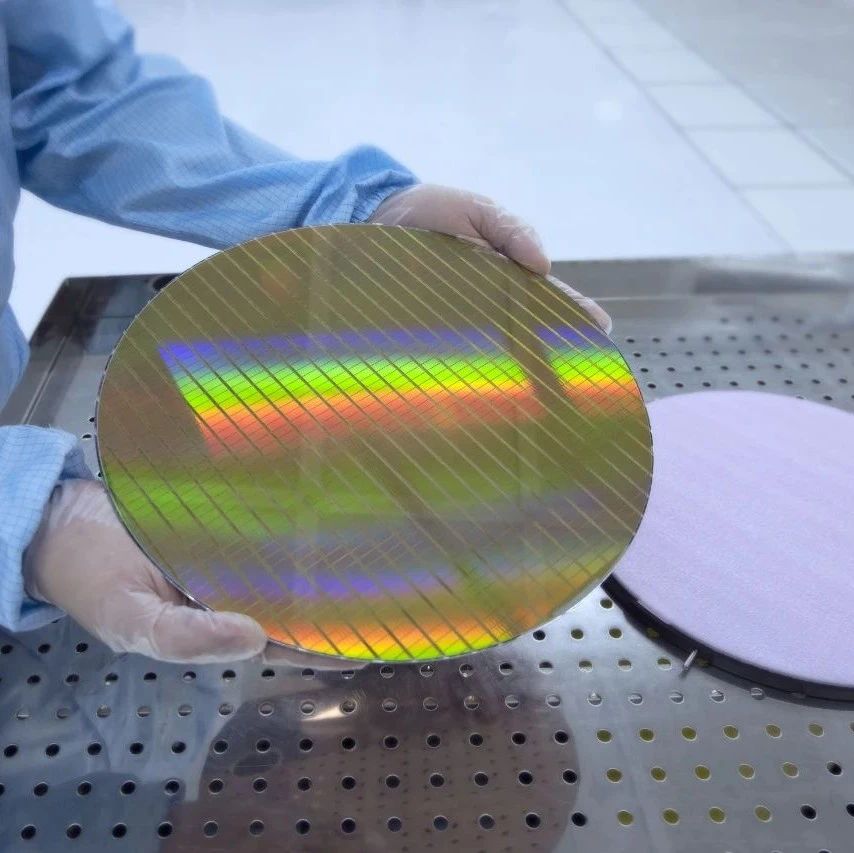
PIC100

Search documents
STMicroelectronics (NYSE:STM) Update / briefing Transcript
2026-03-09 15:32
Summary of ST Cloud AI Update Conference Call Company Overview - **Company**: STMicroelectronics (ST) - **Focus**: Advanced data centers and AI clusters, specifically in optical interconnect and power technologies Key Industry Insights - **AI Data Center Growth**: Global hyperscalers are projected to invest over **$700 billion** in capital expenditures (CapEx) by **2026** and more than **$1 trillion** by **2030** [4][24] - **Market Opportunity**: The structural growth opportunity in AI servers is described as a "once in a lifetime" chance for companies like ST to increase their revenue significantly in data centers [4] Core Technology and Product Offerings - **Power Technologies**: - Transitioning to **800 volts** for power distribution to meet the increasing demands of AI workloads, which are becoming more complex and power-hungry [6][8] - ST is leveraging **silicon carbide (SiC)** and **gallium nitride (GaN)** technologies to enhance energy efficiency and reduce operational costs [9][10] - The company has developed a **hot swap protection circuit** and advanced power converters to support the new architecture [39][40] - **Connectivity Solutions**: - Emphasis on high-speed optical interconnects to connect thousands of GPUs efficiently, addressing the bottlenecks in data transfer within AI data centers [12][14] - ST's **ScaleX approach** aims to enable scalable AI infrastructure through optical technology [14] Financial Projections - **Revenue Expectations**: - ST anticipates revenues exceeding **$500 million** in **2026** and well above **$1 billion** in **2027** due to the increasing demand for AI data center technologies [25][26] - The addressable market (SAM) per gigawatt of infrastructure is estimated at around **$230 million**, supported by approximately **400 products** tailored for the AI data center business [5][24] Strategic Collaborations - **Partnership with AWS**: ST has expanded its collaboration with AWS through a multi-year, multi-billion dollar agreement, positioning itself as a strategic supplier of advanced semiconductor technology for AI infrastructure [23][24] Market Dynamics and Competitive Position - **Market Share Goals**: ST aims to become a market leader in photonics ICs, targeting a **30% market share** as a benchmark for leadership [52] - **Differentiation in Power Market**: ST's unique offerings in power conversion and optical technologies are expected to help it gain market share in a competitive landscape where it previously had a marginal presence [38][39] Future Outlook - **Growth Beyond 2027**: The company expects to grow faster than the overall market due to its advancements in photonics IC and power technologies, particularly with the ramp-up of the **800 volt architecture** [70] - **Long-term Capacity Expansion**: ST plans to quadruple its output by **2027**, with ongoing capacity reservations from customers supporting this growth [22][90] Additional Insights - **Technological Evolution**: The transition from copper to optical technologies in data centers is seen as inevitable, with significant growth expected in near package optics (NPO) and co-package optics (CPO) by **2030** [101][102] - **Bottlenecks in Optical Networking**: Current bottlenecks are identified in laser technology, while future challenges may arise in photonics as demand for higher data rates increases [105][106] This summary encapsulates the key points discussed during the ST Cloud AI Update conference call, highlighting the company's strategic positioning, technological advancements, and market expectations.

STMicroelectronics (NYSE:STM) Earnings Call Presentation
2026-03-09 14:30
ST Cloud AI update Remi El-Ouazzane President, Microcontrollers, Digital ICs and RF products Group March 9, 2026 Forward looking information Some of the statements contained in this document that are not historical facts are statements of future expectations and other forward-looking statements (within the meaning of Section 27A of the Securities Act of 1933 or Section 21E of the Securities Exchange Act of 1934, each as amended) that are based on management's current views and assumptions, and are condition ...
ST挺进硅光代工赛道
半导体芯闻· 2025-03-13 10:55
Core Viewpoint - STMicroelectronics (ST) is leveraging its advanced "Silicon Photonics + BiCMOS" foundry services to address the growing demand for high-speed, energy-efficient data transmission in the AI-driven chip market, particularly in cloud interconnects [2][10][12]. Group 1: Market Context and Challenges - The current data center landscape faces significant bottlenecks in connectivity, particularly for AI workloads that require high bandwidth and low latency, with up to 30% of training time spent waiting for network responses [4][6]. - The demand for optical transceivers is increasing as data centers expand, with the optical communication chipset market projected to grow from approximately $3.5 billion in 2024 to over $11 billion by 2030, at a CAGR of 17% [6][12]. Group 2: Technological Innovations - ST's PIC100 platform is the only pure silicon technology platform capable of supporting 200 Gbps single-channel transmission on 300 mm wafers, offering compact structure and superior performance [11][12]. - The transition to Silicon Photonics (SiPho) technology allows for the integration of multiple components into a single transceiver chip, enhancing efficiency and reducing system losses [10][12][15]. Group 3: Product Offerings and Collaborations - ST's BiCMOS technology, particularly the new B55 series, provides low noise performance and high data transmission rates, making it ideal for next-generation optical connections [13][14]. - The company has established a partnership with AWS to develop the PIC100 technology, aimed at improving interconnectivity for various workloads, including AI [16][17]. Group 4: Future Outlook - ST aims to create PICs that support 400 Gbps per channel, essential for modern data centers as AI applications demand faster and more efficient data flow [17][18]. - The integration of compact modulators into the PIC100 platform is a key focus, ensuring compatibility with GPU packaging sizes and enhancing overall system performance [17].