硅光技术

Search documents
今日晚间重要公告抢先看——罗博特科签订纳斯达克上市的F公司及其子公司6亿硅光订单;中国东航千亿购机计划正式落地;华工科技25年净利润同比增长20%
Jin Rong Jie· 2026-03-25 13:01
Group 1 - Robotech signed a significant contract worth approximately 600 million yuan for mass production coupling equipment and services applicable to pluggable silicon photonics technology, which is expected to positively impact the company's performance in 2026 [2] - China Eastern Airlines plans to purchase 101 Airbus A320NEO series aircraft at a catalog price totaling about 158.02 million USD, equivalent to approximately 108.93 billion yuan, with deliveries scheduled between 2028 and 2032 [2] - Huagong Technology projected a 20% year-on-year increase in net profit for 2025, with a proposed cash dividend of 2.5 yuan per 10 shares [18] Group 2 - Huadian Technology signed a 740 million yuan EPC contract for an offshore wind power project, with the company responsible for 693 million yuan of the contract amount [3] - Yahua Group signed a five-year lithium spodumene concentrate procurement agreement, ensuring a stable supply of resources for lithium salt product production [4] - China Life Insurance plans to invest 2.8 billion yuan in the Xinxin Technology Innovation Fund, focusing on private equity secondary markets and technology innovation sectors [6] Group 3 - Ruineng Technology is planning to acquire control of Botai Intelligent through a combination of issuing A-shares and cash payments, with stock suspension starting March 26 [8] - Debon Holdings will terminate its listing on the Shanghai Stock Exchange on March 31, 2026, after receiving approval for voluntary withdrawal [9] - New Yellow River announced the resignation of Chairman Zhao Zhengrong due to personal health reasons, with no adverse impact on the company's operations [10] Group 4 - Jiahua Food intends to invest approximately 1 billion yuan in a smart manufacturing project for super plant-based milk [11] - Xiamen Tungsten plans to acquire a stake in Jiangxi Jutong to enhance its tungsten resource self-sufficiency [12] - Energy Wind Power announced the resignation of its director and general manager Yang Zhongxu, with a smooth transition of responsibilities [13] Group 5 - Zhongtai Engineering reported a new contract amount of 18.964 billion yuan for January-February 2026, reflecting a year-on-year growth of 0.54% [26] - Jinli Permanent Magnet reported a 142.44% year-on-year increase in net profit for 2025, with a proposed cash dividend of 2.2 yuan per 10 shares [27] - Noya New Materials reported a 337.6% year-on-year increase in net profit for 2025, with a proposed cash dividend of 3.2 yuan per 10 shares [23]




广立微(301095) - 2026年3月23日投资者关系活动记录表
2026-03-23 09:52
Group 1: Company Overview - Guangli Microelectronics is a leading supplier of integrated circuit EDA software and wafer-level electrical testing equipment, focusing on improving chip yield and rapid monitoring technology [2][3] - The company has developed a comprehensive yield enhancement solution that integrates EDA design software, WAT testing equipment, and semiconductor data analysis tools, enhancing chip performance, yield, and stability throughout the product lifecycle [3] Group 2: Core Competitiveness and Product Expansion - The company's core competitiveness lies in its proprietary technologies for parallel testing and in-chip testing acceleration, enabling high-quality domestic alternatives and international market competitiveness [4] - Guangli Microelectronics is expanding its product offerings by maintaining high R&D investment, with recent expansions into WLR (wafer-level reliability testing) and SPICE, as well as new testing equipment categories [4] Group 3: Strategic Acquisitions and Innovations - The acquisition of Luceda, a silicon photonics design software company, is a strategic move to enhance capabilities in silicon photonics, addressing the physical bottlenecks in bandwidth, power consumption, and latency [5][6] - The company aims to create a "silicon photonics chip design-manufacturing closed loop" platform, integrating its EDA tools with Luceda's technology to develop a comprehensive solution covering design, manufacturing, testing, and yield enhancement [6] Group 4: Impact of AI Technology - The rise of AI technologies has significantly influenced the demand for high-performance computing chips, impacting product forms, R&D models, and development efficiency [7] - Guangli Microelectronics has made notable advancements in AI technology, launching the INF-AI industrial intelligence integration platform and deploying various AI-driven defect analysis systems in leading fabs [7] - The company’s semi-conductor large model platform, SemiMind, integrates knowledge bases with AI models, aiming to create an open and flexible research ecosystem [7]
晶圆代工巨头,最新研判
半导体行业观察· 2026-03-14 01:08
Core Insights - The global wafer foundry industry is projected to exceed 1 trillion yuan in revenue for the first time in 2025, reaching 11,485 billion yuan, representing a year-on-year growth of 25.46% compared to 2024 [2][5] - The growth is driven by the ongoing digitalization and intelligence wave, highlighting the increasing demand for chips and the value of the foundry model in the semiconductor industry [2] Group 1: Industry Overview - The top ten wafer foundry companies are expected to generate a total revenue of 11,056 billion yuan in 2025, with a year-on-year growth rate of 26.12%, indicating a concentration of market share among leading firms [5] - The overall market share of the top ten foundry companies is projected to increase to 96.27%, reflecting a "Matthew Effect" where larger firms continue to dominate the market [5] - The industry is characterized by structural growth led by top companies, with smaller firms facing increasing challenges in maintaining market share [5][6] Group 2: Regional Dynamics - Taiwanese companies dominate the foundry landscape, holding four positions in the top ten, with a combined market share of 80.68% in 2025, an increase of 2.15 percentage points from 2024 [6] - TSMC is the leading player, with revenue expected to surpass 8,000 billion yuan in 2025, growing by 2,000 billion yuan from 2024, and capturing nearly 75% of the market share [6] - Chinese mainland firms, including SMIC and HuaHong Group, have made it to the top ten but face challenges in increasing their market share, which is projected to be 10.44% in 2025, down 0.44 percentage points from 2024 [6][7] Group 3: Company Strategies and Trends - SMIC is focusing on local substitution and has identified two main trends: deepening localization and a potential reversal in the storage cycle by Q3 2026, which could alleviate supply shortages in consumer storage [10] - HuaHong Group emphasizes the dual drivers of domestic production and AI, with a focus on power management and MCU chips as core growth areas [13][14] - Chip integration companies like Nexchip are leveraging their strengths in mature processes to capture market opportunities, particularly in AI and automotive sectors [18][19] Group 4: Competitive Landscape - TSMC's capital expenditure is set to reach 40.9 billion USD in 2025, with a focus on advanced processes and AI-driven demand, indicating a robust growth trajectory [26][30] - UMC is navigating a challenging environment with declining demand in consumer electronics, while focusing on high-value mature processes to maintain competitiveness [31][33] - World Advanced is experiencing a renaissance in mature processes, driven by AI demand, and is expanding its capacity to meet the growing needs of the market [35][37] Group 5: Future Outlook - The wafer foundry industry is expected to continue evolving with a focus on advanced packaging and silicon photonics as key growth areas, driven by AI and high-performance computing demands [34][41] - Companies are increasingly adopting strategies that emphasize differentiation through technology and specialization in niche markets, rather than competing solely on scale [20][21]







CPO检测设备专家交流
2026-03-13 04:46AI Processing
CPO 检测设备专家交流 摘要 ficonTEC 战略转向 CPO 后端先进封装与全自动组装,核心产品包括 FAU/MPO 自动化产线、CPO 双面测试设备及 OCS 全自动生产线,单 线价值量达千万欧元级别。 CPO 产业仍处"雷声大雨点小"阶段,光源与连接器为核心瓶颈,台积 电等 Foundry 厂尚未大规模采购测试台,预计 2026 年相关设备销售 预期不宜过分乐观。 公司在 FAU 全自动产线领域具稀缺性,武汉易路通意向订单约 1,000 万欧元,但国内头部厂商(如天孚、旭创)因成本高昂且需求未放量, 目前尚未跟进大额订单。 CPO 测试市场竞争加剧,ficonTEC 虽在光学耦合模块具先发优势,但 面临泰瑞达、爱德万等半导体测试巨头及 FormFactor 等探针厂商在电 测集成领域的强力竞争。 OCS 业务实现突破,为瑞士头部客户提供两条全自动产线,总价值近 1,500 万欧元,标志着公司从传统组装向高价值量、高技术壁垒的算力 应用场景转型。 产能与本地化为核心制约因素,公司历史年营收未超 5 亿元,若无法解 决德国产能限制或实现中国本地化生产,将难以承接未来潜在的大规模 工业化订单。 Q&A 请 ...
AI上游持续供不应求,应用落地
SINOLINK SECURITIES· 2026-03-11 05:45
Investment Rating - The report does not explicitly provide an investment rating for the industry Core Insights - The AI industry is experiencing strong demand, with companies like Nvidia and Marvell reporting significant revenue growth due to AI applications [8][19][20] - Nvidia's strategic investments in silicon photonics technology aim to alleviate supply chain bottlenecks and support the scaling of AI infrastructure [18][31] - OpenAI and Anthropic have achieved substantial annual revenues, indicating a robust market for AI models [14][15] Industry Frontiers - Samsung plans to continue raising NAND product prices in Q2, following a 100% increase in Q1, indicating ongoing supply constraints in the semiconductor market [12] - Nvidia has ceased production of the H200 AI chip for the Chinese market, reallocating resources to the next-generation AI computing platform [13] - OpenAI's GPT-5.4 has demonstrated advanced capabilities, surpassing human-level performance in certain tasks [14] Capital Trends - Nvidia's $20 billion investments in Coherent and Lumentum highlight a commitment to developing next-generation silicon photonics technology [18] - Companies like Broadcom, Marvell, and Ciena have reported strong financial results, reflecting the increasing demand for AI-related products [19][20][21] - ByteDance's partnership with Century Internet for a 500 MW data center underscores the growing need for AI computing power in China [23] Weekly Perspective - The report emphasizes the strong performance of companies in the AI sector, with Broadcom and Marvell both reporting significant revenue increases [31] - Ciena's focus on AI training and co-packaged optics technology is seen as a response to the limitations of traditional electrical interconnects [31] - MiniMax's impressive revenue growth indicates a successful commercialization of AI technologies, driven by improved model efficiency [31]

TSEM20260306
2026-03-09 05:18
Summary of Tower Semiconductor Conference Call Company Overview - Tower Semiconductor (TSEM) has shifted its business focus from mobile RF to silicon photonics and infrastructure, with silicon photonics expected to generate approximately $230 million in revenue by 2025, accounting for 27% of total revenue, making it the largest business segment [2][5][12]. Industry Insights - The penetration rate of silicon photonics is anticipated to enter an explosive growth phase, with the share of 800G silicon photonics expected to rise from less than 5% in 2024 to 60% by 2026, and the 1.6T segment projected to reach over 60-70% penetration by 2026-2027 [2][7]. - The estimated price for 8-inch silicon photonics wafers is around $50,000 per wafer, which can be divided into hundreds to thousands of channels, indicating a market potential worth tens of billions of dollars [3][9]. Financial Performance - From 2021 to 2025, the company experienced various phases of growth, with 2021-2022 marked by rapid growth driven by 5G mobile front-end demand, leading to a peak revenue of approximately $1.68 billion in 2022 and a net profit margin of 16% [5][11]. - In 2023, a significant decline was noted due to a weak mobile market, although profits were bolstered by a $1.2 billion one-time compensation from Intel, resulting in a profit of about $500 million [5]. - By 2025, revenue is expected to rebound to approximately $1.57 billion, with Q4 revenue projected at $440 million and a net profit of around $80 million, reflecting a net profit margin of about 18% [5][12]. Technological Advancements - The PH18 series process has achieved breakthroughs in single-channel rates of 200G-400G, with a yield rate of 70%-80%+ on 200mm lines [2][12]. - The company plans to complete capacity expansion by Q4 2026, aiming to increase silicon photonics monthly capacity to over five times that of Q4 2025, with over 70% of this capacity already secured through long-term agreements [2][14]. Competitive Landscape - TSMC is advancing in silicon photonics with Copper technology, which could reduce power consumption by over ten times compared to copper interconnects, with significant market expectations for 2026-2027 [8]. - Tower Semiconductor plans to triple its silicon photonics manufacturing capacity by mid-2026, focusing on 200mm and 300mm wafer fabs in the U.S. and Israel [8][14]. Market Opportunities - The transition to silicon photonics addresses key pain points in traditional discrete solutions, such as assembly difficulty, sensitivity to loss, and cost challenges, by offering high integration, lower power consumption (20%-40% less), and smaller form factors [6][10]. - The CPO (Co-Packaged Optics) is seen as a critical next step, addressing system-level bottlenecks and enhancing port density and power efficiency [10]. Future Outlook - The company is set to expand its capital expenditure to nearly $1 billion, with a focus on increasing 300mm silicon photonics capacity to meet future demand for 3.2T and CPO engines [14]. - The silicon photonics revenue is expected to double or achieve even higher growth rates starting in 2026, driven by increasing demand and successful capacity expansion [12][14].
果链软板检测隐形冠军-硅光晶元设备等多曲线打开成长空间
2026-03-04 14:17
Summary of Conference Call Records Company Overview - The company is a global leader in FPC (Flexible Printed Circuit) soft board testing, focusing on the fruit supply chain, with clients including eight of the top ten soft board manufacturers globally, achieving a profit margin close to 60% and demonstrating strong cash flow attributes [1][2][4]. Core Business and Revenue Contribution - The primary business of the company is FPCA soft board testing equipment, contributing over 90% of the company's revenue and profit. The company has established a leading position in a market valued at approximately 2.5 to 4 billion RMB over 20 years [2]. Industry Dynamics and Demand Drivers - FPC soft boards are critical components in consumer electronics, particularly in smartphones, which account for 45% of their applications. The testing equipment is essential for ensuring circuit connectivity and signal integrity during production [3]. Customer Structure and Profitability - The company’s main customers are significant players in the fruit supply chain, benefiting from strict quality control requirements from Apple, which mandates that every soft board undergo testing. The company maintains long-term relationships with most of its major clients [4][5]. Expansion into MEMS Sensor Testing - The company is expanding into MEMS (Micro-Electro-Mechanical Systems) sensor testing, which integrates various components into a single chip and is widely used across multiple sectors, with consumer electronics being the primary application [5]. The global MEMS sensor market is projected to grow from approximately $14.6 billion in 2023 to $20 billion by 2029 [5]. Product Development and Market Potential - The company plans to introduce new sensor testing equipment every 1-2 years, with the first product being a pressure sensor testing device, which is expected to maintain good growth in volume starting in 2024 [8][10]. The IMU (Inertial Measurement Unit) testing device is anticipated to have a market space exceeding 2 billion RMB, with initial small-scale production expected to begin in 2026 [10]. Acquisition of ACSI Tech - The company announced the acquisition of 67% of Singapore's ACSI Tech for approximately 20 million RMB, which specializes in silicon photonic wafer testing and optoelectronic coupling equipment. This acquisition is expected to enhance the company's capabilities in a market projected to reach 10 billion RMB [12][13]. Industry Bottlenecks and Market Size - The silicon photonic testing segment faces significant bottlenecks, particularly in wafer testing, which is crucial for avoiding defective chips in subsequent costly packaging stages. The market for silicon photonic wafer testing equipment is estimated to exceed 10 billion RMB, with the overall optoelectronic production equipment market being 2-3 times larger [14]. Financial Health and Investment Strategy - The company has a solid financial standing with a profit margin close to 60% and a clean balance sheet, reflecting a cautious investment approach [11]. The company has accumulated significant cash reserves, indicating a strong financial foundation for future growth and acquisitions [11]. New Ventures and Technological Integration - The establishment of a joint venture, Yanmizhi Technology, focuses on AVI (Automated Visual Inspection) technology, which complements the company's core soft board testing capabilities and indicates a strategy to expand into emerging business areas [15].

英伟达重磅押注硅光
半导体行业观察· 2026-03-03 02:31
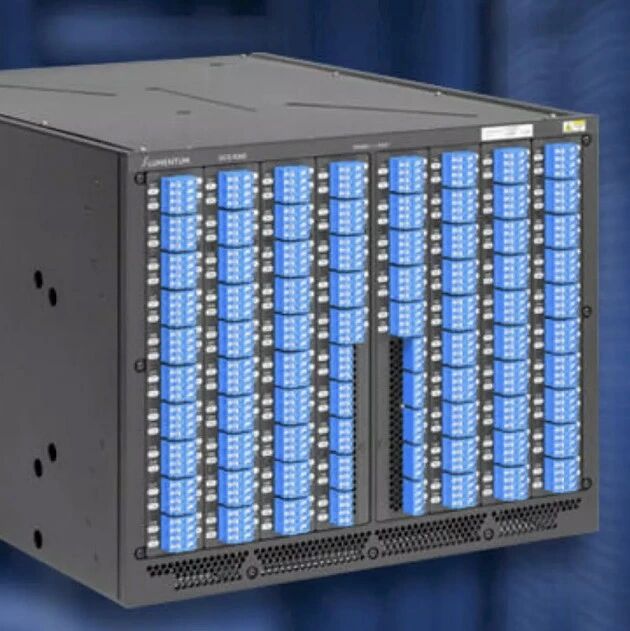
Core Viewpoint - Nvidia's strategic investments in Lumentum and Coherent aim to enhance its optical technology capabilities, crucial for the development of advanced AI systems and networking solutions [2][3]. Group 1: Nvidia's Acquisition and Investment Strategy - Nvidia acquired Mellanox Technologies for $6.9 billion in early 2020, positioning itself as a key player in Ethernet and InfiniBand transceiver sales [2]. - The company invested $2 billion each in Lumentum and Coherent to drive research and development towards optical technologies that support Nvidia's AI objectives [2][3]. - Nvidia's investments are suspected to be in the form of convertible bonds or other equity instruments rather than direct stock purchases [3]. Group 2: Importance of Optical Technology - The LinkX optical cables and transceivers are critical, potentially accounting for over half of network costs and power consumption [2]. - Lumentum and Coherent are involved in Nvidia's upcoming Quantum-X InfiniBand and Spectrum-X Ethernet switch projects, indicating a significant demand for optical components [4]. - The introduction of competition among laser suppliers is expected to lower prices and enhance product offerings for Nvidia [4]. Group 3: Market Performance and Financial Metrics - Lumentum's market value surged 10.7 times over the past year to $50.1 billion, with revenues of $2.11 billion and net profits of $251.6 million [5]. - Coherent's revenue for the past 12 months was $6.3 billion, with a net profit of $331 million, and its market value increased 3.8 times to $48.5 billion [5]. Group 4: Optical Switching Technology - Lumentum's R300 optical switch can potentially reduce overall network power consumption by 65% in AI cluster systems with 100,000 XPUs [9]. - Coherent has begun delivering a liquid crystal-based optical switch with various port configurations, indicating advancements in optical networking solutions [11]. - Nvidia may transition to a ring or dragonfly interconnect topology in future architectures, utilizing optical switching to enhance connectivity and efficiency [13].
自立自强 产销两旺——华工科技聚力领跑光模块产业新赛道
Ke Ji Ri Bao· 2026-02-27 10:03
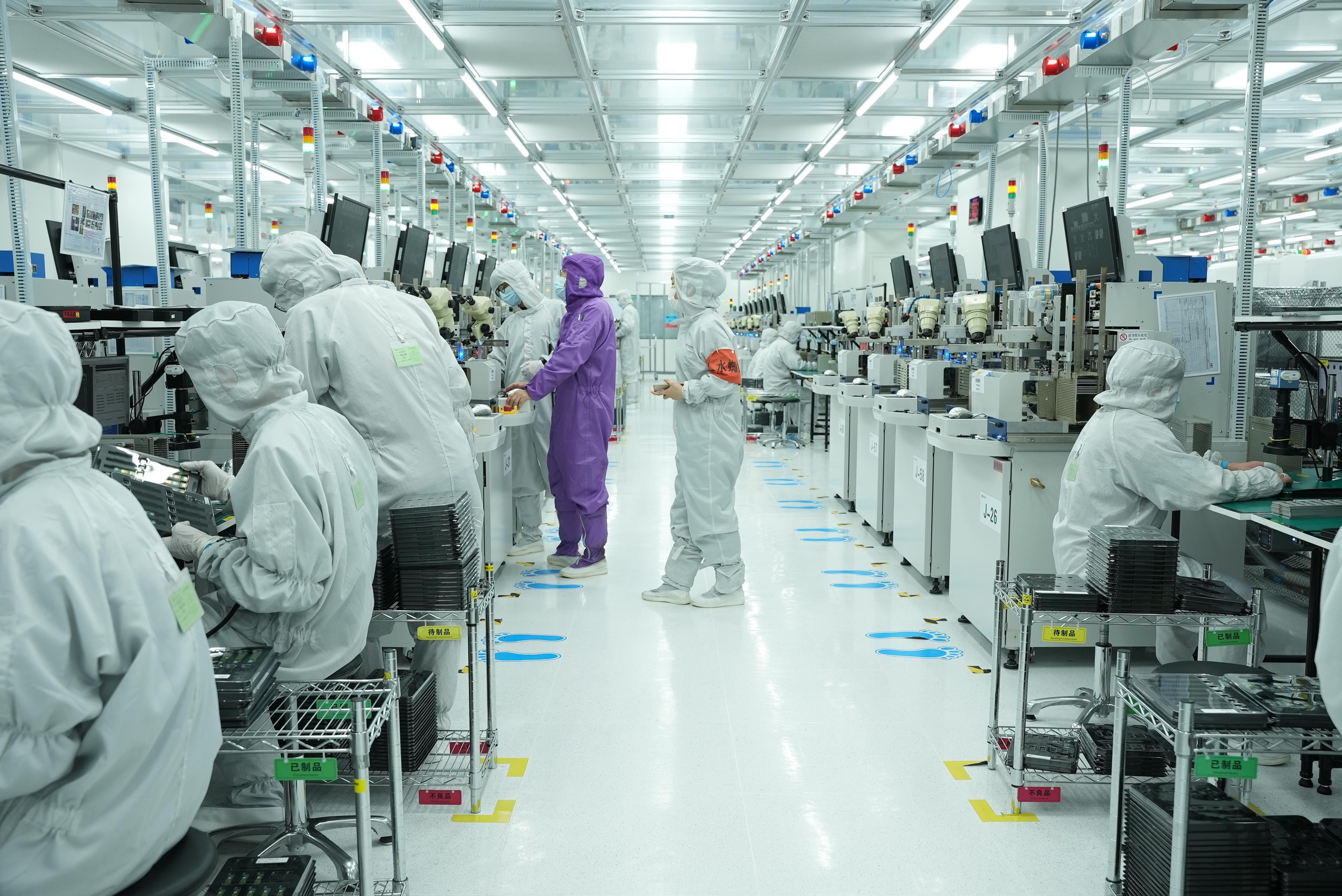
Core Viewpoint - The company, Huagong Technology, is experiencing significant demand for its AI high-speed optical modules, with production lines operating at full capacity to meet orders extending into the fourth quarter of the year [1][4]. Group 1: Production and Demand - Huagong Technology's production line for optical modules is fully operational, capable of producing 4,000 optical modules per day [1]. - The company has multiple production bases in Wuhan and Thailand, focusing on the mass production and delivery of 1.6T and 800G high-speed optical modules [1]. - The demand for AI high-speed optical modules is described as substantial, with orders already scheduled into the fourth quarter of the year [1]. Group 2: Technological Advancements - The company is advancing its optical interconnection technologies and packaging processes, which integrate optical transmission with AI algorithms, providing efficient solutions for data centers and computing networks [4]. - Huagong Technology is focusing on a full-stack layout of optical module technology, covering high-speed optical connections, high-speed copper connections, efficient liquid cooling, and optoelectronic integration [1][4]. - The company plans to increase the production capacity of 800G and 1.6T high-speed optical modules by over 50% this year to meet market demand [4]. Group 3: Future Projections - By 2025, Huagong Technology aims for a 111% increase in domestic production of high-speed optical modules and a 500% increase in overseas production [4]. - The company has introduced a breakthrough 3.2T optical module core technology product, the single-wave 400G optical engine, utilizing domestically produced silicon photonic chips [5]. - The company has launched a full range of industry-leading AI connection solutions, with 3.2T products already applied to leading industry clients [5]. Group 4: Talent and Innovation - Huagong Technology has implemented talent recruitment programs such as the "Falcon Plan" and "Doctor 500 Plan" to attract high-level talent, significantly increasing the number of R&D personnel by 133% since 2021 [6]. - The proportion of master's and doctoral talents within the company has risen from 13.5% in early 2021 to 27% by 2025 [6].
CPO,终于要来了?
半导体行业观察· 2026-02-24 01:23
Core Insights - The article discusses the transition of AI infrastructure competition from chip manufacturing to the efficiency of chip interconnections, highlighting the emergence of Co-Packaged Optics (CPO) as a critical industry focus [2][3] - CPO technology integrates high-speed optical engines with switching chips using advanced packaging techniques, aiming to address the limitations of traditional optical modules in terms of power consumption and bandwidth [6][9] Industry Trends - CPO is moving from a technical validation phase to early commercialization, with a projected global Datacom CPO market growth from under $70 million in 2024 to $8 billion by 2030, reflecting a compound annual growth rate of over 120% [6][9] - The interconnection rate is rapidly evolving from 400G/800G to 1.6T, with expectations to exceed 3.2T by 2027, indicating that traditional architectures are nearing performance ceilings and CPO's large-scale application is inevitable [6][9] Company Performance - Lumentum reported a 65% year-over-year revenue increase to $665.5 million in Q2 FY2026, driven by strong demand in AI and cloud computing, with CPO business emerging as a core growth engine [11][12] - Coherent's Q2 FY2026 revenue reached $1.686 billion, a 17% increase, with data center and communication segments driving growth, particularly through CPO advancements [20][21] - Tower Semiconductor announced a record revenue of $440 million in Q4 2025, with significant investments in silicon photonics to increase capacity fivefold by Q4 2026, indicating strong demand in the CPO market [28][29] Market Dynamics - The demand for CPO is evidenced by Lumentum's full order books and capacity constraints, with plans for further capacity expansion to meet increasing customer needs [14][31] - Coherent secured a substantial CPO order from a leading AI data center client, highlighting the strong market demand and the company's competitive advantage in high-power continuous wave laser technology [24][26] - Tower's silicon photonics capacity is largely pre-sold through customer commitments, indicating a robust market outlook and the urgency of expanding production capabilities [29][30] Future Outlook - CPO is expected to transition from initial deployment in horizontal scaling (Scale-Out) to broader applications in vertical scaling (Scale-Up), with significant market potential as traditional copper cables approach their performance limits [34][36] - The industry anticipates that CPO will gradually replace copper interconnections, with a projected market potential in the hundreds of billions of dollars, driven by AI infrastructure needs [31][36] - Despite current technological and market challenges, the trajectory for CPO indicates a clear path toward widespread adoption and integration into various applications beyond data centers [36][40]