
Performance Max

Search documents
谷歌Q4财报在即!4.1万亿美元市值面临考测,业绩增长需支撑估值扩张
Hua Er Jie Jian Wen· 2026-02-04 13:12
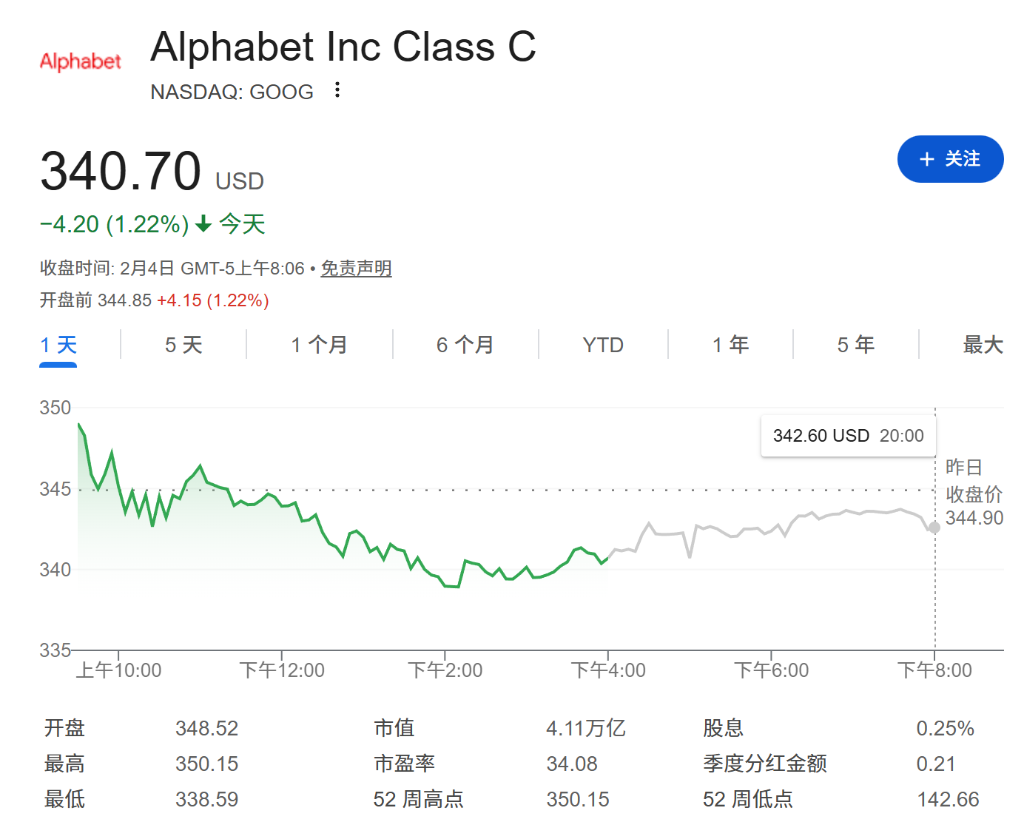
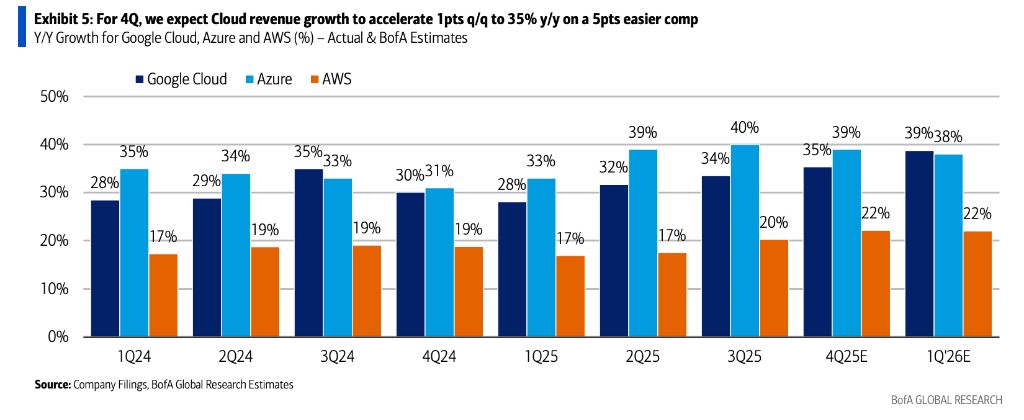
Core Viewpoint - Alphabet is set to report its quarterly earnings, with its market capitalization reaching a historic high of $4.1 trillion, just shy of surpassing Nvidia as the largest company by market value. The market is focused on whether Alphabet's performance can match its valuation, which is at an 18-year high [1][4]. Revenue and Earnings Expectations - Market expectations indicate a 17% revenue growth and a 23% increase in earnings per share (EPS) for Alphabet. Bank of America is more optimistic, predicting that both revenue and EPS will exceed consensus estimates, driven by a stable advertising market and accelerated growth in search and YouTube due to the Gemini 3.0 model [1][5]. Business Performance Insights - Alphabet's core business is on an accelerated growth path, with Q4 revenue forecasted at $95.9 billion and EPS at $2.65, both above Wall Street consensus. The search business is expected to grow 15% year-over-year to $61.9 billion, while YouTube ad revenue is projected to increase by 15% to $12 billion. The cloud business is anticipated to maintain a high growth rate of 35%, reaching $16.2 billion in revenue [5][6]. Capital Expenditure Concerns - Capital expenditures are expected to rise significantly, with Bank of America raising its 2026 forecast to $139 billion, well above the market expectation of $119 billion. This increase in spending is a focal point for investors, as it could impact stock performance. The situation is compared to Microsoft, which faced a sell-off due to slowing cloud growth and high AI spending, while Meta's strong revenue guidance justified its high expenditures [1][7]. Operational Efficiency and Other Business Lines - Alphabet's operational efficiency is improving, with a projected increase in operating profit margin to 39.1% in Q4. The company's other business lines, such as its autonomous driving unit Waymo, have also seen positive developments, with a recent funding round valuing it at $126 billion, nearly tripling its previous valuation [8].

谷歌财报前瞻:业绩大概率超预期,资本开支指引是最大看点
Hua Er Jie Jian Wen· 2026-02-02 13:36
Core Viewpoint - Bank of America expects Alphabet's Q4 revenue and earnings per share to exceed market expectations, with capital expenditure adjustments being a key variable in the upcoming earnings report [1] Group 1: Revenue and Earnings Expectations - Q4 revenue forecast raised to $95.9 billion, above market expectation of $95.2 billion; earnings per share adjusted to $2.65, slightly above the market expectation of $2.64 [1] - Search revenue forecast increased from $61.5 billion to $61.9 billion, maintaining a 15% year-over-year growth rate; YouTube ad revenue forecast raised from $11.8 billion to $12.0 billion, also reflecting a 15% growth [2] - Cloud business revenue forecast remains at $16.2 billion, showing a 35% year-over-year increase [2] Group 2: Advertising Market and Innovations - Strong performance from Meta indicates stability in the digital advertising market; Google's advertising innovations are gaining momentum, particularly with the integration of the Gemini model [5] - AI-driven tools like Performance Max and AI Max are enhancing the effectiveness of user data for targeted advertising, potentially offsetting any negative impacts on query volume and click rates [5] Group 3: Cost Management and Expenses - Q4 operating expenses expected to be $28 billion, below market expectations of $28.7 billion, with a year-over-year increase of 13%; operating margin projected to improve by 119 basis points to 39.1% [6] - Depreciation expenses anticipated to rise significantly by 49% year-over-year to $6.3 billion; excluding depreciation and amortization, expense growth is only 5.3% year-over-year [6] Group 4: Capital Expenditure and Future Investments - Capital expenditure forecast for 2026 raised by 14% to $139 billion, significantly above market expectations of $119 billion; this represents a 50% year-over-year increase [10] - Q4 capital expenditure expected to reach $29.2 billion, a 22% quarter-over-quarter increase and a 105% year-over-year increase [12] - The company is focusing on AI and cloud business expansion, with a significant portion of capital expenditure directed towards technology infrastructure [12] Group 5: Growth Potential in Search and Cloud Business - Analysts believe that the market may underestimate the growth potential of Alphabet's search business in 2026, driven by increased user engagement and monetization opportunities [14] - The collaboration between Gemini 3.0 and TPU is expected to create a differentiated advantage for Google products, potentially leading to new large contract signings in the cloud business [14]
AI投资进入关键验证期、自动驾驶出行渐行渐近……高盛预测2026年十大焦点行业主题
硬AI· 2025-12-12 09:34
Core Insights - 2026 is viewed as a critical year for the commercialization of AI, with Goldman Sachs identifying ten key industry themes that include the rise of generative AI, the integration of advertising and e-commerce, and the acceleration of autonomous driving [2][3] Group 1: AI Commercialization and Investment - The focus will shift from capital expenditure to the actual utility and commercial returns of AI applications in 2026, marking a potential turning point in consumer computing habits [3][6] - Despite concerns over "overbuilding," Goldman Sachs expects high levels of AI-related capital investment to continue in 2026, with a significant increase in capital expenditure forecasts for Amazon, Google, and META [4] Group 2: Consumer AI Landscape - The rise of generative AI and agentic capabilities will redefine consumer experiences, blurring the lines between search and application functionalities [5][7] - The market will increasingly focus on diverse monetization strategies for AI, including advertising and commercial applications, beyond just subscription models [6] Group 3: Advertising and E-commerce Integration - The boundaries between traditional advertising and e-commerce are dissolving, with social platforms enhancing user experiences and e-commerce platforms leveraging retail media networks for advertising revenue [8][9] - Goldman Sachs projects Amazon's advertising business to maintain an approximately 8% compound annual growth rate from 2025 to 2030, with the creator economy playing a crucial role in driving traffic and conversions [9] Group 4: AI's Impact on Advertising - Digital advertising is currently the most mature vertical for AI product development and adoption, with platforms like Google's Performance Max and META's Advantage+ leading in AI automation tools [11][12] Group 5: Local Business Competition Dynamics - On-demand delivery platforms like UBER, DASH, and CART are expanding product categories to enhance user retention and engagement, particularly in grocery and retail sectors [16][17] Group 6: Autonomous Driving and Mobility - The large-scale adoption of autonomous vehicles (AV) is expected to unfold over the next 5-7 years, with a hybrid model of human drivers and AVs emerging to meet global demand [18][19] Group 7: Interactive Entertainment Evolution - Interactive entertainment companies are expanding into new media and verticals to increase consumer engagement, with trends including the integration of live entertainment and AI tools to enhance content development [19][20] Group 8: Health and Wellness Market Opportunities - Post-pandemic, consumer focus on health outcomes has intensified, leading to a trend of integrating physical hardware with subscription services, such as AI-enhanced fitness systems [22][23] Group 9: Balancing Growth and Investment - Companies are increasingly differentiating between growth investments and profit margins, with some prioritizing long-term growth plans over short-term profit maximization [26][27]




AI投资进入关键验证期、自动驾驶出行渐行渐近……高盛预测2026年十大焦点行业主题
Hua Er Jie Jian Wen· 2025-12-12 07:21
Core Insights - 2026 is projected to be a pivotal year for AI technology validation, shifting market focus from capital expenditure to practical utility and commercialization returns [1] - The report by Goldman Sachs indicates that the adoption of general large language models (LLMs) and chatbots will significantly increase in 2025, marking a turning point in consumer computing [2] Group 1: Capital Expenditure and Investment Trends - Despite concerns over "overbuilding," Goldman Sachs expects AI-related capital expenditures to remain high in 2026, with capital spending expectations for Amazon, Google, and META raised by approximately 46% and 80% for the fiscal years 2025 and 2026, totaling an increase of about $250 billion [2] - The ability of these substantial investments in AI development to translate into visible profit returns will be a key factor influencing investor sentiment and company performance over the next 12 to 18 months [2] Group 2: Evolution of Consumer AI Landscape - The discussion around AI is shifting from infrastructure to application, with 2026 potentially being a critical point for changes in consumer computing habits, focusing on diverse monetization models beyond paid subscriptions [2] - The integration of "agentic AI" that can plan multi-step processes and make autonomous decisions is expected to blur the lines between search and applications, significantly impacting consumer behavior [2] Group 3: Advertising and E-commerce Dynamics - The boundaries between traditional advertising and e-commerce are dissolving, with social platforms enhancing user experiences and logistics partnerships to accelerate social commerce [3] - Amazon's advertising business is projected to maintain an annual compound growth rate of about 8% from 2025 to 2030, with the creator economy playing a crucial role in driving traffic and conversions [3] Group 4: AI's Impact on Advertising Landscape - Digital advertising is currently the most mature vertical for AI product development and adoption, with platforms like Google's Performance Max and META's Advantage+ leading in AI automation tools [5] - AI is expected to redistribute profit pools within the advertising industry, with large platforms benefiting from their data and computational advantages [6] Group 5: Local Business Competition Dynamics - On-demand delivery platforms like UBER, DASH, and CART are expanding product categories to improve user retention and engagement, particularly in grocery and retail sectors with low online penetration [8] - Cross-platform consumer retention rates are higher, with spending three times that of single-use consumers, leading to intensified competition in delivery speed [9] Group 6: Future of Mobility Networks - Discussions around autonomous vehicles (AVs) focus on partnerships, urban expansion, and market share, with large-scale adoption expected over the next 5-7 years [10] - Waymo is expanding its operations as a leading AV operator in the U.S., with costs expected to decrease as dedicated hardware scales, enhancing affordability and penetration in shared mobility [10] Group 7: Evolution of Interactive Entertainment - Interactive entertainment companies are increasing consumer touchpoints by expanding into new media and verticals, with trends including the integration of live entertainment and AI to enhance content development efficiency [11] Group 8: Transition to Spatial Computing - Major companies like META, Google, and Apple are investing in spatial computing, transitioning from mobile devices to more immersive interaction methods, with advancements in hardware, software, and connectivity being crucial [12][13] Group 9: Health and Wellness Market Opportunities - Post-pandemic, consumer focus on health outcomes has increased, with a trend towards the integration of hardware and software in health tracking, driving downloads and subscriptions for related applications [14] Group 10: Balancing Growth and Incremental Investment - Companies are showing a divergence in balancing growth investments with profit margins, with some prioritizing long-term growth plans over short-term profit maximization [15]
GOOGL Price Target Raise, SNPS Strong Guidance, LLY Retratrutide Results
Youtube· 2025-12-11 15:15
Synopsis - Synopsis reported adjusted EPS of 290, beating the expected 278, with revenue of 2.4 billion, slightly above the anticipated 2.24 billion [2][4] - The company achieved record full-year performance with fiscal 2025 revenue reaching 7.1 billion, a 15% increase from fiscal 2024 [4] - The backlog stood at 11.4 billion, and the CFO anticipates another revenue record in 2026 [4] - The ANCIS acquisition contributed 2.9 billion in revenue, impacting Q4 results [5] - Analysts are optimistic, with Morgan Stanley raising its price target to 550 from 510, Bank of America upgrading to a buy with a target of 560, and JP Morgan Chase increasing its target to 650 [6][7] Alphabet (Google) - Alphabet has been a strong performer in the MAG 7, with Piper Sandler reiterating an overweight rating and raising the price target from 330 to 365 [8][9] - The increase reflects stronger fundamentals and improved ad buyer sentiment, with Google search gaining digital ad budget share for the first time in three years [9][10] - The latest iteration of Gemini is performing well, and both Performance Max and Gemini are driving incremental revenue and enhancing advertiser insights [11][12] Eli Lilly - Eli Lilly reported positive trial results for its next-generation weight loss drug, showing patients lost about 25% of their weight over 68 weeks [14][15] - The drug targets conditions linked to obesity, reinforcing Eli Lilly's position in a market projected to reach 100 billion by 2030 [15] - Eli Lilly has been outperforming competitors like Novartis in the obesity treatment sector [16]



互联网 - 美国数字广告 2025 年第三季度预览-分析行业争论与预期-Americas Technology_ Internet_ US Digital Ad Q3'25 Preview_ Analyzing the Industry Debates & Estimates
2025-10-16 01:48
Summary of Key Points from the Conference Call Industry Overview - The conference call focuses on the digital advertising sub-sector in the Americas, specifically analyzing the Q3 2025 earnings season and making stock recommendations for companies within this industry [1][2]. Company Ratings and Price Targets - **MAX**: Downgraded from Buy to Neutral with a 12-month price target of $12.00 (previously $14.50) [1] - **IBTA**: Downgraded from Neutral to Sell with a 12-month price target of $26 (previously $30) [1] - **Unity (U)**: Initiated coverage with a Neutral rating and a 12-month price target of $38 (previously $32.50) [1][2]. - **Alphabet (GOOGL)**: Maintained Buy rating, raised price target to $288 from $234 [50]. - **Meta Platforms (META)**: Maintained Buy rating, raised price target to $870 from $830 [50]. - **Pinterest (PINS)**: Maintained Buy rating with a price target of $43 [50]. - **Opera (OPRA)**: Maintained Buy rating with a price target of $24.50 [50]. - **AppLovin (APP)**: Neutral rating with a price target of $630 [50]. - **Ibotta (IBTA)**: Downgraded to Sell with a price target of $26 [50]. Core Industry Insights - **Performance Trends**: Sustained momentum in performance-oriented budgets, particularly in direct response channels, was noted throughout Q3, with strong performance in July and August [2]. - **Brand Advertising**: Continued headwinds from a weaker brand advertising environment, especially from large advertisers, but easing revenue headwinds were observed in September, potentially improving Q4 [2]. - **Experimental Budgets**: Volatility in experimental budgets remains, with smaller platforms experiencing stalled or downside volatility [2]. - **Programmatic Platforms**: The value of programmatic platforms like Meta's Advantage+ and Alphabet's Performance Max continues to grow, attracting more industry budgets [2]. Industry Vertical Performance - **Retail & eCommerce**: Advertisers are deploying marketing dollars against stable end demand trends, particularly in less discretionary verticals [3]. - **Online Travel**: Normalizing around mid to high single-digit growth in 2H 2025, with marketing budgets adjusting accordingly [5]. - **Automotive**: Stable spending aligned with usual seasonality in Q3 [5]. - **Consumer Packaged Goods (CPG)**: Mixed trends with stable marketing and the rise of emerging brands [5]. Key Themes and Risks - **AI and Automation**: Increasing adoption of AI-driven programmatic systems is a significant theme, with potential impacts on advertising budget trends [5][6]. - **Direct Response vs. Brand Advertising**: Direct response spending remains resilient, while brand advertising is more volatile and subject to cuts during economic downturns [16]. - **User Engagement**: User growth and engagement trends are stable to rising, particularly in international markets, with short-form video driving engagement [16][30]. Pricing Trends - Q3 pricing trends across the digital advertising landscape showed slight growth year-over-year, with average CPMs for Meta's platforms experiencing a decrease of approximately 4% quarter-over-quarter but an increase of 3% year-over-year [20][25]. Conclusion - The digital advertising sector is experiencing a mix of challenges and opportunities, with a focus on performance-oriented budgets and the impact of AI on advertising strategies. Companies like GOOGL and META are positioned positively, while others face varying degrees of risk and opportunity based on their exposure to different advertising verticals and market dynamics [7][50].

AI颠覆广告利润池
3 6 Ke· 2025-07-04 09:55
Group 1: Core Insights - AI is reshaping the advertising industry at an unprecedented pace, acting as an engine for a new revolution in the field [1] - Goldman Sachs predicts that AI will disrupt a global advertising profit pool of approximately $470 billion in the coming years [1][2] - The transformation encompasses various aspects including ad placement, content creation, audience targeting, and creative production [1] Group 2: AI's Impact on Advertising Profit Pool - AI is expected to accelerate the shift of traditional advertising budgets towards more efficient and measurable digital channels, representing a $170 billion opportunity [2][3] - The penetration rate of digital advertising has increased from 40.8% in 2017 to an estimated 69% by 2024, with an annual increase of about 4 percentage points [2] - Generative AI is projected to save $114 billion in creative production costs by replacing expensive and time-consuming creative development processes [3] - Automation platforms are challenging the core value of traditional advertising agencies, with a potential impact of $161 billion on their annual revenue [3] - AI-driven platforms are reducing the need for third-party advertising technology intermediaries, potentially squeezing about $25 billion from their profit margins [3] Group 3: Leading AI Advertising Products - Google's Performance Max and Meta's Advantage+ are recognized as the most successful integrated AI advertising products, allowing advertisers to automate cross-channel ad decisions and optimizations [4][5] - The adoption rate of Performance Max among advertisers in the U.S. surged from 2% in Q4 2021 to 59% by Q4 2024, accounting for 46% of Google's total ad spending [5] - Meta's Advantage+ saw a similar growth, with adoption rising from 2% in Q1 2023 to 36% by Q4 2024 [5] Group 4: Chinese Players in AI Advertising - Chinese tech giants like ByteDance, Tencent, and Alibaba are heavily investing in AI to lead the next generation of advertising paradigms [6] - ByteDance is enhancing its advertising creative production process with its "Instant Creation AI" platform, significantly reducing the time required to generate video and graphic materials [7][8] - Tencent's "Miao Si" platform leverages its self-developed AI model to provide various creative generation tools, improving efficiency by hundreds of times compared to traditional methods [11][12] - Alibaba's "Wanshang Laboratory" offers generative AI products that allow merchants to create high-quality advertising materials quickly, improving production efficiency by five times [16][17] Group 5: Overall Industry Transformation - The integration of AI in advertising is leading to more efficient and precise ad placements, while also enhancing the creativity and reducing costs of ad content production [18] - The value distribution in the advertising industry is being reshaped, with platform-based companies that possess data and technological advantages capturing more profits [18] - Advertisers and consumers are expected to benefit from higher ROI and more personalized ad experiences, respectively [18]

