
PowerShares DB Silver Fund(DBS)

Search documents
四连跌停后仍有37%的溢价!白银LOF暴跌拷问产品设计逻辑
Mei Ri Jing Ji Xin Wen· 2026-02-06 00:53
Core Viewpoint - The significant drop of over 30% in the net value of Guotou Ruijin Silver LOF raises critical questions about the underlying design logic of the product, highlighting the challenges in implementing hedging strategies to mitigate losses [1][4]. Group 1: Product Design and Investor Expectations - Investors are suggesting that the fund company should temporarily break conventional rules to use derivatives for hedging, but industry insiders indicate that this is difficult due to product positioning, risk matching, and operational feasibility [1][5]. - The fund's design aims to track silver prices closely, with strict guidelines limiting the use of derivatives to maintain its passive tracking nature, which would be compromised by introducing hedging strategies [6][7]. Group 2: Risk and Suitability of Investors - The introduction of hedging strategies could misalign with the risk tolerance of current investors, as these strategies may introduce new risks that could exacerbate losses [7]. - The fund's current scale and risk profile are aligned with its existing investors, and any changes to the investment strategy could lead to a mismatch in risk tolerance [7]. Group 3: Operational Feasibility and Market Comparisons - Achieving perfect hedging through derivatives for a single asset like silver is unrealistic, and even similar products in overseas markets face challenges [8]. - The closest comparable product in the U.S. market, PowerShares DB Silver Fund, has faced significant issues, including a complete liquidation due to market volatility [8]. Group 4: International Product Insights - Internationally, physical silver ETFs and other investment vehicles are more prevalent, with physical silver ETFs offering a more viable model for addressing high entry barriers and storage costs in the domestic market [10][11]. - The design of physical silver ETFs could provide a framework that aligns with regulatory requirements and investor risk preferences, potentially filling gaps in the domestic silver investment landscape [11]. Group 5: Future Considerations and Industry Reflection - The recent valuation event of Guotou Ruijin Silver LOF has prompted a reevaluation of product designs within the public fund industry, emphasizing the need for improved risk management standards [17]. - The industry may need to adapt its product design philosophy and risk control measures in response to extreme market conditions, as current frameworks may not adequately address unforeseen market volatility [17].

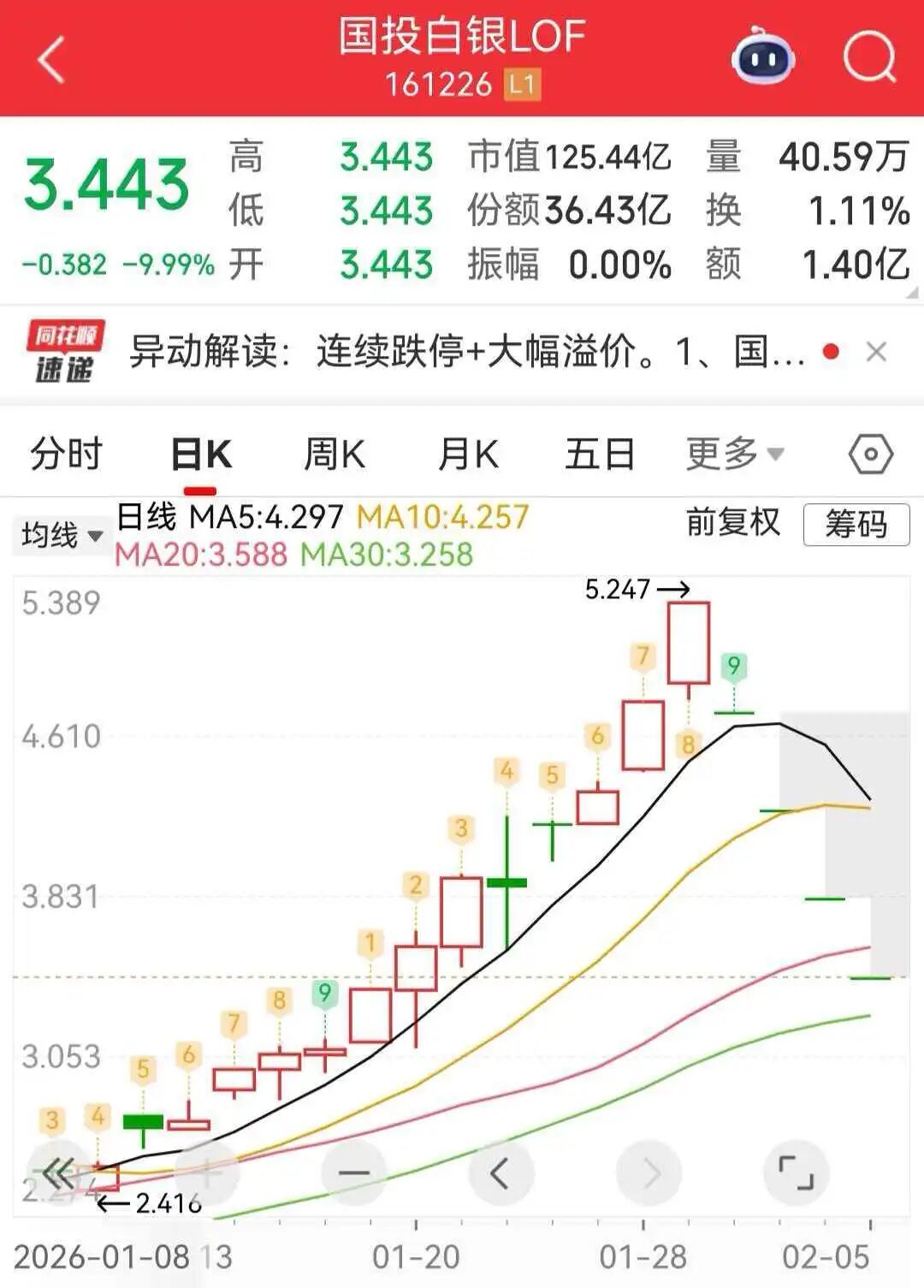
四连跌停后仍有37%的溢价!白银LOF暴跌拷问产品设计逻辑 再次面临极端行情能否扛住压力?
Mei Ri Jing Ji Xin Wen· 2026-02-06 00:45
Core Viewpoint - The significant drop of over 30% in the net value of Guotou Ruijin Silver LOF raises questions about the underlying design logic of the product, prompting investors to seek temporary measures to mitigate losses through derivative hedging, which faces substantial barriers in terms of product positioning, risk matching, and practical implementation [2][4][5]. Group 1: Product Design and Intent - The primary intent of the Guotou Ruijin Silver LOF is to track silver price movements, utilizing futures contracts due to their liquidity, while the physical silver market lacks sufficient depth for large capital movements [6]. - The product is designed to maintain a tracking deviation of no more than 0.5% daily and an annual tracking error of no more than 7%, indicating its nature as a passive tracking tool rather than an actively managed product [6]. Group 2: Investor Suitability and Risk - Introducing hedging mechanisms could misalign the product's risk profile with the existing investors' risk tolerance, as the current holders are matched to a medium-high risk level [7]. - The complexity of hedging strategies may introduce new risks, potentially exacerbating losses if the hedging fails, which could lead to a mismatch between the product's risk and the investors' capacity to bear it [7]. Group 3: Practical Implementation Challenges - Achieving perfect hedging through derivatives for a single asset like silver is unrealistic, and even similar products in overseas markets face challenges, such as the PowerShares DB Silver Fund, which has been affected by futures roll costs and market volatility [8]. - The historical limitations of product design mean that the current framework cannot adequately address extreme market conditions, highlighting the unpredictability of market behavior [9]. Group 4: International Product Comparisons - Internationally, the main silver investment products include physical silver ETFs, silver futures, and silver mining ETFs, with physical silver ETFs being particularly relevant for the Chinese market due to their ability to address high entry barriers and storage costs [11]. - The design of physical silver ETFs, which combines physical backing with share issuance, could provide a model for domestic products, enhancing tracking accuracy and reducing costs [11]. Group 5: Future Product Development - The potential transition of Guotou Ruijin Silver LOF to a QDII-FOF model faces fundamental challenges, particularly regarding the underlying assets, as investing in futures would not fundamentally improve the current model [14]. - The inability to launch a silver ETF in China due to tax implications on physical silver investments presents a significant barrier to developing more effective investment products [14].
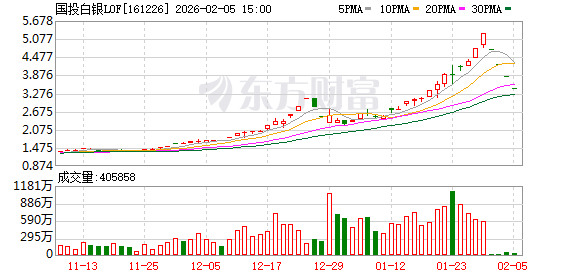
四连跌停后仍有37%的溢价!白银LOF暴跌拷问产品设计逻辑,再次面临极端行情能否扛住压力?
Mei Ri Jing Ji Xin Wen· 2026-02-06 00:38
Core Viewpoint - The significant drop of over 30% in the net value of Guotou Ruijin Silver LOF has raised questions about the underlying design logic of the product, prompting investors to suggest temporary measures such as using derivatives for hedging to mitigate losses, which industry insiders deem difficult due to product positioning, risk matching, and operational feasibility [1][2]. Group 1: Product Design and Intent - The primary intent of the Guotou Ruijin Silver LOF is to track silver price movements, utilizing futures contracts due to their liquidity, while the spot market lacks sufficient depth for large transactions [3]. - The product is designed to maintain a tracking deviation of no more than 0.5% daily and an annual tracking error of no more than 7%, indicating its nature as a passive tracking tool rather than an actively managed product [3]. Group 2: Investor Suitability and Risk - Introducing hedging mechanisms could misalign the risk profile of the fund with the existing investors' risk tolerance, as the current fund holders are matched to a medium-high risk level [4]. - The complexity of hedging strategies may introduce new risks, potentially exacerbating losses rather than mitigating them, which raises concerns about the appropriateness of such strategies for current investors [4]. Group 3: Operational Feasibility and Market Comparison - Achieving perfect hedging through derivatives for a single asset like silver is unrealistic, and even in international markets, similar products that effectively manage such risks are scarce [5]. - The closest international counterpart, the PowerShares DB Silver Fund, faced challenges due to futures contract roll costs and market volatility, leading to its liquidation in March 2023 [5]. Group 4: Alternative Investment Structures - Internationally, physical silver ETFs and silver mining ETFs are more prevalent, with physical silver ETFs offering a more accessible investment structure that could address high entry barriers and storage costs in the domestic market [8]. - The design of physical silver ETFs, which combines physical backing with share issuance, could enhance tracking accuracy and reduce costs, making it suitable for domestic investors [8]. Group 5: Future Considerations for Product Design - The current situation highlights the historical limitations of product design, which did not anticipate extreme market conditions, suggesting a need for a thorough review of product categories and risk management standards in the industry [14]. - Future product designs may need to adapt based on lessons learned from this incident, potentially leading to changes in risk control measures and investment strategies [14].
