风险匹配

Search documents
四连跌停后仍有37%的溢价!白银LOF暴跌拷问产品设计逻辑 再次面临极端行情能否扛住压力?
Mei Ri Jing Ji Xin Wen· 2026-02-06 00:45
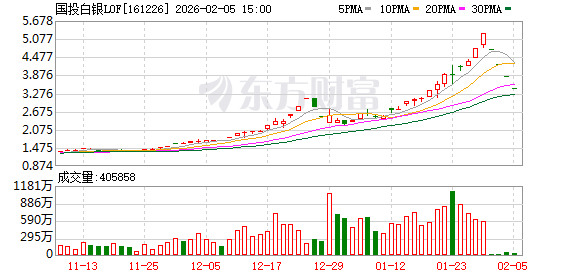
Core Viewpoint - The significant drop of over 30% in the net value of Guotou Ruijin Silver LOF raises questions about the underlying design logic of the product, prompting investors to seek temporary measures to mitigate losses through derivative hedging, which faces substantial barriers in terms of product positioning, risk matching, and practical implementation [2][4][5]. Group 1: Product Design and Intent - The primary intent of the Guotou Ruijin Silver LOF is to track silver price movements, utilizing futures contracts due to their liquidity, while the physical silver market lacks sufficient depth for large capital movements [6]. - The product is designed to maintain a tracking deviation of no more than 0.5% daily and an annual tracking error of no more than 7%, indicating its nature as a passive tracking tool rather than an actively managed product [6]. Group 2: Investor Suitability and Risk - Introducing hedging mechanisms could misalign the product's risk profile with the existing investors' risk tolerance, as the current holders are matched to a medium-high risk level [7]. - The complexity of hedging strategies may introduce new risks, potentially exacerbating losses if the hedging fails, which could lead to a mismatch between the product's risk and the investors' capacity to bear it [7]. Group 3: Practical Implementation Challenges - Achieving perfect hedging through derivatives for a single asset like silver is unrealistic, and even similar products in overseas markets face challenges, such as the PowerShares DB Silver Fund, which has been affected by futures roll costs and market volatility [8]. - The historical limitations of product design mean that the current framework cannot adequately address extreme market conditions, highlighting the unpredictability of market behavior [9]. Group 4: International Product Comparisons - Internationally, the main silver investment products include physical silver ETFs, silver futures, and silver mining ETFs, with physical silver ETFs being particularly relevant for the Chinese market due to their ability to address high entry barriers and storage costs [11]. - The design of physical silver ETFs, which combines physical backing with share issuance, could provide a model for domestic products, enhancing tracking accuracy and reducing costs [11]. Group 5: Future Product Development - The potential transition of Guotou Ruijin Silver LOF to a QDII-FOF model faces fundamental challenges, particularly regarding the underlying assets, as investing in futures would not fundamentally improve the current model [14]. - The inability to launch a silver ETF in China due to tax implications on physical silver investments presents a significant barrier to developing more effective investment products [14].

50万亿定存到期潮!钱怎么投?银行理财、基金配置新答案
Sou Hu Cai Jing· 2026-01-27 07:52
Core Insights - A significant amount of deposits is maturing, with estimates suggesting that the nationwide maturing fixed deposits could reach 50 trillion yuan this year, prompting a shift in investment strategies among residents [2][3] Group 1: Deposit Trends and Investment Shifts - The continuous decline in deposit interest rates has led to a reassessment of investment options, with many conservative investors opting to renew deposits or shift towards insurance products, while risk-tolerant investors are increasingly exploring funds and bank wealth management products [2][3] - The People's Bank of China has indicated that a large volume of long-term deposits will mature by 2026, which will compel depositors to consider alternatives like bank wealth management and funds due to lower interest rates [3][4] Group 2: Performance of Financial Products - In 2025, the capital market is expected to show an upward trend, with median returns for equity and mixed funds reaching 26.42% and 22.92% respectively, while bank wealth management products are projected to yield around 2% [4] - Despite the decline in returns from wealth management products due to bond market fluctuations, they still offer a better yield compared to traditional deposits [4] Group 3: Customer Behavior and Market Dynamics - The transition of funds from deposits to investment products is gradual, with increased interest in funds noted since last year, particularly during the year-end and early-year periods when many customers receive bonuses or have maturing funds [5][6] - Many ordinary depositors remain unaware of the implications of interest rate cuts, often choosing to reinvest in fixed deposits rather than exploring other investment avenues [6] Group 4: Investment Strategies and Recommendations - Financial advisors are increasingly recommending diversified investment strategies, emphasizing the importance of balanced asset allocation to mitigate risks associated with market volatility [8][10] - Investment firms are adapting their product offerings to meet the evolving needs of clients, focusing on multi-strategy and multi-asset solutions to enhance returns while managing risk [8][9]
银行批量上调代销基金风险等级 投资者如何应对?
Guo Ji Jin Rong Bao· 2025-11-28 12:52
Core Viewpoint - Banks are increasingly adjusting the risk levels of mutual fund products they distribute, with several banks, including China Construction Bank and Minsheng Bank, making multiple adjustments this year to align with market conditions and regulatory requirements [1][3][4]. Group 1: Bank Adjustments - China Construction Bank has announced a batch increase in the risk levels of 87 mutual fund products, marking the fourth adjustment this year [1][3]. - Minsheng Bank has also made four similar adjustments since October, with the latest announcement on November 18 regarding eight lower-risk fund products being raised to medium risk [1][3]. - Postal Savings Bank has adjusted the risk levels of 86 mutual fund products in two recent announcements [1][4]. Group 2: Reasons for Adjustments - The adjustments are attributed to a combination of mutual fund product characteristics, market conditions, and regulatory guidance, which aim to reduce the risk mismatch between investors and products [1][4]. - Changes in investment strategies and asset allocations of certain funds have increased their net value volatility, prompting institutions to reassess the risk-return alignment [4]. - Regulatory frameworks, such as the Asset Management New Regulations, are reinforcing the core requirement of "risk matching," compelling institutions to establish dynamic risk rating mechanisms [4][5]. Group 3: Future Implications - The adjustments may become a regular practice as banks are required to dynamically assess product risks to fulfill their suitability obligations and protect investor interests [5]. - Short-term impacts may lead conservative investors to redeem their investments due to increased risk levels, while long-term benefits include enhanced risk transparency and reduced risk mismatch [5][6]. - This shift is expected to drive the wealth management industry towards a service-oriented model, encouraging fund companies to improve their research and investment capabilities [5][6].