
R5系列无人车

Search documents
无人车公司白犀牛再融资,全年总额已超1亿美元
3 6 Ke· 2025-12-19 03:07
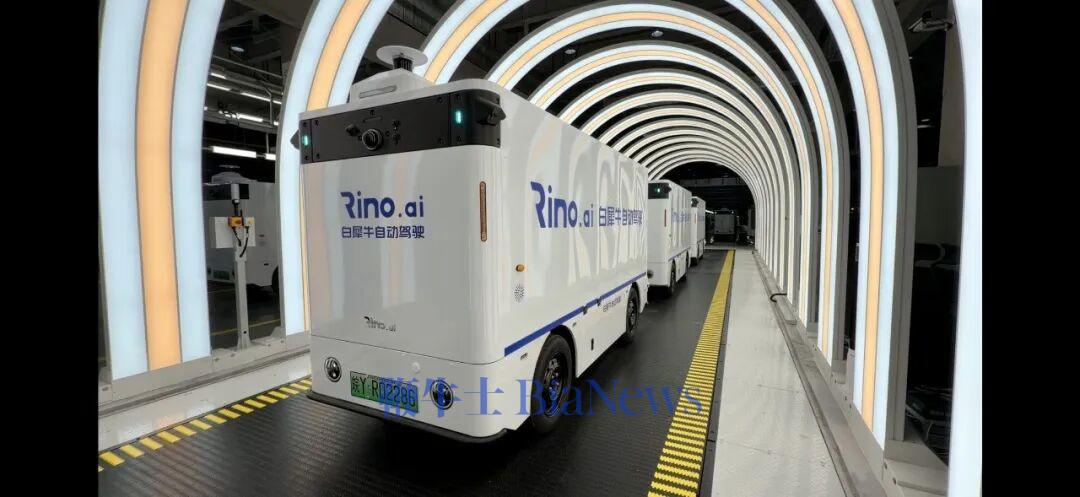
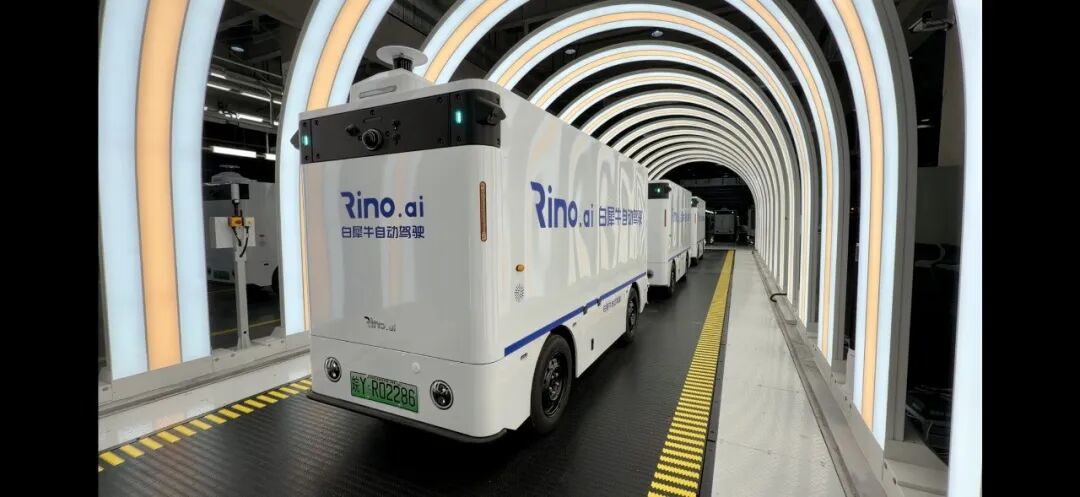
Group 1 - White Rhino, an L4 autonomous driving company, recently completed a new round of financing with investors including Jiukun Venture Capital and Qifu Capital, aimed at accelerating the mass production and market promotion of its autonomous vehicle platform [1][3] - The company was founded in April 2019 by former Baidu autonomous driving team members and focuses on developing full-stack autonomous delivery solutions [2] - By 2025, White Rhino has completed three rounds of financing, raising over $100 million, with significant business growth reflected in the increase of active autonomous vehicles from approximately 100 in December 2023 to over 2000 by the end of the year [3][8] Group 2 - The logistics sector targeted by White Rhino is at a critical point for large-scale implementation, with over 103 cities in China opening up road rights for autonomous delivery vehicles [4][8] - White Rhino's main product, the R5 series autonomous vehicle, has a cargo volume of 5.5m³ and can carry over 500 packages, serving major logistics companies and covering more than 170 cities [7] - The global market for autonomous logistics vehicles is projected to reach 3.6 trillion yuan by 2030, with China accounting for about 40% of this market [8] Group 3 - The industry is moving towards vehicle-grade standards, driven by customer demands for lower lifecycle costs and higher safety [9] - Challenges include the legal status of autonomous delivery vehicles and the need for stringent engineering standards to ensure reliability under extreme conditions [10] - White Rhino is developing a vehicle-grade autonomous vehicle platform that is expected to be the first in China capable of mass production and delivery of true vehicle-grade L4 autonomous logistics vehicles [10][13]

无人车公司白犀牛再融资,全年总额已超1亿美元|36氪独家
3 6 Ke· 2025-12-18 07:02
Core Insights - White Rhino, an L4 autonomous driving company, has recently completed a new round of financing to accelerate the mass production and market promotion of its vehicle platform, enhance core technology R&D, and expand into high-value scenarios like instant delivery and overseas markets [1][3] Group 1: Company Overview - White Rhino was founded in April 2019 by former Baidu autonomous driving team members and focuses on developing full-stack autonomous delivery solutions [3] - The company has completed three rounds of financing by 2025, raising over $100 million, with significant investments from major logistics companies like SF Express [3] - The active fleet of White Rhino's autonomous vehicles has grown from approximately 100 units in December 2023 to over 2000 units by the end of the year, achieving more than 20 times business growth [3][5] Group 2: Market Dynamics - The market for autonomous logistics vehicles is at a critical inflection point, with over 103 cities in China opening up road rights for autonomous delivery vehicles [5] - According to a McKinsey report, the global market for autonomous logistics vehicles is projected to reach 3.6 trillion yuan by 2030, with China accounting for about 40% of this market [5] Group 3: Product and Technology - White Rhino's main product, the R5 series autonomous vehicle, has a cargo volume of 5.5 m³ and can carry over 500 packages with a range of over 120 kilometers on a single charge [5] - The company aims to meet "vehicle-grade" standards, which require higher durability and lower lifecycle costs compared to non-vehicle-grade vehicles [8][9] - White Rhino is developing a vehicle-grade autonomous vehicle platform that is modular and adaptable to various logistics scenarios, positioning itself as a potential leader in mass production capabilities for vehicle-grade L4 autonomous delivery vehicles [9][11]
顺丰三次加注,无人车公司「白犀牛」完成近5亿元B轮融资|36氪独家
3 6 Ke· 2025-08-21 01:33
Core Insights - The core focus of the article is on the recent B+ round financing of the autonomous driving company, White Rhino, which has raised nearly 500 million RMB in total during its B round, indicating strong investor confidence in the logistics automation sector [1][2]. Financing and Investment - White Rhino has completed its B+ round financing, accumulating nearly 500 million RMB in total for its B round, with existing investors like SF Express and Linear Capital participating alongside new investors such as Jun Capital and 360 Fund [1]. - The funds from this round will be directed towards the development of vehicle-grade autonomous vehicles, continuous iteration of AI technology, and expansion into commercial scenarios [1][6]. Market and Business Model - The company is targeting the unmanned logistics sector, which is currently experiencing a commercial explosion due to technological advancements, cost reductions, and supportive government policies [1][3]. - White Rhino's primary product, the R5 series unmanned vehicle, has a cargo volume of 5.5 m³ and can carry over 500 packages, with a range of over 120 kilometers on a full charge [4]. - The company aims to increase its daily active vehicle count to 5,000 by 2026, with current active vehicles growing from nearly 100 at the end of 2023 to around 1,000 by August [4][9]. Operational Efficiency - White Rhino's unmanned vehicles can reduce last-mile delivery costs by 30%-50%, addressing the inefficiencies and high labor costs associated with traditional delivery methods [5]. - The vehicles operate 24/7, allowing for remote scheduling and execution of delivery tasks, thus enhancing operational efficiency for clients [5]. Technological Development - The company is focusing on developing vehicle-grade autonomous vehicles, which are expected to enhance asset value and improve market deployment rates and safety [6]. - White Rhino is transitioning from high-precision mapping to a BEV+Transformer architecture, which integrates multi-sensor data to reduce errors and improve adaptability in complex scenarios [7][8]. Future Prospects - As the company approaches a scale of 10,000 vehicles, it anticipates achieving financial profitability, with a clear path towards commercialization as the industry shifts from technology validation to rational consumer adoption [9].