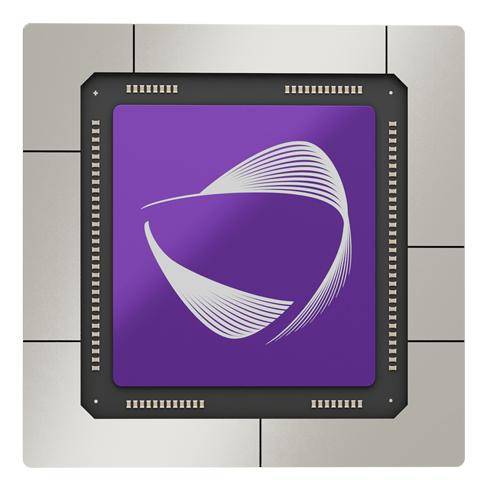
RDU芯片

Search documents
当软件巨头转身投芯片:SambaNova获3.5亿美元融资背后的AI战争
Xin Lang Cai Jing· 2026-02-12 12:12
Core Viewpoint - SambaNova Systems, an AI chip company, successfully raised $350 million in Series E funding, led by Vista Equity Partners and Cambium Capital, with Intel participating, signaling a significant shift in investment focus from software to hardware in the AI sector [2][11]. Group 1: Investment Dynamics - Vista Equity Partners' investment marks a notable shift as it traditionally focused on software companies, indicating a strong signal that capital is now chasing computing infrastructure as AI disrupts traditional software business models [12]. - The global software sector has seen a market value decline of nearly $1 trillion in the past three months, while AI chip financing has exceeded $30 billion during the same period [12]. - Vista partners have stated that hardware companies with autonomous computing capabilities are becoming new safe assets as software companies are being restructured by AI [12]. Group 2: SambaNova's Positioning - Founded in 2017, SambaNova has faced significant challenges, including a valuation drop from $5 billion to $1.6 billion amid layoffs, but has managed to rebound through its unique technology [5][14]. - The company's RDU (Reconfigurable Dataflow Unit) chip outperforms Nvidia's A100 by 40% in AI inference scenarios, leveraging a software-defined hardware architecture [5][14]. - SambaNova's pivot from cloud AI training chips to inference chips has resulted in oversubscription during its latest funding round, reflecting a shift in the AI industry's focus [15]. Group 3: Competitive Landscape - The AI chip market is currently divided into three main camps: Nvidia's dominant CUDA ecosystem, emerging players like Cerebras and Groq, and traditional chip giants like Intel and AMD [16]. - SambaNova differentiates itself by focusing on inference scenarios and providing a comprehensive solution from chips to systems, which has proven effective in securing significant projects [16]. - The latest SN40L chip supports inference for models with 50 trillion parameters and has been validated in climate prediction projects, showcasing its capabilities [16]. Group 4: Challenges Ahead - SambaNova faces production challenges due to its chips being manufactured using TSMC's 5nm process, with yield fluctuations impacting delivery schedules [17]. - The company missed revenue targets in 2024 due to capacity issues, including losing a Microsoft Azure order [17]. - Despite claiming compatibility with mainstream AI frameworks, SambaNova's developer community is significantly smaller than competitors, which may hinder long-term competitiveness [17]. Group 5: Future Outlook - The recent funding indicates a new era where traditional software capital is entering the chip sector, emphasizing a competition that spans "chip + system + application" capabilities [18]. - SambaNova aims to integrate global idle computing power into a supercomputer network, challenging Nvidia's DGX clusters and Amazon's AWS inference services [18]. - Analysts suggest that the period from 2026 to 2028 will be crucial for SambaNova; capturing 15% of the global inference chip market could lead to a valuation exceeding $10 billion [18]. Group 6: Conclusion - SambaNova's journey reflects the broader struggle to push the boundaries of computing power, mirroring the collective anxiety and exploration within the AI industry [19]. - The investment from Vista signifies not just a financial move but the dawn of a new era where each chip could reshape industry dynamics and every technological breakthrough could redefine business rules [19].


消息称英特尔最快下月收购SambaNova,当前含债务总价16亿美元
Sou Hu Cai Jing· 2025-12-15 00:30
Group 1 - Intel is in deep negotiations to acquire AI chip company SambaNova, which has also signed letters of intent with other potential financial investors, indicating that the situation may change [1] - SambaNova's enterprise value, including total debt, is approximately $1.6 billion (around 11.308 billion RMB), while its previous peak valuation was $5 billion (approximately 35.337 billion RMB) [2]

英特尔正洽谈收购人工智能芯片初创公司SambaNova
Huan Qiu Wang Zi Xun· 2025-11-02 04:50
Core Insights - Intel is negotiating to acquire AI startup SambaNova for approximately $5 billion, aiming to rapidly build an end-to-end AI ecosystem and close the gap with leaders like Nvidia [1][5] - If the deal is finalized, it will be the largest and most strategically significant acquisition under the new CEO Pat Gelsinger [1] Company Overview - SambaNova was founded in 2017 and specializes in self-developed RDU (Reconfigurable Dataflow Unit) chips and accompanying software, which significantly enhance efficiency in AI inference scenarios compared to traditional GPU solutions [5] - The company offers an integrated AI platform that includes DataScale rack-level systems and the SambaFlow compiler, with applications in finance, healthcare, and government sectors [5] Strategic Implications - Intel believes that acquiring SambaNova will provide immediate access to a mature hardware and software stack, saving years of research and development time, and strengthening its competitive position in the AI inference market [5] - This acquisition aligns with Intel's recently announced "Crescent Island" GPU roadmap, which prioritizes AI inference as a key direction [5] - By integrating SambaNova's technology with its own manufacturing, channels, and customer resources, Intel plans to launch diverse AI solutions covering cloud, edge, and endpoint, thereby enhancing chip value and improving profit margins [5] Leadership Context - Current CEO Pat Gelsinger's investment firm, Walden International, was an early investor in SambaNova, indicating a long-standing relationship between the two companies [5] - Gelsinger has expressed intentions to accelerate AI transformation through acquisitions, and the resumption of negotiations suggests that internal obstacles may have been resolved [5]