
Real Stripe RGB OLED手机屏

Search documents
锚定“十五五”创新蓝图 TCL以印刷显示技术引领产业变革
Zhong Guo Jing Ji Wang· 2025-12-12 07:23
Core Insights - The "14th Five-Year Plan" emphasizes the importance of original innovation and key core technology breakthroughs for high-quality development in manufacturing, with TCL showcasing its advancements in the printing display sector at the TIC2025 conference [1] - TCL has achieved a significant milestone with the construction of the world's first 8.6-generation printing OLED production line, marking a transition to large-scale production and solidifying its global leadership in next-generation display technology [1][2] Group 1: Technological Advancements - TCL Huaxing has overcome critical challenges in the printing OLED field, becoming the first Chinese company to lead and achieve large-scale production of this important display technology [2] - The self-developed printing OLED production line offers significant advantages over traditional OLED technology, including lower energy consumption, reduced resource usage, and higher material utilization rates, aligning with green development principles [2] - The introduction of the Real Stripe RGB pixel arrangement in the printing process addresses traditional display issues, resulting in a qualitative leap in image clarity [2] Group 2: Product Applications - TCL Huaxing's printing display technology has achieved full-size coverage, with the launch of the world's first Real Stripe RGB OLED smartphone screen, featuring a high resolution of 390 PPI and superior visual detail [3] - The unique Blue Less technology in the printing OLED reduces blue light, enhancing eye comfort for users [3] Group 3: Innovation and AI Integration - TCL's achievements in the printing display sector are supported by consistent R&D investment and a robust innovation system, integrating AI technology to enhance efficiency across the entire production process [4] - The implementation of the Auto Defect Classification (ADC) technology has improved defect detection accuracy from 85% to 95%, with further advancements leading to the Auto Defect Repair (ADR) system [4] - The integration of AI in the semiconductor display industry has resulted in significant cost reductions and increased production efficiency, contributing to the widespread adoption of OLED technology [4] Group 4: Market Position and Impact - TCL Huaxing holds the leading global market position in various display categories, including 55-inch and larger TV panels, and is poised to further strengthen its industry leadership through the large-scale application of printing display technology [4] - The widespread adoption of this technology is expected to accelerate upgrades in the global display industry and make high-end display products more accessible to consumers [4]

印刷OLED突围,中国屏的新路径
2 1 Shi Ji Jing Ji Bao Dao· 2025-11-21 02:43
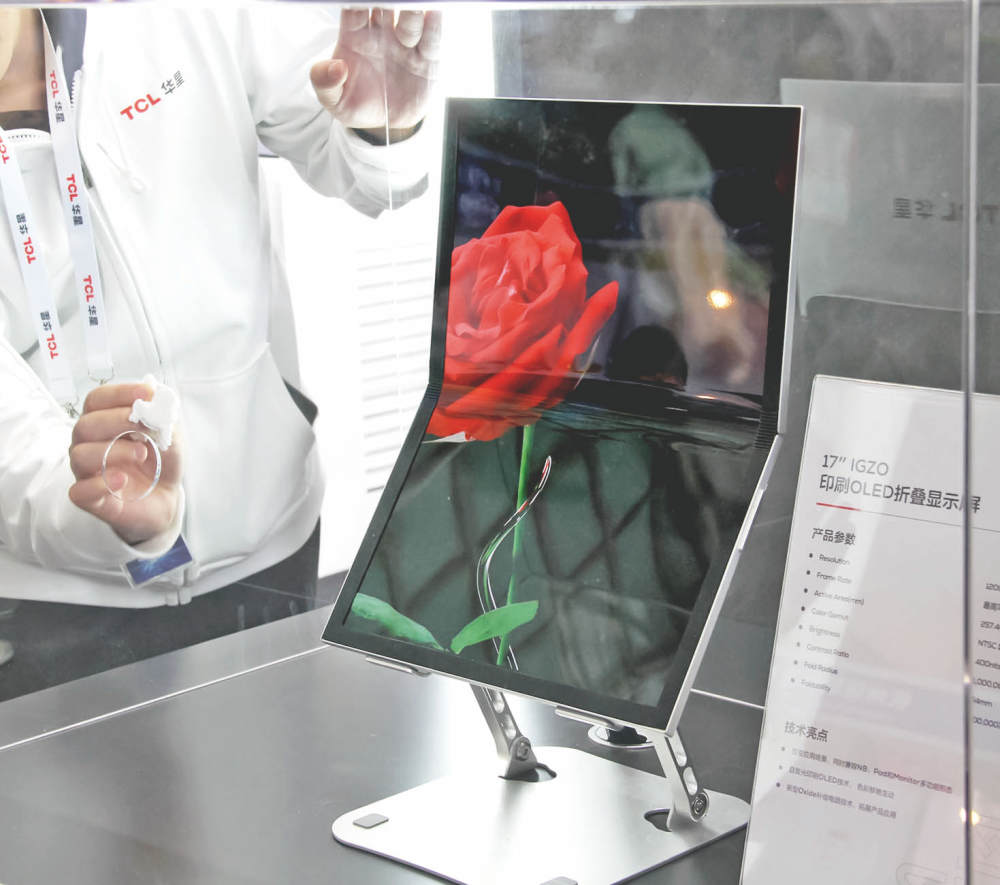
Core Viewpoint - The global display industry is undergoing a new round of technological upgrades, with OLED technology's penetration rate increasing, particularly in the area of printed OLED, which is being advanced by Chinese companies [1][2]. Group 1: Industry Trends - The display industry is moving towards high resolution, low power consumption, and wide color gamut, with OLED technology leading this transition [1]. - Printed OLED is recognized as a key technology that can cover applications from small mobile devices to large TVs, marking a significant shift in the competitive landscape of the OLED industry [1][2]. Group 2: Company Developments - TCL Huaxing has showcased the world's first Real Stripe RGB OLED mobile screen, achieving a resolution of 390 PPI, indicating a critical step towards small-size applications [1][6]. - The company is focusing on mid-size applications such as laptops, monitors, and automotive displays, with its first printed OLED product being a medical screen that achieved a 70% yield in production [6][7]. Group 3: Competitive Landscape - Four major panel manufacturers, including TCL Huaxing, are investing in high-generation OLED production lines, with a total investment nearing 170 billion yuan [6]. - The competition in high-generation OLED production is intensifying, and TCL Huaxing's ability to maintain competitiveness is under scrutiny as production capacity is set to be released between 2024 and 2028 [6][7]. Group 4: Strategic Decisions - TCL Huaxing made four key decisions to advance its printed OLED technology, including choosing the printed OLED route, shifting application focus to mid-size displays, relocating production lines to China, and initiating the Guangzhou T8 project with an investment of approximately 29.5 billion yuan [10][11][12]. - The company emphasizes the importance of supply chain stability, particularly in materials, to mitigate risks associated with production [11][12]. Group 5: Future Challenges - Key challenges for TCL Huaxing include improving power consumption, achieving higher yield rates, and enhancing resolution and material performance to meet market demands [15][16]. - The company aims to transition printed OLED from experimental stages to commercial viability, addressing issues such as resolution, material performance, and yield rates [14][15]. Group 6: Ecosystem Development - TCL Huaxing is focused on building an open, autonomous, and collaborative industry ecosystem, prioritizing upstream material and equipment collaboration, co-creating application scenarios with customers, and promoting industry standards [16].

印刷OLED突围,中国屏的新路径
21世纪经济报道· 2025-11-21 02:36
Core Viewpoint - The global display industry is undergoing a new round of technological iteration, with OLED technology's penetration rate increasing, particularly in the context of printed OLED technology being led by Chinese companies [1][2]. Group 1: Industry Trends - The display industry is moving towards high resolution, low power consumption, and wide color gamut, with printed OLED technology emerging as a key player [1]. - China’s share of the global OLED market has surpassed 46%, with predictions indicating it will exceed 50% by 2027-2028 as three major companies launch high-generation OLED lines [2]. Group 2: Competitive Landscape - Four panel manufacturers, including TCL Huaxing, BOE, Visionox, and Samsung Display, are investing in high-generation OLED production lines, with total investments nearing 170 billion yuan [5]. - The competition in high-generation OLED technology is intensifying, with TCL Huaxing focusing on maintaining competitiveness in its 8.6-generation printed OLED production line [5][6]. Group 3: Key Decisions by TCL Huaxing - TCL Huaxing made four critical decisions in the development of printed OLED technology, including choosing the printed OLED route, shifting application focus to mid-size displays, relocating JOLED's production line to China, and initiating the Guangzhou T8 project for large-scale commercialization [8][9][10]. - The decision to focus on mid-size applications was driven by the performance and cost advantages of printed OLED technology [8]. Group 4: Challenges and Future Directions - Key challenges for TCL Huaxing include improving power consumption, achieving high yield rates, and addressing material performance issues [11][12]. - The company aims to enhance the efficiency of its printed OLED technology to meet the stringent requirements of top-tier customers while ensuring compatibility with existing OLED materials [12]. - The future strategy involves building an open, autonomous, and collaborative industry ecosystem to enhance global competitiveness [13].
印刷OLED突围 中国屏的新路径
2 1 Shi Ji Jing Ji Bao Dao· 2025-11-20 13:22
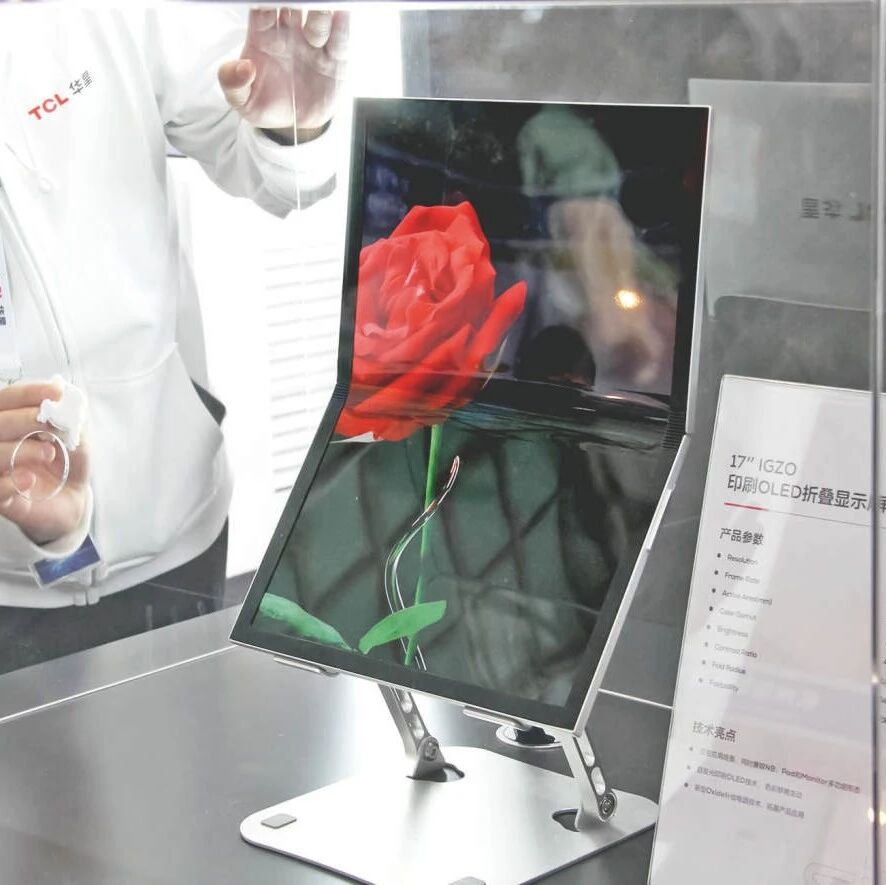
Core Insights - The global display industry is undergoing a new round of technological upgrades, with OLED technology's penetration rate increasing, particularly in the context of mobile devices, AI PCs, and high-end displays [1][2] - Chinese companies are leading the way in the development and implementation of printed OLED technology, marking a significant shift in the global competitive landscape of the OLED industry [1][2] - TCL Huaxing has showcased the world's first Real Stripe RGB OLED mobile screen, achieving a resolution breakthrough of 390 PPI, indicating progress in the application of printed OLED technology in smaller devices [1][3] Industry Trends - The competition in the OLED market is intensifying, with four major panel manufacturers, including TCL Huaxing, BOE, Visionox, and Samsung Display, investing nearly 170 billion yuan in high-generation OLED production lines [2] - The focus of investment is primarily on 8.6-generation OLED lines, which signifies a competitive escalation in OLED technology [2] Company Developments - TCL Huaxing's CEO emphasized that the company has made significant investment decisions regarding high-generation OLED production lines, which are expected to release capacity between the second half of next year and 2028 [2][3] - The company is expanding its application of printed OLED technology into small-sized devices, with ongoing improvements in performance metrics such as brightness, lifespan, and yield rates [3][4] Strategic Decisions - TCL Huaxing has made four key strategic decisions to advance printed OLED technology, including choosing the printed OLED route, shifting application focus from large to medium-sized displays, relocating JOLED's production line to China, and initiating the Guangzhou T8 project for large-scale commercialization [5][6][7] - The T8 project, with an investment of approximately 29.5 billion yuan, marks a significant step towards the commercialization of printed OLED technology [6] Challenges and Future Outlook - The company faces challenges in improving power consumption and yield rates, which are critical for the successful commercialization of printed OLED technology [7][8] - TCL Huaxing aims to enhance its competitive edge by continuously innovating technology and improving cost efficiency in response to market competition [7][9] - The printed OLED technology is seen as a breakthrough for the Chinese display industry, with the potential to lead in global technology routes [9]