Roomba扫地机

Search documents
扫地机鼻祖,一场出海大败局
Tai Mei Ti A P P· 2025-12-18 04:56
Core Viewpoint - iRobot, once a leader in the robotic vacuum industry, has filed for Chapter 11 bankruptcy, leading to its delisting from NASDAQ, highlighting the consequences of poor global strategy and failure to adapt to market changes [1][9]. Group 1: Company Overview and Financial Status - iRobot announced its bankruptcy on December 16, 2025, with only $24.8 million in cash and total liabilities soaring to $508 million, primarily owed to its Chinese manufacturer, Shenzhen Shanjun [1]. - The company's market value has plummeted from nearly $4 billion at its peak to less than $25 million [1]. Group 2: Technological Stagnation - iRobot, founded in 1990, initially dominated the market with its Roomba vacuum, but failed to innovate as competitors adopted advanced technologies like laser navigation [2][3]. - The company’s reliance on outdated visual navigation technology has resulted in a significant performance gap compared to competitors, which can now offer superior user experiences [3]. Group 3: Research and Development Disparities - In the first three quarters of 2025, competitors like Stone Technology and Ecovacs invested heavily in R&D, with expenditures of approximately $1.5 billion and $1.1 billion respectively, while iRobot's R&D spending was primarily focused on minor improvements [4][5]. Group 4: Market Localization Failures - iRobot's failure to adapt its products for local markets, particularly in China, where consumer needs differ significantly, has led to a drastic decline in market share from 10% in 2018 to less than 1% by 2021 [6]. - The company’s pricing strategy was perceived as arrogant, with average prices exceeding 5,000 yuan, significantly higher than local competitors, which contributed to its market marginalization [6]. Group 5: Competitive Landscape and Market Share - iRobot's market share has dramatically decreased from 60% in 2015 to less than 8% by 2025, while the global robotic vacuum market continues to grow, with shipments reaching approximately 17.42 million units in 2025, a nearly 19% year-on-year increase [8][9]. - Competitors have successfully captured significant market shares in both the European and American markets, with Chinese brands holding 35% of the mid-to-high-end market in the U.S. by 2023 [8]. Group 6: Lessons for Globalization - The downfall of iRobot serves as a cautionary tale for companies looking to expand globally, emphasizing the importance of localizing products and strategies to meet specific market demands [10][11]. - The narrative reinforces that successful globalization requires deep localization, focusing on understanding and addressing local consumer needs [11].
扫地机鼻祖iRobot破产重组,中国代工厂接盘还要过几道关?
2 1 Shi Ji Jing Ji Bao Dao· 2025-12-17 00:13
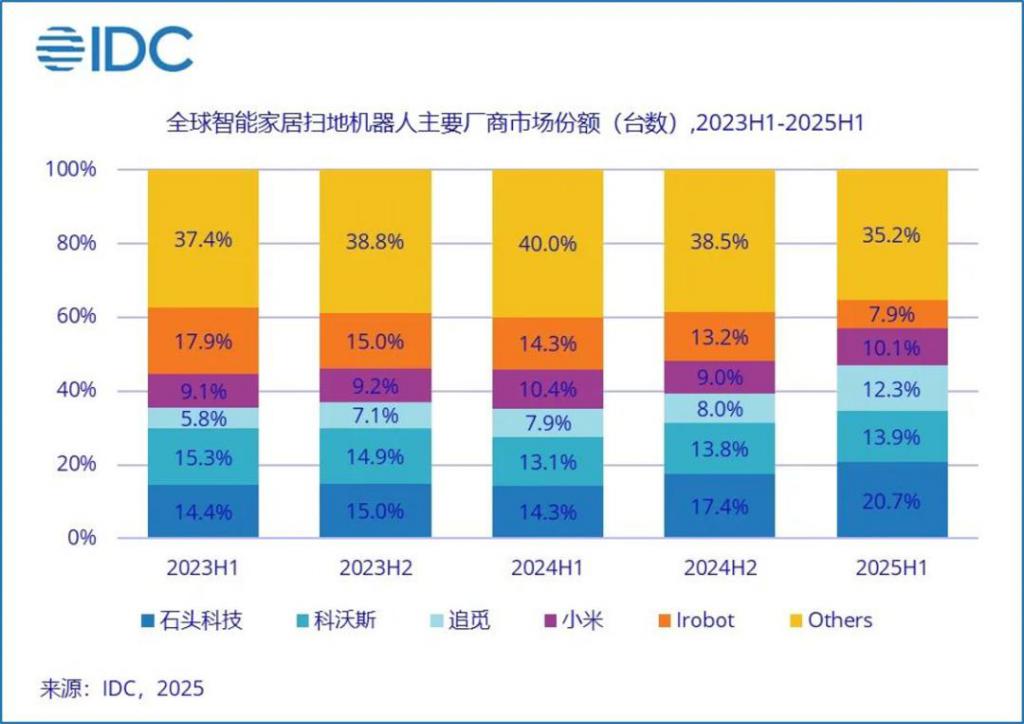
Core Viewpoint - iRobot, known as the pioneer of "robot vacuum cleaners," is undergoing a bankruptcy restructuring process, having reached a restructuring support agreement with its major creditor Shenzhen Santrum, which will acquire 100% of iRobot's shares, leading to its privatization and delisting from stock exchanges by February 2026 [1][11]. Company Summary - iRobot was founded in 1990 and initially developed military robots before launching its first consumer robot, the Roomba, in 2001. At its peak in 2015, iRobot held over 60% of the global market share for robot vacuums [3][4]. - The company has faced significant competition from Chinese manufacturers like Ecovacs and Roborock, which have rapidly gained market share due to competitive pricing and innovative product features [5][7]. - iRobot's market share has drastically declined, with its global share dropping to 7.9% by the first half of 2025, a decrease of 10 percentage points from 2023 [5][7]. Financial Situation - iRobot's total liabilities have reached $350 million (approximately 2.465 billion RMB), while its cash reserves are only $24.8 million (approximately 175 million RMB) [7]. - The failed acquisition attempt by Amazon for $1.7 billion, which was blocked by regulatory concerns, resulted in iRobot receiving $94 million (approximately 690 million RMB) in compensation, part of which was used to pay off debts [7][12]. Acquisition Dynamics - Shenzhen Santrum's acquisition of iRobot is seen as a strategic move to mitigate risks associated with iRobot's bankruptcy, as it becomes the largest creditor and gains rights to iRobot's assets [2][14]. - The acquisition faces potential regulatory hurdles, including antitrust reviews and compliance with data protection laws, which could impact the transaction's completion [9][10]. Market Impact - The acquisition of iRobot by Santrum could significantly alter the competitive landscape of the robot vacuum market, potentially allowing Santrum to leverage iRobot's brand and distribution channels to enhance its market position [15][16]. - The merger may lead to a consolidation of resources in the industry, intensifying competition and potentially squeezing smaller players out of the market [16].