RubinCPX芯片系统

Search documents
CPO板块杀回江湖!“易中天”成反弹急先锋!万亿巨头工业富联涨停
Ge Long Hui· 2025-09-10 06:40
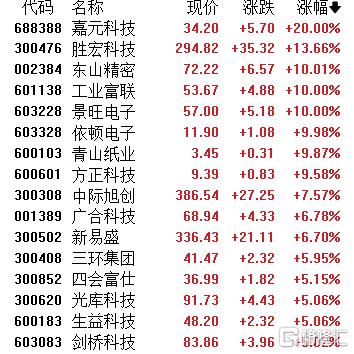
Core Viewpoint - The CPO (Co-Packaged Optics) sector has rebounded strongly after a period of correction, driven by solid fundamentals and external catalysts, with significant stock price increases among leading companies in the industry [1][4]. Group 1: Market Performance - The CPO sector experienced a strong rebound on September 10, with notable stock performances including a 20% increase in Jia Yuan Technology and a 10% increase in Industrial Fulian, bringing its market capitalization to 1.07 trillion yuan [1][2]. - Key stocks such as Zhongji Xuchuang and Xinyi Sheng also saw significant gains, with increases of over 7% and 6% respectively, indicating a notable recovery in market sentiment [1][2]. Group 2: Industry Trends - The CPO sector has been on an upward trend since April 2023 but entered a phase of correction starting September 2, with a particularly sharp decline on September 8 [3]. - Citigroup's report highlights that despite profit-taking, the overall narrative for the sector remains strong, with expectations for demand visibility increasing significantly by 2027 [4]. Group 3: Catalysts for Growth - The recent launch of Apple's iPhone 17 series and AI-enabled AirPods Pro 3 is expected to drive demand for high-speed optical interconnect technologies, benefiting the CPO market [5]. - NVIDIA's introduction of the new RubinCPX chip system, designed for large-scale AI tasks, is anticipated to further boost long-term demand for high-speed optical modules [5]. - Oracle's upward revision of its cloud infrastructure revenue growth forecast from 70% to 77% reflects strong demand for AI services, enhancing market confidence in AI-related technologies [6]. Group 4: Policy Support - Recent government policies aimed at supporting the AI industry are expected to provide sustained momentum for the CPO sector, with initiatives focusing on data empowerment and AI integration across various industries [7]. - The CPO technology is positioned as a core component of AI infrastructure, with projections indicating substantial growth in demand driven by ongoing investments in computing power [8].