Running Shoes

Search documents
Wednesday's Movers: CPB Hits 23-Year Low, NKE Upgrade, TGT Cutting Prices
Youtube· 2026-03-11 14:00
Campbell Soup Company - Campbell Soup Company reported weaker than expected earnings, with earnings per share at 51 cents, missing the expected 57 cents, and revenue at $2.564 billion, below the anticipated $2.61 billion [2][3] - The snacks division, particularly chips and pretzels, showed significant weakness, contributing to a 6% decline in snack sales, while meals and beverages also saw a 4% drop in sales due to softer US demand for soup [3][4] - The company has lowered its full-year profit forecast to between $2.15 and $2.25 per share, raising concerns among investors [3] - Operational disruptions and storm-related issues have impacted shipments and increased costs, further complicating the company's financial outlook [2][4] - Campbell is facing pricing pressure due to tariffs on metals, which has led to price increases to offset these costs [4][5] - The stock is currently at a two-decade low, indicating significant challenges for the company in maintaining investor confidence [5] Nike - Barclays upgraded Nike to overweight, suggesting that the worst of its struggles may be behind it, with shares responding positively, up about 1.75% [6][7] - Barclays raised its price target for Nike from $64 to $73, implying a potential upside of about 30% [7][8] - Operational improvements, including better inventory management and signs of increasing demand in North America, are contributing to a more favorable outlook for Nike [8][9] - The running category has shown double-digit growth, which is a positive indicator for Nike amidst competitive pressures [9] Target - Target plans to cut prices on over 3,000 items across various categories, including clothing and home goods, in an effort to compete with Walmart and regain customers [10][11] - The company is positioning itself for a potential comeback this year, aided by easier year-over-year comparisons [12] - The price cuts are part of a strategy to take advantage of the spring shopping season and respond to consumer trends [12][13]


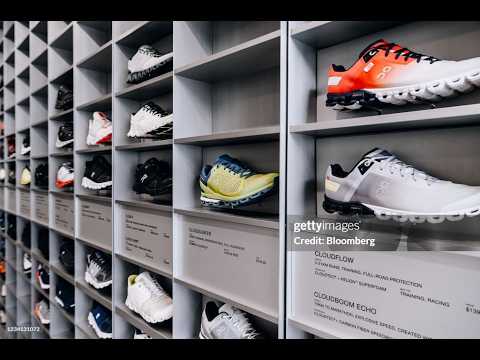
Maker of OnCloud Running Shoes disappoints investors with outlook
Bloomberg Television· 2026-03-08 07:00
On holiday. And of course, that's the running shoe company having its worst day since August. This after the company forecast net sales for the full year that fell short of estimates.Now, earlier today, I had a chance to sit down with Martin Hoffman. He's on CEO and CFO, talk about his earnings and his global expansion strategy and plans to scale into apparel. Take a listen.We had an amazing last year. For the first time, we exceeded 3 billion CHF in net sales. That's almost 4 billion in Swiss francs.We hav ...
Why Did On Holding Stock Tank Today?
Yahoo Finance· 2026-03-03 19:29
On Holding (NYSE: ONON) has been the envy of the athletic footwear world. The business has, at least. The stock has held a high valuation, though, and even strong financial results couldn't sustain that level today. After reporting fourth-quarter and full-year results this morning, On shares slid as much as 14.3%. As of 2:08 p.m. ET, the stock remained lower by 6.95%. Will AI create the world's first trillionaire? Our team just released a report on the one little-known company, called an "Indispensable Mon ...

This Turnaround Stock Has One of the ‘Best Brands’ in the World. Buy Its Shares in 2026.
Yahoo Finance· 2026-01-06 18:33
Core Viewpoint - Under Armour (UAA) is experiencing a potential turnaround as recent positive analyst calls and a rebound in stock price suggest a shift in market sentiment despite previous struggles [1][4][13]. Company Overview - Founded in 1996, Under Armour has evolved into a global sportswear brand with a market capitalization of $2.26 billion, offering a wide range of products from apparel to footwear and accessories [2][6]. Financial Performance - Under Armour's Q2 results showed a revenue decline of 5% year-over-year (YOY) to $1.3 billion, with North America down 8% to $792 million, while international revenue grew 2% to $551 million [9][10]. - The gross margin fell by 250 basis points to 47.3%, influenced by supply-chain costs, but adjusted operating income reached $53 million, and adjusted EPS of $0.04 exceeded Wall Street forecasts [10][11]. Analyst Insights - Analyst Jay Sole from UBS believes that Under Armour's brand is undervalued compared to peers, with a projected 25% five-year EPS compound annual growth rate (CAGR) and a price target of $8, indicating a 47% upside potential [3][13][14]. - The consensus rating for UAA stock is "Hold," with an average price target of $5.61, suggesting a modest upside, while the highest target price of $9 indicates a potential rally of up to 65% [15]. Future Outlook - For fiscal 2026, revenue is expected to decline by 4% to 5%, with a projected adjusted EPS of $0.03 to $0.05, before a significant rebound to $0.20 in fiscal 2027 [12]. - Analysts anticipate that renewed product innovation and strong brand awareness will drive revenue growth towards $5.6 billion by 2030 [14].

Can These 2025 Stock Market Losers Turn It Around?
The Motley Fool· 2026-01-06 03:49
Core Insights - The podcast discusses three companies that underperformed in 2025: Super Micro Computer, Lululemon, and Nike, and evaluates their potential for recovery in 2026 [3][12]. Super Micro Computer - Super Micro Computer has faced significant challenges, including a loss of confidence from auditors Ernst & Young, which stated they were "unwilling to be associated with the financial statements prepared by management" [3][4]. - The company has taken on $4.4 billion in debt and increased inventory by $3.3 billion, which could pose risks if they cannot sell the inventory at favorable prices [3][4]. - Despite a backlog of $36 billion in expected revenue for fiscal 2026, concerns remain about the company's ability to execute and the potential slowdown in AI demand [7][4]. Lululemon - Lululemon's stock has underperformed the market by approximately 60% year-to-date, attributed to inventory issues and a 5% decline in same-store sales in Q3 2025 [8][9]. - The brand faces competition from emerging brands like HOKA and On, which are gaining popularity among consumers [8][10]. - While Lululemon's price-to-earnings ratio appears attractive, concerns about its long-term brand momentum and potential value trap for investors are raised [10][11]. Nike - Nike has underperformed the market by about 25% year-to-date, facing revenue declines and increased competition from brands like HOKA and On [12][13]. - The company's strategy to withdraw from wholesale customers has not yielded the expected results, leading to difficulties in regaining shelf space with retailers [12][13]. - Analysts express skepticism about Nike's ability to recover in 2026, citing a challenging market environment and a shift in consumer behavior towards direct-to-consumer brands [13][14].


What We’re Reading (Week Ending 16 November 2025) : The Good Investors %
The Good Investors· 2025-11-16 01:00
Group 1: BlackRock and Renovo Home Partners - BlackRock Inc. has revised its valuation of the private debt extended to Renovo Home Partners from 100 cents on the dollar to zero following Renovo's bankruptcy filing [7][8] - Renovo, a company formed by private equity firm Audax Group, had previously undergone a recapitalization in April, where lenders converted some loans into equity to help the company recover [8] - Despite the financial struggles, BlackRock and MidCap Financial had marked the Renovo debt at par until the end of September, indicating an expectation of full repayment [9] Group 2: Mortgage Rates and Fed Funds Rate - The relationship between mortgage rates and the Federal Reserve's fed funds rate has been misunderstood, as mortgage rates have been more closely tied to the interest on 10-year Treasury notes [10][12] - Factors influencing longer-term Treasury yields include economic growth expectations, fiscal policies, inflation expectations, and borrower credit risk, which can lead to mortgage rates moving in opposite directions from short-term rates [12] Group 3: AI and Investment Bubbles - The concept of "Inflection Bubbles" is introduced, which are characterized by beneficial long-term effects and fewer harmful side effects compared to "Mean-reversion Bubbles" [13][14] - Investments in AI are driving significant advancements in infrastructure, particularly in chip manufacturing and power generation, which are expected to have long-term utility [20][21] - The current AI bubble is fostering innovation and funding for new technologies, including novel chip designs and lithography machines, which may not have received attention otherwise [22][23][24] Group 4: E-Commerce and AI Integration - An interview discusses the challenges of product visibility in Google search results compared to AI models like ChatGPT, with AI providing more accurate recommendations [25][30] - Amazon is positioned to benefit from the integration of AI in e-commerce, as it consistently ranks highest in consumer trust and delivery speed [31] - Walmart has removed restrictions on multichannel fulfillment, allowing third-party sellers to utilize Amazon's distribution network, which could enhance competition in the e-commerce space [32][33]

X @The Wall Street Journal
The Wall Street Journal· 2025-11-13 07:07
Tall running shoes, faster innovation: Inside Elliott Hill’s push to turn around Nike https://t.co/R3ZiP8gJo4 ...
X @The Wall Street Journal
The Wall Street Journal· 2025-11-10 12:52
Tall running shoes, faster innovation: Inside Elliott Hill’s push to turn around Nike https://t.co/gQJPtHheUd ...
Brooks Running CEO Dan Sheridan on the NYC Marathon, company profitability and tariff impact
CNBC Television· 2025-10-30 11:11
The New York City Marathon is this Sunday. That race attracts athletes from all over the world and CEOs from major brands because of its prestige and global appeal. Joining us right now is one of those CEOs who are flocking here to New York City this weekend.Dan Sheridan is Brooks running CEO and Dan, thanks for coming in. >> Thanks for having me. It's nice to be in New York. >> It's great to have you here.Now, you guys are not an official sponsor of the New York City Marathon. Uh but you do have a lot of p ...

滔搏(06110) - 2026 Q2 - 业绩电话会
2025-10-23 02:02
Financial Performance - Overall revenue declined by 5.8% to RMB 12.3 billion, affected by weak consumer demand and air flight traffic fluctuations [4][6] - Retail business revenue declined by 3% worldwide, while wholesale business revenue decreased by 20.3% [4] - Gross profit margin declined by 0.1% to 41%, with total expenses decreasing by 5.5% [6][9] - Net profit declined by 6% on a worldwide basis, with a net profit rate of 6.4% [9][10] - Free cash flow was RMB 1.22 billion, representing 1.5 times the net profit for the same period [13][14] Business Line Performance - Core brand sales revenue decreased by 4.8% to RMB 10.8 billion, while other brand sales revenue declined by 12.2% to RMB 1.4 billion [4] - Online sales discounts were higher than offline, contributing to the increase in online channel sales but negatively impacting gross profit margin [5][6] - Employee headcount decreased by 16% worldwide, with total employee costs down by 5.2% [7] Market Data - The textile and apparel industry grew by 2.5%, slightly faster than the previous year, but the recovery pace was lower than the overall retail sales growth [15] - Consumer segmentation in the sports industry has become more diverse, with a shift towards specialized vertical interest communities [16] Company Strategy and Industry Competition - Topsports is committed to advancing its core strategy and adapting to market changes, focusing on omnichannel retail agility and operational efficiency [2][17] - The company aims to enhance its role within the industrial ecosystem by expanding brand partnerships and improving operational lean management [17][18] - Topsports is focusing on building a diversified user value system and enhancing user relationships through targeted marketing and omnichannel integration [26][27] Management Comments on Operating Environment and Future Outlook - The management acknowledges the challenging external environment but remains optimistic about achieving planned performance [2][3] - The company is committed to fulfilling its full-year guidelines and aims for net profit to remain flat in fiscal year 2026 [61] - Management emphasizes the importance of adapting to evolving consumer habits and enhancing digital intelligence capabilities [19][31] Other Important Information - The company has reduced capital expenditure by 36% and selling and distribution expenses ratio decreased by 0.2% [21] - Topsports is actively engaging in sustainability initiatives, including a used clothing recycling charity [23][24] Q&A Session Summary Question: Future of Nike in China and partnership strategies - Management acknowledges Nike's challenges in the Chinese market and is supportive of their initiatives to improve offline operations [41][42] Question: Sustainability of brand support and product orders - Management believes that as a key partner, Topsports will continue to receive strong support from brands despite market challenges [56][57] Question: Outlook for H2 and product breakdown from Nike - Management expects to fulfill full-year guidelines and maintains a healthy inventory level, with 70% to 80% of Nike products being new [62][61] Question: Development of Aptus project - Aptus is positioned as a social infrastructure for runners, focusing on community engagement and brand partnerships [63][64]