
Ruthenium

Search documents
Metals Focus:预计2026年贵金属板块整体仍具备进一步上行空间
智通财经网· 2026-01-20 05:51
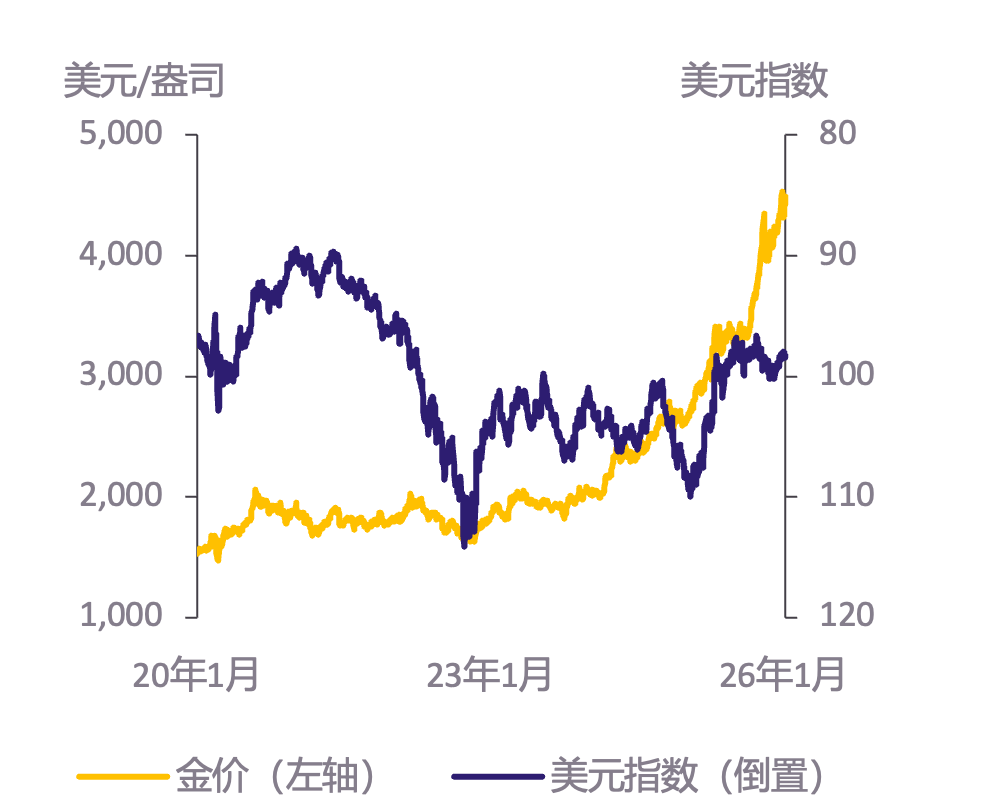
Core Viewpoint - The precious metals market is expected to perform strongly in 2025, with prices for gold, silver, platinum, and ruthenium reaching historical highs, driven by geopolitical uncertainties and concerns over the sustainability of U.S. debt and the dollar's status as a global reserve currency [1] Gold - Gold prices have shown strong performance at the beginning of 2026, influenced by rising market risk aversion due to U.S. military actions in Venezuela, with prices reaching approximately $4,500 per ounce, just 1% below the historical high of $4,550 set in December [2] - The outlook for gold remains bullish, with expectations for new highs driven by ongoing uncertainties in U.S. policies and economic health concerns, alongside a supportive environment from continued Federal Reserve rate cuts and rising fiscal deficits [4] - Institutional investment demand is expected to be a major driver for gold prices, despite a potential increase in supply due to rising recycling and mining output [5] Silver - Silver prices surged by 147% in 2025, marking the best annual performance since 1979, with expectations for further price increases despite potential short-term corrections due to commodity index rebalancing [7] - Strong investment demand, tariff uncertainties, and structural supply-demand gaps are expected to support silver prices, with the possibility of reaching three-digit price levels [7] - The performance of silver relative to gold may improve initially, but a reversal is anticipated mid-2026 as tariff policies clarify and industrial demand adjusts [7] Platinum - Platinum prices increased by 33% in 2025, breaking out of previous trading ranges, with supply constraints from South African floods and increased demand from jewelry manufacturers contributing to price support [10] - The market is expected to remain in a supply-demand deficit for the fourth consecutive year in 2026, although the gap may narrow as supply recovers and industrial demand expands [10] Palladium - Palladium prices rebounded in 2025, with an average increase of 17%, driven by geopolitical risks and the introduction of palladium futures in Guangzhou [11] - The outlook for palladium in the first half of 2026 remains positive, with prices potentially testing $2,000 per ounce, although a correction of 10%-20% may occur later in the year as uncertainties ease [11] Rhodium - Rhodium prices strengthened in 2025, with a 37% year-on-year increase, despite a narrowing supply-demand gap [12] - The outlook for 2026 suggests further price increases, driven by renewed speculative interest and a continued supply-demand imbalance [13] Ruthenium - Ruthenium prices surged by 66% in 2025, supported by strong demand from the electronics sector and its potential to replace iridium in electrolytic applications [14] - The market is expected to remain in a supply-demand deficit for the eighth consecutive year in 2026, with continued investor interest supporting prices [14] Iridium - Iridium prices experienced an 8% decline in 2025 despite ongoing supply shortages, with resilient demand in electrochemical applications offsetting weaknesses in other sectors [16] - The outlook for 2026 indicates a significant narrowing of the supply-demand gap, with potential short-term price strength followed by a gradual decline as market fundamentals stabilize [16]

Platinum poised for strong 2026 as supply constraints offset EV headwinds
KITCO· 2026-01-02 22:02
Group 1 - The article presents an outlook for various precious metals, including palladium, rhodium, ruthenium, platinum, iridium, and osmium, indicating their projected prices for 2026 [1][4][5] - Specific price forecasts for palladium, rhodium, and platinum are highlighted, with palladium expected to be around 46, rhodium at 45, and platinum at 78 [1][4] - The data suggests a trend in the precious metals market, reflecting potential investment opportunities in these commodities as their values are projected to change significantly by 2026 [1][4]

Eurasia agrees to divest West Kytlim mining operations in Russia
Yahoo Finance· 2025-12-30 12:03
Core Viewpoint - Eurasia Mining has decided to sell its West Kytlim operations due to concerns over potential nationalization and regulatory risks in Russia [1][4]. Group 1: Sale Agreement Details - The company has accepted terms to divest its stake in Kosvinsky Kamen, which holds the West Kytlim alluvial platinum group metals and gold operations [1]. - The transaction values the loss-making asset at approximately $251 million, with the buyer set to pay Rbs671.2 million (around $9 million) [2]. - The significant difference between the asset's valuation and the expected proceeds is attributed to Russian regulations that limit foreign owners' returns from asset sales amid geopolitical tensions [3]. Group 2: Strategic Focus Shift - Eurasia Mining indicated that the West Kytlim asset represents only 0.3% of its total reserves, and the company aims to focus on its Arctic portfolio, which constitutes 99.7% of its reserves [4]. - The planned disposal aligns with the company's strategy to streamline its asset base and concentrate on higher-value projects in the Arctic region [5]. - The Arctic assets are supported by an agreement with the state-owned Far East and Arctic Development Corporation [5]. Group 3: Financial Implications - The sale is expected to provide non-dilutive funding for the development of the remaining Arctic portfolio, including the Tier 1 nickel-copper deposit NKT, which has an estimated net present value of $1.2 billion to $1.7 billion [6]. - As part of the deal, Kosvinsky Kamen will transfer the Travyanaya licence to Eurasia, allowing the company to retain this licence post-sale [6]. Group 4: Board Recommendations - The board of Eurasia Mining believes the sale is in the best interests of the company and has unanimously recommended that shareholders vote in favor of the transaction [7].
电容器中贵金属成分分析
Sou Hu Cai Jing· 2025-12-02 12:17
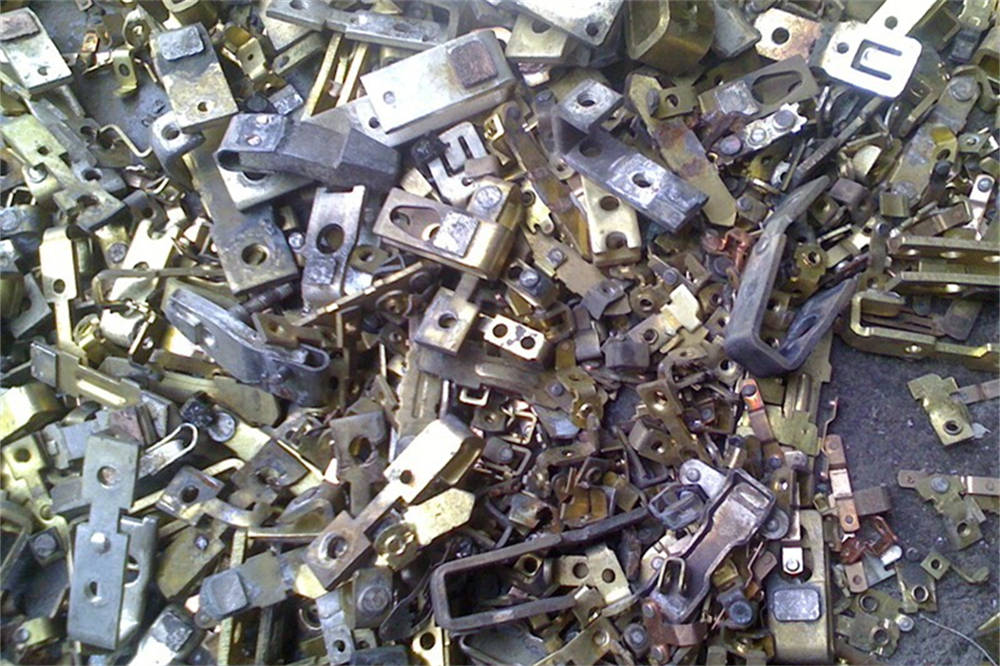
Group 1 - Capacitors are critical components in electronic circuits, serving functions such as energy storage, filtering, and coupling, with significant differences in internal structures based on type, and some contain valuable precious metals in their manufacturing materials [1] - The distribution and content of precious metals vary among different types of capacitors; for instance, electrolytic capacitors often use ruthenium plating for the anode, enhancing corrosion resistance and stability, while ceramic capacitors may use silver paste and occasionally gold for improved conductivity and oxidation resistance [3] - High-voltage capacitors require higher reliability and pressure resistance in electrode materials, often utilizing high-purity silver or silver plating, ensuring stable operation under high pressure due to silver's excellent conductivity and thermal stability [5] Group 2 - The value of capacitors containing precious metals is primarily determined by the specific content of these metals, and recovery involves classification, disassembly, and chemical analysis to accurately measure metal weight proportions [6] - A systematic evaluation and processing workflow is necessary for the recovery of capacitors containing precious metals, including precise classification, extraction, and assessment of precious metal content, along with calculations of recovery value based on current metal market prices and processing costs [8]
Stillwater Critical Minerals Engages Mine Technical Services to Complete an Updated Mineral Resource Estimate at Stillwater West in Montana, USA
Accessnewswire· 2025-10-27 11:00
Core Insights - Stillwater Critical Minerals Corp. has engaged Mine Technical Services to conduct an updated NI 43-101-compliant Mineral Resource Estimate for its Stillwater West project in Montana, USA [1] - The updated Mineral Resource Estimate is anticipated in the first half of 2026 and aims to advance Stillwater West as a significant source of ten critical minerals in the U.S. [1] - The Stillwater West project contains a unique combination of nickel, copper, cobalt, chromium, platinum, palladium, rhodium, ruthenium, iridium, gold, and osmium, which are essential for clean energy, defense, and technology supply chains [1]

Sibanye Stillwater (SBSW) - 2025 Q2 - Earnings Call Transcript
2025-08-28 13:00
Financial Data and Key Metrics Changes - Group adjusted EBITDA increased by 120% compared to the same period in 2024, reaching ZAR 10 billion, and even excluding the 45X credits, it was still 51% higher [5][6] - Net debt to adjusted EBITDA ratio improved to 0.89 times, significantly below the market's earlier projections [6] - The total fair value of 45X credits is projected to increase to ZAR 12.6 billion by 2034, representing 32% of the acquisition value of the Stillwater operations [7] Business Line Data and Key Metrics Changes - South African PGM operations produced 840,400 ounces, a 4% decrease year-on-year, with underground operations consistent at 750,000 ounces [59] - South African gold operations saw a 36% increase in average gold price received, reaching slightly more than ZAR 1.8 million per kilogram, while adjusted EBITDA increased by 118% to ZAR 4.8 billion [65][66] - U.S. PGM operations produced 141,000 ounces at an all-in sustaining cost of $1,207 per ounce, reflecting a 41% decrease in costs compared to pre-restructuring [74] Market Data and Key Metrics Changes - Gold prices increased by 26% in the first half of the year, with average trading volumes reaching $329 billion per day, the highest for any half-year period on record [48] - PGM prices have rallied due to tight supply, with platinum prices outperforming driven by lower mine supplies [49] - Lithium market remains oversupplied, with average prices just over $9,000 per ton, affecting profitability for a third of lithium supply [56] Company Strategy and Development Direction - The company is focused on commodity diversification, particularly in gold and lithium, to stabilize earnings during volatile market cycles [25] - A multipolarity strategy is being implemented to enhance local supply of critical minerals, including a petition for a palladium trade remedy [8][26] - The company is investing in brownfield projects with low capital intensity to improve competitiveness and efficiency [28] Management's Comments on Operating Environment and Future Outlook - Management expressed confidence in the company's increasing earnings trend and decreasing leverage, indicating a positive outlook for future performance [9] - The company acknowledges the challenges posed by geopolitical tensions and tariff impacts on market demand, particularly in the U.S. [46] - Future growth is anticipated in the PGM and lithium markets, despite current pressures, with a focus on sustainable practices and stakeholder engagement [30][57] Other Important Information - The company has launched a petition against unwrought palladium imports from Russia, addressing unfair trade practices [78] - The acquisition of Metalex is expected to enhance the company's recycling footprint and contribute to earnings [43] - The company is assessing the Burnstone project for potential future development [29] Q&A Session Summary Question: What is the outlook for dividend payments? - The company has decided not to pay dividends at the interim stage but will review this at year-end, with confidence in returning to dividend-paying territory if commodity prices remain stable [41] Question: How is the company addressing safety concerns? - The company reported three fatalities during the reporting period but noted improvements in safety frequency rates and a commitment to eliminating fatal incidents [21][22] Question: What are the expectations for the lithium market? - The lithium market is currently oversupplied, but the company remains bullish on long-term demand driven by electrification, forecasting a healthy CAGR for battery electric vehicle production [57]
