
SBR产品

Search documents
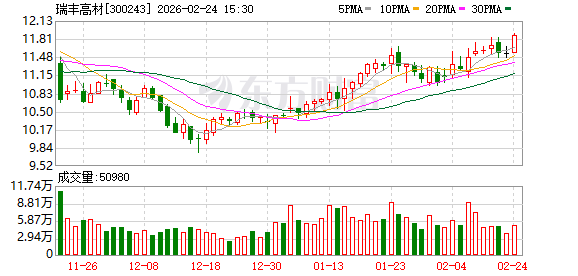
瑞丰高材:公司在SBR合成领域已拥有多年技术积淀
Zheng Quan Ri Bao· 2026-02-24 13:07
Core Viewpoint - The company is transitioning to produce battery binder SBR products, leveraging its existing technology and production capabilities in the SBR synthesis field, which has been developed over many years [2] Group 1: Company Strategy - The company has identified synthetic SBR as a precursor for MBS products and is well-positioned to produce battery binder SBR due to its technological advantages [2] - The company plans to start producing SBR products in 2024 and has already launched several product grades suitable for applications in 3C and energy storage sectors [2] Group 2: Market Position - Currently, SBR as a key battery binder product is primarily imported from Japan, indicating a significant market opportunity for domestic production [2] - There is a noted gap in performance between the company's products and high-end Japanese products in certain power battery applications, prompting ongoing efforts in technology optimization and collaboration with downstream customers [2] Group 3: Production Capacity - The company has sufficient production capacity based on its established MBS production lines, eliminating the need for large-scale new production line construction [2]


Diodes(DIOD) - 2025 Q1 - Earnings Call Transcript
2025-05-08 22:02
Financial Data and Key Metrics Changes - Revenue for Q1 2025 was $332.1 million, a 10% increase year-over-year compared to $302 million in Q1 2024, but a decrease of 2.1% sequentially from $339.3 million in Q4 2024 [12][19] - Gross profit for Q1 2025 was $104.7 million, representing 31.5% of revenue, down from 33% in the prior year quarter and 32.7% in the previous quarter [12] - GAAP net loss for Q1 2025 was $4.4 million, or a loss per share of $0.10, compared to net income of $14 million or $0.30 per diluted share in the prior year quarter [14] Business Line Data and Key Metrics Changes - Automotive and industrial markets accounted for 42% of Q1 product revenue, maintaining the same level as the previous quarter [8][20] - The computing market showed strong performance, particularly in AI-related applications, contributing significantly to revenue growth [8][26] Market Data and Key Metrics Changes - Asia represented 78% of revenue, Europe 13%, and North America 9% in Q1 2025, with improvements noted across all regions [19] - Channel inventory levels decreased, indicating a better alignment with actual demand [9][19] Company Strategy and Development Direction - The company announced a $100 million stock repurchase program, reflecting confidence in future growth prospects [10] - The hybrid manufacturing model allows the company to adapt to changing market conditions and customer needs, mitigating tariff impacts [10][29] Management's Comments on Operating Environment and Future Outlook - Management expressed optimism about continued growth, expecting Q2 2025 to show both year-over-year and sequential growth [9][30] - The company is closely monitoring the impact of tariffs and adjusting its strategies accordingly [29] Other Important Information - Cash flow from operations was $56.7 million for Q1 2025, with free cash flow of $40.8 million [16] - Total inventory days decreased to approximately 187 days, down from 193 days in the previous quarter [17] Q&A Session Summary Question: Demand Pull Forward and Stability - Management noted that while tariffs create uncertainty, they do not see significant demand pull forward but rather an improvement in channel inventory and backlog [35][38] Question: Manufacturing Footprint and Tariff Impact - The hybrid manufacturing model remains a priority, and the company will continue to port products from external to internal manufacturing without changing its strategy due to tariffs [40][41] Question: AI CapEx Trends - Demand for AI-related products is strong, particularly in data centers and edge computing, with ongoing design wins expected to drive future growth [43][45] Question: Gross Margin Catalysts - Management highlighted that while there are pressures on margins, improvements in internal loading and product mix are expected to drive margin expansion in the second half of the year [48][51] Question: Inventory Normalization - Current inventory levels are slightly above the target range of 11 to 14 weeks, but management is comfortable with the levels supporting anticipated growth [59][60]

Diodes(DIOD) - 2025 Q1 - Earnings Call Transcript
2025-05-08 22:00
Financial Data and Key Metrics Changes - Revenue for Q1 2025 was $332.1 million, a 10% increase year-over-year compared to $302 million in Q1 2024, but a decrease of 2.1% sequentially from $339.3 million in Q4 2024 [12][18] - GAAP net loss for Q1 2025 was $4.4 million, or a loss per share of $0.10, compared to net income of $14 million or $0.30 per diluted share in Q1 2024 [14] - Non-GAAP adjusted net income for Q1 2025 was $8.8 million, or $0.19 per diluted share, down from $13 million or $0.28 per diluted share in Q1 2024 [14] - EBITDA for Q1 2025 was $26.2 million, or 7.9% of revenue, compared to $48.3 million or 16% of revenue in the prior year period [15] Business Line Data and Key Metrics Changes - Automotive and industrial markets accounted for 42% of Q1 2025 product revenue, maintaining the same level as the previous quarter [7][19] - The computing segment represented 27% of product revenue, with ongoing design momentum in AI server and data center applications [18][25] - Consumer market revenue was 17%, while communication market revenue was 14% [19][27] Market Data and Key Metrics Changes - Asia represented 78% of revenue, Europe 13%, and North America 9% in Q1 2025, with improvements noted across all regions [18] - Channel inventory levels decreased, indicating a better alignment with actual demand [7][18] Company Strategy and Development Direction - The company announced a $100 million stock repurchase program, reflecting confidence in future growth prospects [10] - The hybrid manufacturing model allows the company to adapt to global customer needs and mitigate tariff impacts [10][28] - The focus remains on content expansion and gaining market share in the automotive sector as it recovers [20] Management's Comments on Operating Environment and Future Outlook - Management expressed optimism about growth prospects in 2025 and beyond, despite current economic uncertainties due to tariffs [29] - The company expects revenue for Q2 2025 to increase to approximately $355 million, representing 11% growth year-over-year [17] Other Important Information - Total inventory days at the end of Q1 2025 were approximately 187, down from 193 in the previous quarter [16] - Cash flow provided by operations was $56.7 million for Q1 2025, with free cash flow of $40.8 million [15] Q&A Session Summary Question: Demand pull forward due to inventory levels and tariffs - Management noted that while tariffs create uncertainty, they do not see significant demand pull forward, but rather an improvement in channel inventory and backlog [35][36] Question: Impact of tariffs on manufacturing strategy - The hybrid manufacturing model will continue to be a focus, with no changes to the strategy despite tariff issues [39][40] Question: AI CapEx trends and regional demand - Demand is strong in data center applications, particularly among hyperscalers, with positive trends in edge computing as well [44][46] Question: Gross margin catalysts and potential headwinds - Management expects margin improvement in the second half of the year, driven by increased revenue and improved product mix [48][52] Question: Normalization of distributor inventories - Current inventory levels are slightly above the target range of 11 to 14 weeks, but management is comfortable with the levels supporting expected growth [58]