SBR粘结剂

Search documents
电池里的“隐形韧带” 亮晶晶如何撬动200亿锂电粘结剂市场?
高工锂电· 2026-01-29 10:34
Core Viewpoint - The lithium battery industry is undergoing a cyclical adjustment after a period of intense capacity expansion, leading to a reshaping of the competitive landscape [2][9]. Group 1: Industry Background - From 2020 to 2022, the industry experienced a capital influx phase, characterized by the active participation of "first-generation cross-border" companies [4]. - The volatility in lithium carbonate prices during this period reflected supply-demand dynamics and prompted traditional enterprises to seek new growth avenues [5]. - Significant capital flowed into lithium mining, cathode materials, and electrolyte sectors based on high industry expectations [6]. Group 2: Shift in Investment Logic - The previous investment logic focused on resource positioning and capacity scale, aiming for beta returns through heavy asset investments [7]. - As the cycle declined, high inventory levels and falling prices challenged the expansion model reliant on capital leverage, leading to valuation corrections and capacity clearances for many projects [8]. Group 3: Emergence of New Players - A new wave of "second-generation cross-border" companies is entering the market, focusing on the micro-materials sector, which has been overlooked but has high technical barriers [10][11]. - Liangjingjing New Materials, based in Fujian, exemplifies this trend by entering the lithium battery anode binder niche, aiming to optimize battery manufacturing yield and cost through micron-level process improvements [12]. Group 4: Technical Foundation and Innovation - The founder of Liangjingjing, Zeng Weijie, has nearly 20 years of experience in emulsion polymerization, which underpins the company's strategic focus on SBR binders rather than repeating the "main material" expansion path [13]. - The company is also developing new types of anode binders, such as PAA, for next-generation battery systems [16]. Group 5: Performance and Product Development - Liangjingjing's products, such as the LAD08 series, have shown significant improvements in peel strength, achieving 2-3 times better performance compared to conventional systems [41]. - The company has optimized electronic transmission efficiency in its new product lines, reducing charge transfer resistance by approximately 75% [43]. Group 6: Market Positioning and Supply Chain - Liangjingjing has entered the supply chains of leading companies like BYD, Penghui, and Putailai, with its products offering a balance of cost-effectiveness and supply chain stability [52]. - The company is positioned to meet the growing demand for lithium battery binders, with expectations of over 100,000 tons of global demand in the next five to ten years, corresponding to a market size of over 20 billion yuan [60]. Group 7: Capacity Expansion and Strategic Planning - Liangjingjing plans to produce 19,000 tons of SBR annually at its Fujian base, including 5,000 tons for lithium batteries, and is expanding its capacity in Guangxi to 450,000 tons per year by 2028 [65][66]. - This dual-base strategy and diversified product structure aim to ensure supply capability while mitigating risks associated with a single market segment [67]. Group 8: Industry Evolution and Future Outlook - The transition from the first generation of cross-border companies to the second generation reflects a maturation of China's fine chemical industry and a shift towards engineering capabilities and problem-solving [72]. - Companies like Liangjingjing are moving from being mere material suppliers to partners that help battery manufacturers control yield, optimize costs, and enhance energy density [69].


电池创新熄火了吗?答案在材料里
高工锂电· 2025-11-27 11:15
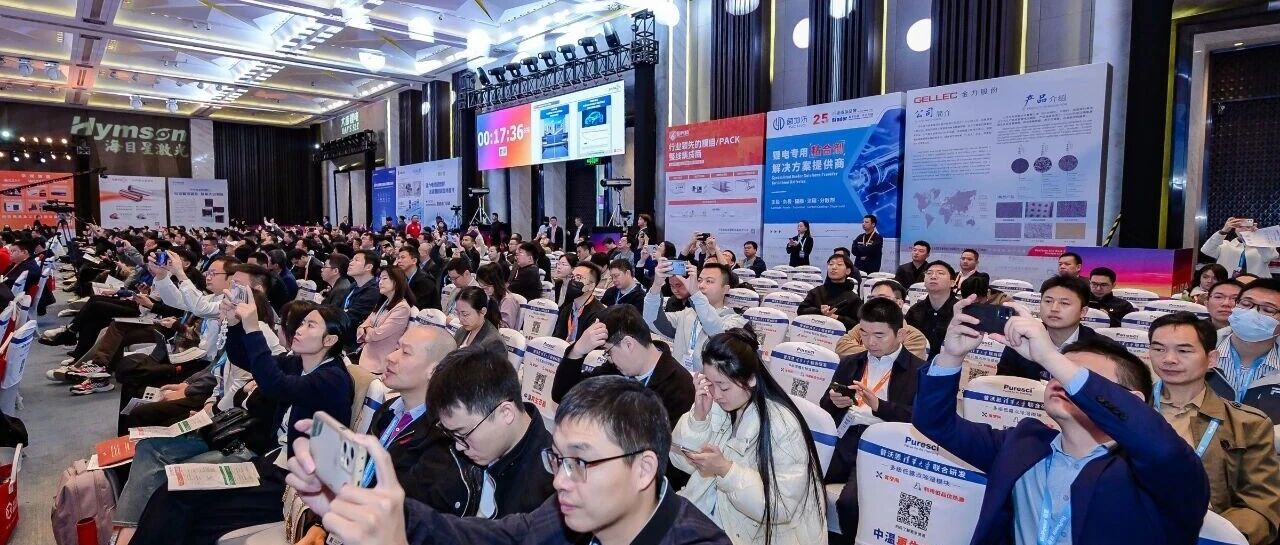
Core Insights - The article emphasizes the importance of material innovation in the battery industry, particularly in achieving high safety, performance, and low cost under increasing pressure [1][2][3] - It highlights the collaborative efforts across the supply chain to enhance material structures, process compatibility, and overall industry synergy [2][3] Material Innovations - Composite current collectors are being developed to improve safety by preventing aluminum thermal reactions during thermal runaway [4][6] - The production of composite copper foil has reached a width of 1140mm with a thickness uniformity of ≤ 2%, meeting the demands for large-scale production in power batteries [7] - New lithium deposition techniques are yielding metal lithium layers with superior cycle life compared to rolled lithium, providing new solutions for solid-state systems [8] Capacity and Production - Fengyuan Lithium Energy has a current production capacity of 240,000 tons for cathode materials, with plans to expand to a total of 905,000 tons, including various lithium compounds [11][12] - The company has upgraded its phosphor lithium products to enhance both capacity and rate performance, achieving a 1C capacity of over 140mAh/g [12] Safety Enhancements - The article discusses advancements in fire-retardant materials, including a unique three-layer design for fireproof tape that activates under high temperatures [27] - A systematic approach to "zero thermal propagation" is proposed, focusing on passive safety measures to mitigate thermal runaway risks [30][31] Technological Developments - The development of in-situ polymerized electrolytes aims to enhance battery safety and longevity, with promising results in various battery systems [21] - Innovations in conductive agents, such as high-structure acetylene black, are being explored to improve conductivity while reducing costs [34][36] Market Trends - The demand for advanced materials is driven by the increasing energy density of batteries and the expansion of applications in electric vehicles and energy storage [21][28] - The article notes a significant reduction in large-scale fire incidents due to ongoing improvements in material technology and manufacturing processes [25]