
SKA中频天线

Search documents
新春走基层|跨越半球的坚守,他们奔赴一场“宇宙之约”
Xin Hua She· 2026-02-21 03:39
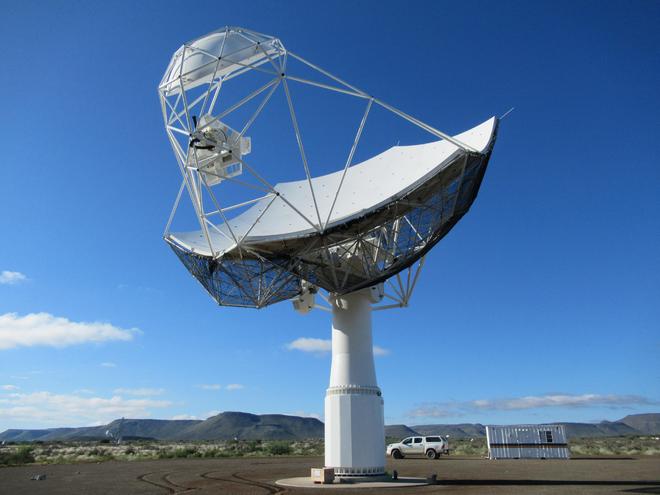
Core Viewpoint - The Square Kilometer Array (SKA) project, an international scientific initiative, is progressing with the construction of the world's largest radio telescope in South Africa's Karoo region, with China contributing 64 mid-frequency antennas [2]. Group 1: Project Overview - SKA aims to cover a total area of approximately 1 square kilometer to assist in exploring cosmic mysteries [2]. - The project is entering a critical construction phase, with a target to complete 28 antennas within the year [2]. Group 2: Team Efforts and Challenges - Zhang Lei, the project leader, is coordinating efforts across multiple sites, ensuring compliance with international standards [4]. - The team is addressing various challenges, including balancing scientific goals with technical, scheduling, and cost considerations [2]. - The servo control system is crucial for the antennas' precision, and ongoing adjustments are being made to enhance performance [4]. Group 3: International Collaboration - The team is actively sharing technical expertise with international partners while learning from their feedback to improve future projects [7]. - Continuous communication is maintained through video conferences to track progress and provide technical support [7]. Group 4: Cultural Aspects - Despite working during the Chinese New Year, the team maintains a sense of community and celebration, reflecting cultural traditions even in a remote location [7].

到南非看这个国际大科学工程,没想到负责人用中文说“谢谢”
Bei Jing Ri Bao Ke Hu Duan· 2025-10-01 07:13
Core Viewpoint - The Square Kilometre Array (SKA) is a significant international scientific project that has attracted global attention, particularly due to China's deep involvement in its construction and operation [1][3]. Group 1: Project Overview - The SKA is the world's largest integrated aperture radio telescope, funded by multiple countries, consisting of low-frequency arrays in Australia and mid-frequency arrays in South Africa and eight southern African countries [3]. - The project is named after its total receiving area of approximately one square kilometer [3]. Group 2: China's Contribution - China has made substantial contributions to the SKA, including the design and manufacture of 64 mid-frequency antennas, with several already installed and others in transit [5][7]. - The mid-frequency antennas are critical components of the SKA, with their structure being designed and constructed by a Chinese team, led by the China Electronics Technology Group Corporation [5][7]. - The antennas' main reflector consists of 66 independent panels, each adjusted with sub-millimeter precision to ensure smoothness and specific curvature, which is essential for collecting radio waves from space [5][7]. Group 3: International Collaboration - The SKA project exemplifies international collaboration, bringing together scientists and engineers from various countries to achieve common scientific goals [7][9]. - The SKA regional science center plays a crucial role in data aggregation from both South Africa and Australia, allowing global access to astronomical data [7][9]. Group 4: Acknowledgments and Future Prospects - South African officials expressed gratitude towards China for its core support in advancing the country's science, technology, and innovation systems [9]. - The project is expected to lead to further advancements in understanding the universe, with more Chinese-designed and manufactured antennas anticipated to be established in the Karoo region [9].
国际大科学工程中的中国贡献——实地探访平方公里阵列射电望远镜南非台址
Xin Hua Wang· 2025-10-01 07:05
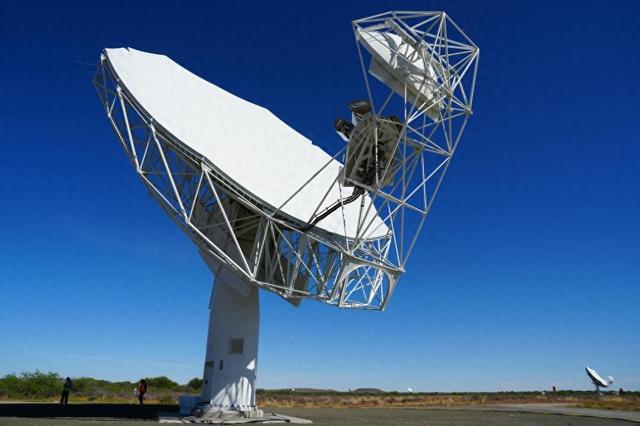
Core Insights - The article highlights China's significant contributions to the international scientific project, the Square Kilometer Array (SKA), which is the world's largest radio telescope project, involving multiple countries [1][2]. Group 1: Project Overview - The SKA consists of two parts: a low-frequency array in Australia and a mid-frequency array in South Africa and eight other Southern African countries, named for its total receiving area of approximately one square kilometer [1]. - The MeerKAT radio telescope, a precursor to the SKA, features 64 hexagonal dishes, each with a diameter of 13.5 meters, located in the Karoo region of South Africa [1]. Group 2: China's Contributions - China has provided 64 mid-frequency antennas for the SKA, with 3 already installed and 1 undergoing testing, showcasing its role as a primary contractor for the antenna structure [2]. - The mid-frequency antennas are critical components of the SKA, with their main and secondary reflectors designed and manufactured by the China Electronics Technology Group Corporation [2][3]. - The antennas consist of 66 individual panels, each requiring sub-millimeter precision adjustments to ensure smooth reflective surfaces, essential for collecting radio waves from space [2]. Group 3: Knowledge Transfer and Collaboration - China has also contributed to the development of the servo control system for the antennas, enhancing their pointing accuracy to achieve the scientific goals of the SKA [3]. - As a key participant in the SKA regional science center, China collaborates with international teams to process and understand the data generated by the telescopes in South Africa and Australia [3]. Group 4: International Cooperation - The SKA project fosters collaboration among countries, uniting efforts to address cosmic questions and mysteries, emphasizing the importance of joint endeavors in scientific exploration [4]. - South African officials expressed gratitude towards China for its core support and commitment to the scientific, technological, and innovation systems in South Africa [4].
记者手记|国际大科学工程中的中国贡献——实地探访平方公里阵列射电望远镜南非台址
Xin Hua She· 2025-09-30 10:37
Core Insights - The article highlights China's significant contributions to the international scientific project, the Square Kilometre Array (SKA), which is the world's largest radio telescope project, involving multiple countries [1][2]. Group 1: Project Overview - The SKA consists of two parts: a low-frequency array in Australia and a mid-frequency array in South Africa and eight other southern African countries, named for its total receiving area of approximately one square kilometer [1]. - The MeerKAT radio telescope, a precursor to the SKA, features 64 hexagonal dishes, each with a diameter of 13.5 meters, located in the Karoo region of South Africa [1]. Group 2: China's Contributions - China has provided 64 mid-frequency antennas for the SKA, with three already installed and one undergoing testing, showcasing its role as a primary contractor for the antenna structure [2]. - The mid-frequency antennas are critical components of the SKA, with their main reflector made up of 66 individual panels, each requiring sub-millimeter precision adjustments to ensure optimal performance [2][3]. Group 3: Knowledge Transfer and Collaboration - China has also contributed to the development of the servo control system for the antennas, enhancing their pointing accuracy, which is essential for achieving the scientific goals of the SKA [3]. - The SKA regional science center, where data from both South Africa and Australia is aggregated, involves collaboration among astronomers, computer scientists, and engineers, with China playing a key role [3]. Group 4: International Cooperation - The SKA project fosters international collaboration, bringing together countries from both the Global North and South, with a shared goal of understanding the universe [3][4]. - South African officials expressed gratitude for China's support in advancing the country's scientific and technological capabilities [4].