
国际大科学计划

Search documents
新春走基层丨跨越半球的坚守,他们奔赴一场“宇宙之约”
Xin Hua She· 2026-02-21 05:13
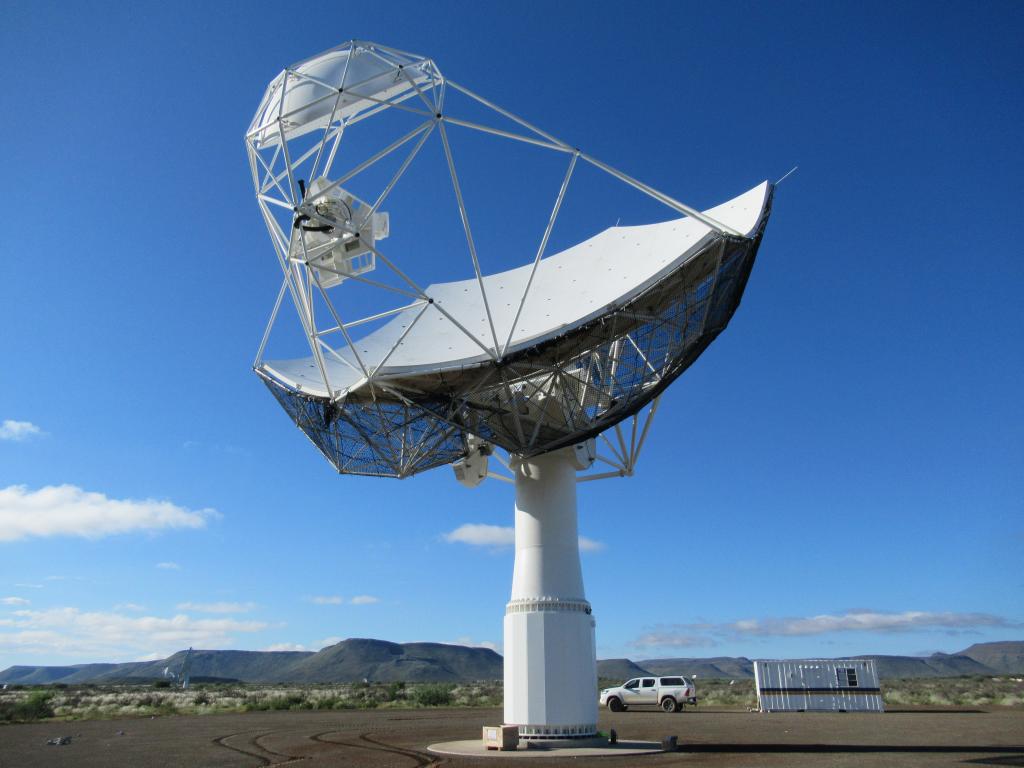
Core Insights - The SKA (Square Kilometre Array) project is a significant international scientific initiative aimed at constructing the world's largest radio telescope, with a total receiving area of approximately 1 square kilometer, to aid in the exploration of cosmic mysteries [3][4] Group 1: Project Overview - The SKA project involves collaboration among multiple countries, with China contributing 64 mid-frequency antennas, which are being developed and constructed by the China Electronics Technology Group Corporation [3][4] - The project is currently in a critical construction phase, with a goal to complete the installation of 28 antennas within the year [3] Group 2: Technical Challenges - Engineers are focused on balancing scientific objectives with technical, scheduling, and cost considerations, while also ensuring minimal interference with existing equipment at the site [3][4] - The servo control system is crucial for the antennas' precise operation, and engineers are continuously optimizing parameters and algorithms to enhance performance in response to environmental challenges [4][7] Group 3: Team Dynamics and Collaboration - The project team maintains regular communication with international partners through daily and weekly meetings to ensure adherence to safety and quality standards [4] - Team members in South Africa and those in China are collaborating effectively, sharing technical insights and learning from each other's experiences to improve future projects [7]

新春走基层|跨越半球的坚守,他们奔赴一场“宇宙之约”
Xin Lang Cai Jing· 2026-02-21 04:52
Core Viewpoint - The SKA (Square Kilometre Array) project, an international scientific initiative, is progressing with the construction of the world's largest radio telescope in South Africa's Karoo region, with China contributing 64 mid-frequency antennas [3][5]. Group 1: Project Overview - The SKA aims to build a total receiving area of approximately 1 square kilometer to aid in the exploration of cosmic mysteries [3]. - The project is entering a critical construction phase, with a target to complete 28 antennas within the year [3]. Group 2: Team Efforts and Challenges - Zhang Lei, the project leader, is coordinating efforts across multiple sites, ensuring that safety and quality standards are met [5]. - The team is facing challenges such as optimizing the servo control system for antenna precision and addressing environmental factors that may affect performance [5][8]. Group 3: International Collaboration - The project involves collaboration with international partners, with regular meetings to track progress and share technical expertise [5][8]. - The team is learning from international feedback to enhance their future projects [8]. Group 4: Cultural Aspects - Despite being away from home during the Chinese New Year, the team maintains a sense of celebration and camaraderie, reflecting cultural traditions [6][8].
新春走基层|跨越半球的坚守,他们奔赴一场“宇宙之约”
Xin Hua She· 2026-02-21 03:39
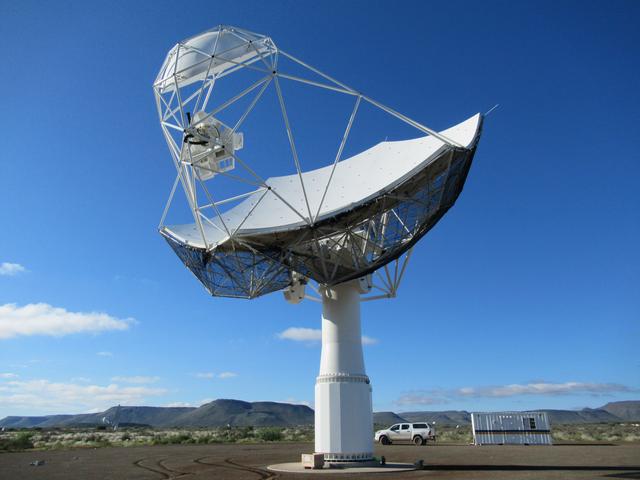
Core Viewpoint - The Square Kilometer Array (SKA) project, an international scientific initiative, is progressing with the construction of the world's largest radio telescope in South Africa's Karoo region, with China contributing 64 mid-frequency antennas [2]. Group 1: Project Overview - SKA aims to cover a total area of approximately 1 square kilometer to assist in exploring cosmic mysteries [2]. - The project is entering a critical construction phase, with a target to complete 28 antennas within the year [2]. Group 2: Team Efforts and Challenges - Zhang Lei, the project leader, is coordinating efforts across multiple sites, ensuring compliance with international standards [4]. - The team is addressing various challenges, including balancing scientific goals with technical, scheduling, and cost considerations [2]. - The servo control system is crucial for the antennas' precision, and ongoing adjustments are being made to enhance performance [4]. Group 3: International Collaboration - The team is actively sharing technical expertise with international partners while learning from their feedback to improve future projects [7]. - Continuous communication is maintained through video conferences to track progress and provide technical support [7]. Group 4: Cultural Aspects - Despite working during the Chinese New Year, the team maintains a sense of community and celebration, reflecting cultural traditions even in a remote location [7].
硬核创新铸底气 2025步履铿锵
Zhong Guo Qing Nian Bao· 2025-12-28 22:16
Group 1 - The Jiangmen neutrino experiment officially began data collection in August 2025, becoming the world's first large-scale, high-precision neutrino facility [2][7] - China's manned space program has successfully completed multiple missions, including emergency launches, marking significant milestones in the development of the Chinese space station [3][7] - The "Chang'e 6" mission returned 1935.3 grams of lunar soil from the moon's far side, contributing to ongoing research that enhances understanding of lunar geology [4][8] Group 2 - The National Space Administration's action plan for commercial space development outlines 22 key initiatives to promote high-quality growth in the commercial space sector [5] - The "DeepSeek" AI model has transformed search habits, indicating a significant shift in how people interact with technology [9][12] - The introduction of the revised National Natural Science Foundation regulations encourages collaboration between government, enterprises, and organizations to foster innovation [14][15] Group 3 - The "Youth Science and Technology Talent Cultivation Project" aims to support the development of young scientists, emphasizing the importance of nurturing talent for future innovation [18][20] - The "Deep Time Digital Earth" international scientific plan, initiated by China, aims to enhance global geological knowledge through international collaboration [23][24] - The ITER project, a major international nuclear fusion initiative, has seen significant progress with China's successful development of a critical component [24][26]

科技部表示 深入实施“一带一路”科技创新行动计划
Zhong Guo Zheng Quan Bao· 2025-06-03 20:47
Group 1 - The core theme of the second "Belt and Road" Science and Technology Exchange Conference is "Building an Innovation Road Together, Promoting Cooperative Development - Hand in Hand to Construct a 'Belt and Road' Science and Technology Innovation Community" [2] - The conference will feature 38 activities across five major areas, including policy alignment, cultural exchange, industrial innovation, international scientific programs, and technology poverty alleviation [2] - China has established science and technology cooperation with over 160 countries and regions, with 119 intergovernmental science and technology agreements and participation in over 200 international organizations and multilateral mechanisms [3] Group 2 - The Sichuan and Chongqing governments will launch the "Double Thousand" plan, which includes "Thousand Cooperation Projects" and "Thousand Young Scientist Exchange" initiatives to deepen collaboration with partner countries [4] - The first "Belt and Road" Science and Technology Exchange Conference was held in Chongqing, and the region is working to become a highland for reform and opening up in inland China [4] - The conference aims to promote resource sharing, talent exchange, joint research, and the transformation and industrialization of scientific achievements to contribute to the high-quality development of the "Belt and Road" initiative [4]
科学技术部:将继续深入实施“一带一路”科技创新行动计划 促进共建“一带一路”国家科技合作
Xin Hua Cai Jing· 2025-06-03 07:16
Group 1 - The Ministry of Science and Technology of China is promoting international scientific and technological cooperation, having established partnerships with over 160 countries and regions, and signed 119 intergovernmental science and technology agreements [2][3] - The ministry is expanding channels for both governmental and private sector collaboration, encouraging joint efforts in areas such as climate change, clean energy, and health [2] - China is actively participating in global scientific governance, proposing initiatives like the Global Artificial Intelligence Governance Initiative and engaging in nearly 60 international large-scale scientific programs [3] Group 2 - The Ministry plans to continue implementing the "Belt and Road" technology innovation action plan, enhancing cooperation with countries along the Belt and Road to promote connectivity in the digital age [3] - There is a focus on building international research and innovation platforms, such as joint laboratories and international technology transfer centers, to facilitate global scientific collaboration [2] - The ministry aims to increase technological assistance to developing countries, contributing to global scientific progress for the benefit of all humanity [3]