SOFR

Search documents
CA Markets:读懂美联储资产负债表与FIMA、IORB、SOFR的微妙联动
Sou Hu Cai Jing· 2026-01-09 04:22
Core Viewpoint - The sudden spike in the Secured Overnight Financing Rate (SOFR) by 15 basis points has caused significant concern in the funding market, despite the stability of the Interest on Reserve Balances (IORB) rate and the Federal Reserve's balance sheet size [1][4]. Group 1: Federal Reserve's Balance Sheet and Operations - The Federal Reserve's balance sheet has increased from $4 trillion in spring 2020 to nearly $8.5 trillion, primarily through bond purchases and liquidity injections [3]. - The FIMA Repo facility serves as an emergency liquidity channel for foreign central banks, allowing them to convert long-duration U.S. Treasury securities into overnight reserves quickly [3][6]. Group 2: Interest Rates and Market Signals - The IORB rate acts as a benchmark for banks, influencing their willingness to lend in the repo market; adjustments to this rate can signal tightening or easing of monetary policy [3][8]. - SOFR reflects the actual overnight repo costs in the market; a SOFR exceeding IORB by more than 5 basis points indicates abnormal market stress and potential risk aversion [4][9]. Group 3: Monitoring and Practical Implications - Investors should monitor the total balance sheet size, FIMA balances, IORB rates, and SOFR daily to gauge liquidity conditions [10]. - A significant rise in FIMA balances may indicate cash accumulation by foreign central banks, while a high SOFR could suggest tightening liquidity [12][11]. - Observing ON-RRP transaction volumes can provide insights into overall risk sentiment, with high volumes often signaling a decline in risk appetite [13].


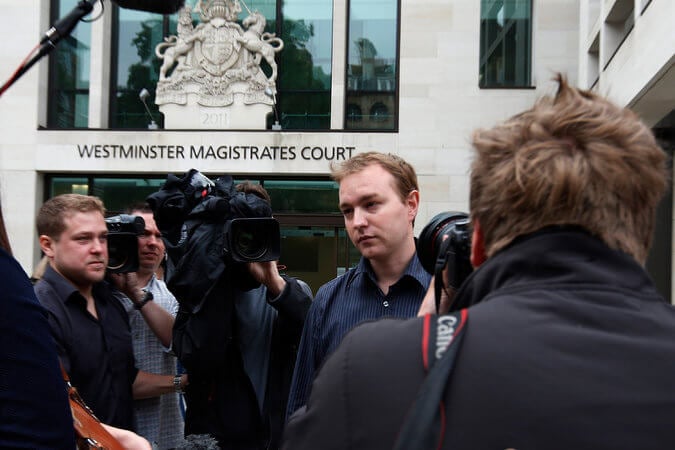
US Court Throws Out Last Libor Collusion Case Against Global Banks
FinanceFeeds· 2025-09-26 21:15
Core Viewpoint - A federal judge has dismissed the last remaining claims in the litigation against global banks accused of conspiring to manipulate Libor, concluding one of the longest financial antitrust cases in U.S. history [1][13]. Legal Ruling - U.S. District Judge Naomi Reice Buchwald issued a 273-page ruling, stating that investors failed to prove collusion among banks to keep Libor artificially low, indicating that the evidence did not exclude the possibility of independent actions by the banks [2][7]. - The ruling marks the end of over a decade of litigation that began in 2011, with plaintiffs seeking to recover losses linked to the alleged manipulation of Libor [3]. Impact on Investors and Banks - The decision concludes private antitrust claims related to Libor, removing the last legal uncertainty for banks after global investigations resulted in approximately $9 billion in fines [4][9]. - The investor group involved included various entities such as Principal Financial Group, cities like Baltimore and Houston, and mortgage financiers Fannie Mae and Freddie Mac, alleging that banks' actions inflated profits and distorted borrowing costs during the 2008 financial crisis [5][6]. Evidence and Findings - Over the years, investors presented various forms of evidence, including emails and expert analysis, but the judge found that it did not establish a coordinated effort among banks [7]. - Despite uncovering manipulation by traders during investigations, civil courts did not find sufficient evidence to prove a broad conspiracy [9][10]. Libor's Transition - Libor, which influenced interest rates for over $300 trillion in loans and derivatives, was phased out in January 2022 and replaced by the Secured Overnight Financing Rate (SOFR) and other benchmarks [8][14]. - The transition to new benchmarks aims to prevent future manipulation, addressing the issues highlighted by the Libor scandal [14].