SYNDA R1

Search documents
人形机器人产业周报:稚晖君发布启元Q1,新时达发布轮式工规级机器人-20260107
Guoyuan Securities· 2026-01-07 03:14
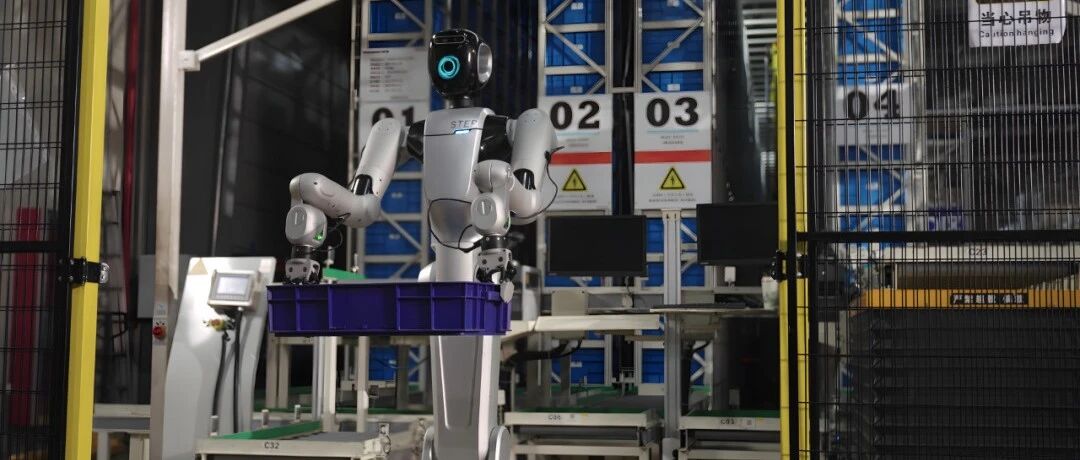
Investment Rating - The report maintains a "Recommended" investment rating for the humanoid robot industry [7]. Core Insights - The humanoid robot concept index increased by 2.56% from December 28, 2025, to January 2, 2026, outperforming the CSI 300 index by 3.15 percentage points. Year-to-date, the humanoid robot index has risen by 77.59%, surpassing the CSI 300 index by 56.40 percentage points [12][17]. - The report highlights significant advancements in humanoid robot technology, including the launch of the world's smallest full-body force-controlled humanoid robot, "Qiyuan Q1," by Zhihui Jun, and the introduction of the industrial-grade wheeled robot SYNDA R1 by Xinshi Da [5][20][23]. - The report emphasizes the importance of policy support for the humanoid robot industry, citing Shenzhen's 15th Five-Year Plan, which aims to promote the large-scale application of embodied intelligence and accelerate the development of new intelligent terminal clusters [20][21]. Weekly Market Review - From December 28, 2025, to January 2, 2026, the humanoid robot concept index rose by 2.56%, outperforming the CSI 300 index by 3.15 percentage points. The humanoid robot index has seen a year-to-date increase of 77.59%, exceeding the CSI 300 index by 56.40 percentage points [12][17]. - Among A-share humanoid robot stocks, Buke Co., Ltd. had the highest weekly increase at +50.42%, while Mingxin Xuteng experienced the largest decline at -10.34% [17][18]. Weekly Hotspots Review Policy Developments - The Shenzhen Municipal Committee's proposal for the 15th Five-Year Plan emphasizes the promotion of large-scale applications of embodied intelligence and the cultivation of new intelligent terminal clusters [20]. - The establishment of the humanoid robot and embodied intelligence standardization technical committee by the Ministry of Industry and Information Technology aims to enhance the quality of standards and promote the application of humanoid robot technologies [22]. Product and Technology Iteration - Zhihui Jun launched the "Qiyuan Q1," the world's smallest full-body force-controlled humanoid robot, which has achieved breakthroughs in joint systems and application scenarios [20][23]. - Xinshi Da introduced the SYNDA R1, a wheeled industrial-grade robot designed for typical industrial tasks, with plans to release a bipedal humanoid robot next year [23]. Investment and Financing - Deeping Ji announced the completion of a 100 million yuan angel round financing, which will focus on R&D and product innovation [24]. - Genisom AI completed multiple rounds of financing totaling several hundred million yuan to accelerate the large-scale application of embodied intelligence [24]. Key Company Announcements - Lingyi Intelligent Manufacturing reported the completion of over 5,000 humanoid robot hardware/assembly services [26]. - Tianzhun Technology announced that its high-performance embodied intelligence controllers have begun small-scale sales [26]. - Midea Group's humanoid robot series "Mei La" has entered the final testing phase, with plans for market entry in 2026 [27]. - Zhaofeng Co., Ltd. plans to invest 1.53 billion yuan in the industrialization of embodied intelligence robots and high-end precision components for automotive intelligent driving [28].
工规级,中国具身智能的“分水岭”?
机器人大讲堂· 2025-12-30 14:00
Core Viewpoint - Humanoid robots are in a rapidly evolving stage, with national standardization efforts underway to establish a clear framework for industrial applications [1][8]. Group 1: Industrial Application of Humanoid Robots - The SYNDA R1, developed by a company with 30 years of industrial experience, is designed for continuous operation in production lines, showcasing practical industrial parameters such as millisecond response time and millimeter precision [2][4]. - The industrial environment demands robots that can operate 24/7 with high precision and safety, which many current humanoid robots fail to meet due to their design being more suited for laboratory demonstrations rather than real-world applications [5][7]. - The lack of robust design for industrial scenarios has led to many humanoid robots being unable to perform effectively in actual production environments, highlighting the need for a focus on industrial-grade capabilities [5][8]. Group 2: Technological Advancements - The SYNDA R1 features an integrated intelligent control system that combines perception, planning, and motion control, addressing issues of response delay and stability in complex industrial conditions [8][10]. - The robot's ability to adapt to real-time changes in its environment, such as adjusting its actions based on the position of parts during assembly, demonstrates its suitability for high-precision industrial tasks [10][11]. - The design includes a dual-battery hot-swappable system, allowing for uninterrupted operation, which is critical for maintaining production line efficiency [11][13]. Group 3: Market Dynamics and Industry Trends - The entry of established companies into the humanoid robot market signifies a shift from conceptual excitement to a focus on practical industrial applications, with a clear emphasis on industrial-grade standards [13][18]. - Companies that can demonstrate industrial reliability and continuous operational capabilities will likely dominate the market, while those focusing solely on demonstration effects may be phased out [18][20]. - Collaborations with major tech firms are essential for resource integration and accelerating product deployment, indicating a trend towards ecosystem partnerships in the humanoid robotics sector [20][21]. Group 4: Future Outlook - The future of humanoid robots lies in their ability to solve real industrial problems rather than showcasing advanced technology in controlled environments, emphasizing the importance of practical applications [21][23]. - As the manufacturing sector in China undergoes transformation, humanoid robots are positioned to become integral to smart manufacturing, provided the industry focuses on industrial needs and practical deployment [21][24].