
Spikevax

Search documents
Moderna (NasdaqGS:MRNA) FY Conference Transcript
2026-03-10 14:32
Summary of Moderna FY Conference Call (March 10, 2026) Company Overview - **Company**: Moderna (NasdaqGS:MRNA) - **Fiscal Year**: 2025 - **Key Highlights**: Strong execution across revenue and cost management, significant progress in product pipeline Financial Performance - **Revenue**: $1.9 billion for FY 2025, at the high end of guidance range [2] - **Cost Reduction**: Achieved over $2 billion in cost savings, exceeding the $1 billion target set for 2025 [3] - **Cash Balance**: Ended 2025 with a cash balance of $8.1 billion, including $600 million from a credit facility [3] Product Pipeline Developments - **COVID-19 Vaccines**: - Spikevax approved for pediatric use (ages 6 months to 5 years) [4] - Positive data from Phase 3 flu vaccine study, application filed in the U.S. and other territories [4] - **Cancer Pipeline**: - Intismeran in Phase 3 for adjuvant melanoma, fully enrolled renal cell carcinoma study [4] - **Rare Diseases**: Fully enrolled study in PA, expecting readout in 2026 [42] Revenue Growth Projections - **2026 Guidance**: Up to 10% revenue growth expected, driven by: - Continued penetration of Spikevax in the U.S. (24% market share) [5] - Strategic partnerships with the U.K., Canada, and Australia, expected to generate $1 billion in international revenue [11] - **U.S. Sales Decline**: Anticipated decline in U.S. sales from $1.2 billion to $1 billion (20% decline) [11] Combination Vaccine Opportunities - **Flu-COVID Combination**: - Positive CHMP opinion received, expected approval in Europe later in 2026, contributing to revenue in 2027 [12] - Anticipated strong demand from single-payer systems internationally due to cost-effectiveness [15] - **U.S. Market**: Ongoing discussions with the FDA regarding the combination vaccine filing [13] Oncology Market Potential - **Adjuvant Melanoma**: - Multibillion-dollar market opportunity, with a 50/50 partnership with Merck [22] - Positive Phase 2 data with a hazard ratio of 0.51, aiming for similar or better results in Phase 3 [20] - **Future Indications**: Potential synergism with Keytruda, ongoing studies in various cancer types [24] Operating Expenses and Break-even Analysis - **R&D Spending**: Anticipated decrease in cash costs to $3.5 billion-$3.7 billion by 2027, with a need for revenue in that range to break even [36] - **Growth Drivers**: Expected contributions from European market openings and new partnerships in Latin America and Asia-Pacific [37] Rare Disease Program - **Partnership with Recordati**: Expected milestone payments of $160 million and tiered royalties based on sales for the PA program [42] Conclusion - **Outlook**: Exciting year ahead with multiple product approvals and significant growth opportunities in both existing and new markets [43]

Moderna pays up to $2.25bn to settle drug delivery tech patent lawsuit
Yahoo Finance· 2026-03-05 17:33
Core Insights - Moderna has agreed to pay up to $2.25 billion to settle a patent infringement lawsuit with Genevant and Arbutus, concluding a lengthy legal dispute between the companies [1][2][3] Settlement Details - The settlement includes an upfront payment of $950 million, with a potential additional payment of $1.3 billion contingent on the outcome of a pending appeal in the US Court of Federal Claims [3] - The agreement grants Moderna a non-exclusive license to utilize Genevant and Arbutus' lipid nanoparticle (LNP) delivery technology for infectious disease applications [3] Legal Context - This settlement occurs as Genevant is involved in a similar legal dispute with Pfizer and BioNTech regarding the use of its LNP technology in their Covid-19 vaccine, Comirnaty [4] - Moderna, Pfizer, and BioNTech have been engaged in ongoing patent litigation concerning their respective mRNA technologies, with multiple lawsuits filed globally [5] Financial Outlook - Moderna's CEO, Stéphane Bancel, indicated that resolving this legal matter removes uncertainty and allows the company to focus on future growth, with expectations to return to revenue growth by 2026, ending that year with over $5 billion in cash [6] - The company aims to break even by 2028, following a reported net loss of $826 million in Q4 2025, attributed to declining Covid-19 vaccine sales and changing vaccine usage policies in the US [7] Regulatory Challenges - Moderna has faced hurdles in gaining approval for its pipeline products, including the FDA's initial refusal to review its seasonal influenza vaccine, mRNA-1010, due to trial design concerns, although this decision was later reversed [8]
Moderna (MRNA) Climbs 16% as Arbutus-Genevant Legal Battle Clears
Yahoo Finance· 2026-03-05 01:00
Core Viewpoint - Moderna Inc. has resolved a four-year legal dispute regarding patent infringement related to its lipid nanoparticle (LNP) delivery technology, resulting in a significant stock price increase of 15.99% to $57.80 [1]. Group 1: Legal Settlement Details - Moderna has agreed to pay a total of $2.5 billion to Arbutus Biopharma Corporation and Genevant Sciences GmbH to settle the LNP patent infringement case, with $950 million to be paid as a lump sum in Q3 and the remaining $1.3 billion contingent on the outcome of its appeal [2]. - The legal issue involved allegations that Moderna used Arbutus and Genevant's LNP technology for its Spikevax and mRESVIA vaccines without permission [4]. - If Moderna prevails in its appeal, no further payments will be required; however, if liability is affirmed, an additional payment of up to $1.3 billion will be due within 90 days of the decision [5]. Group 2: Financial Implications - Moderna expects to record charges of $950 million in the first quarter related to the settlement and anticipates ending the year with cash and cash equivalents between $4.5 billion and $5 billion [6].
Stock Market Today: Dow, Nasdaq Higher Amid Jobs, Iran, Tariffs; Nvidia Rises (Live Coverage)
Investors· 2026-03-04 21:24
Market Overview - Major indexes finished positively, with the Dow Jones Industrial Average gaining 0.5%, the S&P 500 up 0.8%, and the Nasdaq composite rising 1.3% [1][2] - The yield on the benchmark 10-year Treasury note increased by two basis points to 4.08% [1] - Crude oil prices rose, with West Texas Intermediate futures settling near $75.65 per barrel [1] Company Performances - Nvidia (NVDA) shares rose over 3% amid news that CEO Jensen Huang indicated the company may not invest further in OpenAI after its $30 billion stake [1] - Abercrombie & Fitch (ANF) reported earnings of $3.68 per share, exceeding expectations by 11 cents, but predicted only 2% sales growth due to tariffs, leading to a 5% drop in shares [1] - Broadcom (AVGO) is expected to report earnings of $2.03 per share, reflecting a 27% growth, with sales projected to rise 28% to $19.3 billion [1] - Ross Stores (ROST) shares jumped nearly 8% after reporting earnings of $2 per share on sales of $6.6 billion, surpassing forecasts [1] - Moderna (MRNA) surged over 8% after resolving a patent lawsuit, agreeing to pay a one-time fee of $950 million [1] Economic Indicators - The ADP reported that private payrolls rose by 63,000 in February, exceeding expectations of 43,000 [2] - The Federal Reserve's Beige Book indicated mixed economic activity across its 12 districts, with seven reporting increases and five showing flat to declining activity [1] Sector Movements - Tech stocks, particularly Nvidia and Tesla (TSLA), were among the winners, with Tesla gaining 1.1% after a previous decline [2] - Bitcoin surged 7% following President Trump's announcement regarding the Clarity Act, which is aimed at the crypto industry [1]


Moderna Stock Pops After Inking $950 Million Covid Vaccine Settlement
Investors· 2026-03-04 21:02
Core Viewpoint - Moderna's stock surged after settling a patent dispute with Arbutus Biopharma for $950 million, alleviating concerns over potential liabilities that could have reached $5 billion [1][1][1] Group 1: Settlement Details - The settlement involves a one-time payment of $950 million to Arbutus and Genevant Sciences, with no future royalties owed [1][1] - Moderna plans to appeal to the Federal Circuit court, claiming immunity as a government contractor; if unsuccessful, it may incur an additional payment of up to $1.3 billion within 90 days [1][1] - The settlement resolves all litigation related to Moderna's Covid vaccines, including Spikevax and mResvia, and addresses future litigation for next-generation vaccines mNexspike and mCombriax [1][1] Group 2: Financial Implications - Following the settlement, Moderna expects to end the year with $4.5 billion to $5 billion in cash and equivalents [1][1] - Analysts view the settlement as a positive development, reducing potential liquidity concerns and allowing Moderna to focus on upcoming late-stage oncology trials expected in 2026 [1][1] Group 3: Stock Performance - Moderna's stock rose 16% to close at $57.82 after the settlement announcement [1][1] - The stock has experienced volatility, previously rising 87% to a peak of $55.20 on January 22, then dropping 34% by February 11, before rebounding [1][1] - The stock currently holds a strong IBD Digital Relative Strength Rating of 97 out of a possible 99, indicating it ranks in the top 3% of all stocks for 12-month performance [1][1]
Moderna's $950 Million Settlement Clears Legal Overhang, Stock Soars
Benzinga· 2026-03-04 13:14
Core Viewpoint - Moderna Inc. has reached a settlement agreement worth $950 million with Arbutus Biopharma and Roivant's Genevant Sciences, resolving all litigation related to its COVID-19 vaccine, Spikevax, and its mRESVIA product [2][3]. Financial Implications - The settlement will involve a lump sum payment of $950 million in Q3, with potential additional payments of up to $1.3 billion depending on the outcome of a legal appeal regarding government-contractor immunity [2][3]. - If the additional payment is realized, it would represent the largest disclosed patent settlement in the pharmaceutical industry and the second largest in any industry [3]. Future Outlook - CEO Stéphane Bancel stated that resolving this litigation allows the company to focus on its near-term future, with expectations to end 2026 with $4.5 billion to $5 billion in cash and cash equivalents [3][4]. - The company anticipates returning to revenue growth in 2026 and aims for a strong balance sheet with over $5 billion in liquidity by that time, targeting breakeven in 2028 [4]. Analyst Perspectives - Following the settlement, Moderna shares have increased, as the settlement value was better than anticipated. Analysts had previously considered the potential liability to be close to $5 billion [5][6]. - Analyst Myles Minter noted that the resolution of litigation provides certainty regarding funding for multiple late-stage oncology readouts expected in 2026 [6]. Legal Context - The lawsuit alleged that Moderna's mNEXSPIKE relied on proprietary technology developed and patented by BioNTech [7]. Earnings Performance - Moderna reported a fourth-quarter loss of $2.11, which was better than the expected loss of $2.59, and lower than a loss of $2.91 a year ago. Quarterly sales reached $678 million, exceeding expectations of $626.097 million [8]. Stock Performance - The stock is currently trading 4.5% above its 20-day simple moving average (SMA) and 5.2% above its 100-day SMA, indicating short-term strength [9]. - Over the past 12 months, shares have significantly increased and are closer to their 52-week highs, reflecting a positive long-term trend. The stock carries a Hold rating with an average price target of $34.40 [10]. Recent Analyst Actions - Recent analyst ratings include Piper Sandler with an Overweight rating and a target of $69.00, Goldman Sachs with a Neutral rating and a target of $41.00, and RBC Capital with a Sector Perform rating and a target of $30.00 [11].


Moderna, Inc. (NASDAQ: MRNA) Overview: Settlement Impact and Financial Stability
Financial Modeling Prep· 2026-03-04 06:03
Core Viewpoint - Moderna, Inc. is experiencing significant developments following its settlement with Arbutus Biopharma and Genevant Sciences, which has positively influenced its stock performance and financial outlook [2][6] Group 1: Settlement Impact - The recent settlement with Arbutus Biopharma and Genevant Sciences resulted in a stock surge of over 10%, resolving all global patent litigation related to its Covid vaccines, including Spikevax and mResvia [2][6] - As part of the settlement, Moderna will pay a one-time fee of $950 million, ensuring no future royalties on these vaccines, which enhances the company's market position [2][6] Group 2: Legal Considerations - Despite the positive settlement, Moderna plans to appeal to the Federal Circuit court for immunity as a government contractor, which could potentially save the company up to $1.3 billion if successful [3][6] - No accrual has been recorded for the potential additional payment, as the loss is not considered probable, highlighting the complexities of patent disputes in the pharmaceutical industry [3] Group 3: Financial Outlook - Following the settlement, Moderna expects to end the year with cash reserves between $4.5 billion and $5 billion, which is crucial for ongoing research and development efforts [4][6] - The resolution of the patent dispute provides a more predictable path for future growth, particularly for next-generation vaccines like mNexspike and mCombriax [4] Group 4: Stock Performance - Currently, Moderna's stock is trading at $49.83, reflecting a decrease of approximately 5.71% for the day, with a market capitalization of approximately $19.47 billion [5]
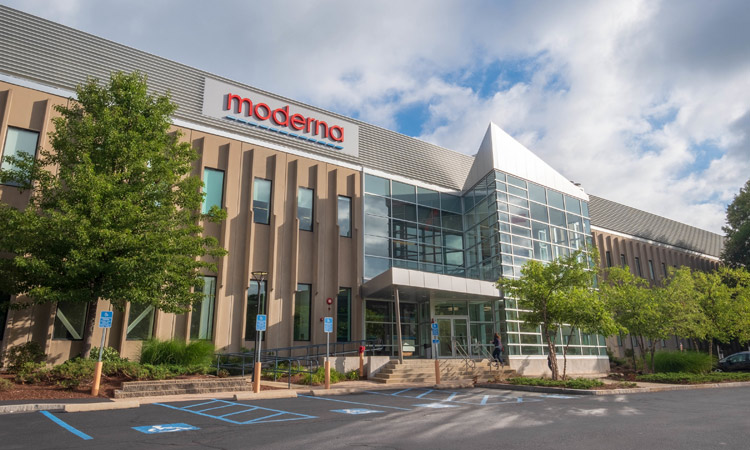
Moderna agrees to pay up to $2.25 billion to settle COVID vaccine patent dispute
Reuters· 2026-03-03 21:26
Core Viewpoint - Moderna has agreed to pay up to $2.25 billion to settle a patent dispute related to its COVID-19 vaccine technology, resolving all legal actions against it regarding the use of lipid nanoparticle technology [1]. Group 1: Financial Terms of the Settlement - Moderna will make an upfront payment of $950 million in July 2026 [1]. - An additional $1.3 billion payment is contingent on the outcome of a separate legal appeal [1]. Group 2: Market Reaction - Following the announcement, Moderna's shares increased by more than 10% in extended trading [1]. - Arbutus Biopharma's shares rose by 11%, while Roivant Sciences saw a 1% increase [1]. Group 3: Legal Context - The settlement resolves all U.S. and international legal actions accusing Moderna of unauthorized use of lipid nanoparticle technology owned by Genevant Sciences and Arbutus Biopharma in its COVID-19 vaccine, Spikevax [1]. - Lipid nanoparticle technology is crucial for delivering mRNA molecules effectively to human cells [1].

Roivant Announces Genevant Sciences’ and Arbutus Biopharma’s $2.25 Billion Global Settlement With Moderna
Globenewswire· 2026-03-03 21:15
Core Viewpoint - Roivant's subsidiary Genevant Sciences and Arbutus Biopharma have reached a $2.25 billion global settlement with Moderna to resolve patent infringement claims related to the use of Genevant's and Arbutus' lipid nanoparticle (LNP) delivery technology in COVID-19 vaccines [1][2][4]. Financial Summary - Moderna will pay $950 million upfront in July 2026 and an additional $1.3 billion contingent on a favorable appellate ruling regarding the applicability of Section 1498 to Genevant's and Arbutus' claims [2][4]. - If the contingent payment is realized, this settlement will be the largest disclosed patent settlement in the pharmaceutical industry and the second largest across any industry [4]. Legal and Patent Implications - The settlement includes a judgment of infringement and no invalidity on four Genevant/Arbutus patents, holding Moderna accountable for its unauthorized use of the technology [4]. - Genevant will grant Moderna a global non-exclusive license to its LNP delivery technology for infectious disease applications and a covenant not to sue for certain patents and products [2][4]. Company Statements - Genevant's CEO expressed satisfaction with the settlement, emphasizing the importance of their LNP technology in addressing the COVID-19 pandemic [3]. - Arbutus' CEO highlighted the transformative nature of the settlement and the recognition of their scientists' contributions to drug development [3]. Ongoing Litigation - Genevant continues its litigation against Pfizer/BioNTech, whose Comirnaty sales account for approximately two-thirds of global COVID-19 vaccine sales [4]. Shareholder Actions - Roivant's board has approved a $1 billion share repurchase program, which includes a previously authorized $500 million [4][5].


Genevant Sciences and Arbutus Biopharma Announce $2.25 Billion Global Settlement With Moderna
Globenewswire· 2026-03-03 21:15
Core Viewpoint - Genevant Sciences and Arbutus Biopharma have reached a $2.25 billion global settlement with Moderna to resolve patent infringement claims related to the unauthorized use of their lipid nanoparticle (LNP) delivery technology in COVID-19 vaccines [1][2]. Settlement Details - Moderna will pay $950 million upfront in July 2026 and an additional $1.3 billion contingent on a favorable appellate ruling regarding the applicability of Section 1498 to Genevant's and Arbutus' claims [2][4]. - The settlement includes a judgment of infringement and no invalidity on four patents held by Genevant and Arbutus [4]. - Genevant will grant Moderna a global non-exclusive license to its LNP delivery technology for infectious disease applications and a covenant not to sue for certain patents and products [2][4]. Company Statements - Genevant's CEO expressed satisfaction with the settlement, emphasizing the importance of their technology in addressing the pandemic [3]. - Arbutus' CEO highlighted the recognition of their scientists' contributions to drug development and the significance of the settlement for the company [3]. Financial Implications - If the contingent payment is realized, this settlement will be the largest disclosed patent settlement in the pharmaceutical industry and the second largest across all industries [4]. - Arbutus is evaluating a potential return of capital to shareholders in conjunction with the upfront payment [4]. Ongoing Litigation - The litigation against Pfizer/BioNTech regarding the use of Arbutus' patented LNP technology in their COVID-19 vaccines is still ongoing [4].
