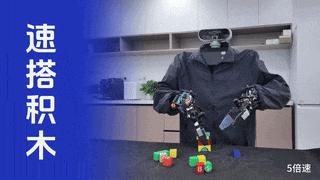
TeleDroid具身智能控制平台

Search documents
80后清华教授,与投资人联手创业,打造机器人界的Model 3
创业邦· 2025-10-24 03:34
Core Viewpoint - The article discusses the entrepreneurial journey of two Tsinghua University alumni, Mo Yilin and Jin Ge, who founded Lingyu Intelligent, a startup focused on practical applications of remote operation robotics, aiming to address industry challenges and create a cost-effective solution in the robotics sector [4][41]. Company Overview - Lingyu Intelligent was established in February 2024, focusing on high-quality remote operation technology, offering low-latency, high-precision, and user-friendly robotic systems [5][18]. - The company aims to create a "Model 3" in the robotics industry, emphasizing practicality and affordability over high-end luxury products [20][22]. Founders' Background - Mo Yilin, the founder and chief scientist, has an impressive academic background, including a PhD from Carnegie Mellon University and postdoctoral work at Caltech [7][10]. - Jin Ge, the CEO, has extensive experience in high-tech venture capital and corporate management, previously serving as a managing partner at Yuanjing Venture Capital [9][14]. Technology and Product Development - Lingyu Intelligent has developed a complete remote operation system addressing two major industry pain points: operational difficulty and data collection challenges [19][20]. - The system consists of three core modules: the TeleAvatar remote operation robot, the CyberBraceletVR device for user interaction, and the TeleDroid intelligent control platform [19][20]. - The TeleAvatar robot is priced under 100,000 RMB, making it accessible for various commercial applications [22][39]. Market Strategy - The company adopts a gradual development approach, starting with remote operation and aiming to achieve higher levels of human-robot collaboration over time [23][30]. - Lingyu Intelligent's business strategy includes a five-tier pyramid approach, focusing on research and data collection as the foundation, followed by specialized industries and eventually targeting household applications [33][34]. Financial Backing and Growth - Lingyu Intelligent secured its first funding before officially registering, with significant investments from Inno Angel Fund and other venture capitalists [16][18]. - The company completed a seed round financing of over 10 million RMB in May 2024, followed by another round three months later [18][19]. Industry Context - The article highlights the current enthusiasm in the robotics sector, with a growing market for practical applications of robotics technology [45]. - Lingyu Intelligent's approach contrasts with many competitors focused on fully autonomous robots, positioning itself as a pragmatic player in the industry [28][41].

打造上手即用的遥操作机器人,「灵御智能」完成种子+轮融资丨早起看早期
36氪· 2025-08-30 01:19
Core Insights - The article discusses the emergence of "Lingyu Intelligent," a company founded by a team with backgrounds from Tsinghua University and Carnegie Mellon, focusing on high-quality remote operation technology for robots [5][6]. - The company aims to address the challenges of embodied intelligence data collection and promote the rapid deployment of robots in service and industrial sectors through a three-step strategy: selling hardware, data, and capabilities [5][8]. Team Overview - The founder and chief scientist, Mo Yilin, has a strong academic background in automation and robotics, while CEO Jin Ge has experience in both technology entrepreneurship and management [6]. Financing Progress - "Lingyu Intelligent" recently completed a seed round financing of tens of millions, led by Huaying Capital, with participation from existing investors [7]. Products and Business - The company has developed a comprehensive remote operation system that includes three core modules: machine-side hardware, human-side hardware, and a control platform [8]. - The pricing strategy is aimed at different market needs, with the wheeled dual-arm remote operation robot priced around 70,000 yuan, making it accessible for small and medium-sized projects [8][12]. Business Model - "Lingyu Intelligent" has a clear commercialization path through a three-step strategy: selling hardware to gain market share, selling data to create a data barrier, and eventually selling capabilities to provide intelligent solutions [11][12][13]. Key Barriers - The company has achieved breakthroughs in reducing latency and costs, which are critical for the deployment of remote operations [15][16]. - The system's image latency is as low as 100 milliseconds, and operational latency is only 50 milliseconds, meeting the requirements for high-precision tasks [15]. Founder Insights - Mo Yilin believes that remote operation is a necessary step towards fully autonomous robots, emphasizing the importance of easy-to-use robots for high-quality data collection [19][20]. - He highlights the current data challenges in the robotics field, noting that the volume of data is significantly lower than in other sectors like autonomous driving [21]. - The future trend in data collection will lean towards VR devices, which offer high precision and low cost, aligning with human operational habits [23].
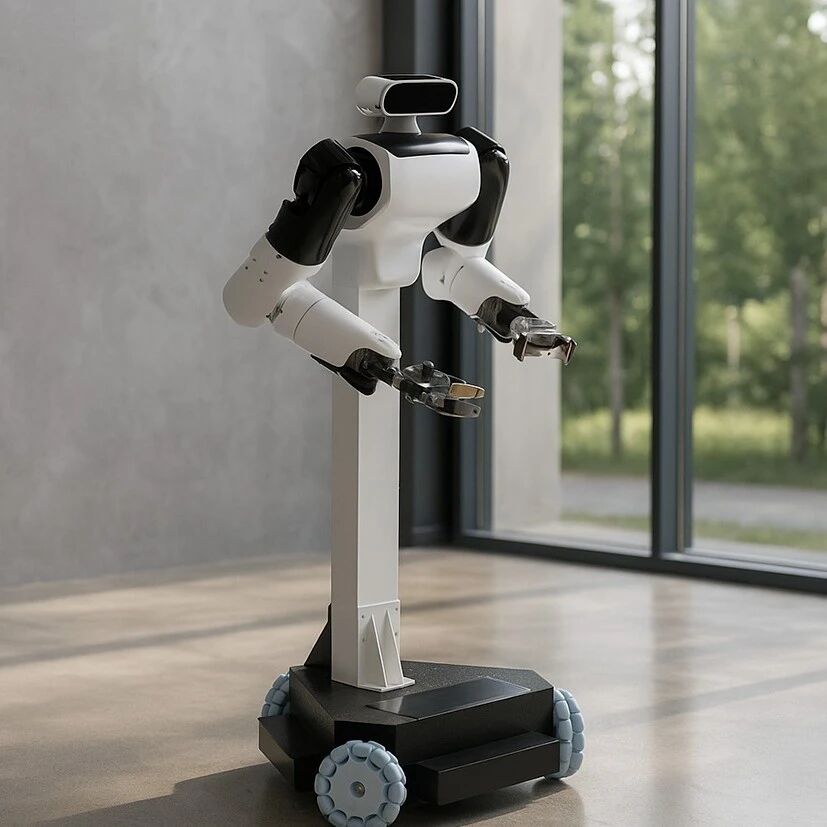
打造能上手即用的遥操作机器人,「灵御智能」完成种子+轮融资丨涌现新项目
3 6 Ke· 2025-08-28 02:46
Core Insights - Lingyu Intelligent, founded by a team with backgrounds from Tsinghua University and Carnegie Mellon, focuses on high-quality remote operation technology to develop a cost-effective, low-latency, and high-precision remote operation robot system aimed at addressing data bottlenecks in embodied intelligence and promoting rapid deployment in service and industrial sectors [1][4]. Team Overview - The founder and chief scientist, Mo Yilin, is a tenured associate professor at Tsinghua University with a strong academic background in automation and robotics, having studied at Tsinghua, Carnegie Mellon, and Caltech [2]. - CEO Jin Ge also graduated from Tsinghua University and has experience in both high-tech entrepreneurship and investment management, previously holding positions in venture capital and technology companies [2]. Financing Progress - Lingyu Intelligent recently completed a seed round financing of over 10 million yuan, led by Huaying Capital, with participation from existing investors including Inno Angel Fund and Tsinghua Waterwood Investment [3]. Products and Business Model - The company has developed a comprehensive remote operation embodied intelligence system addressing industry pain points related to robot operation and data collection, consisting of three core modules: hardware, user-side devices, and a control platform [4]. - The TeleAvatar robot is designed for lightweight and practical use across various scenarios, while the CyberBracelet VR device aims to lower the operational threshold for users, with future plans for more cost-effective wearable products [4]. - The TeleDroid control platform supports low-latency data transmission and high-precision motion control, with the robot priced around 70,000 yuan, making it accessible for small and medium-sized projects [4]. Business Strategy - Lingyu Intelligent has a clear commercialization path through a three-step strategy: selling hardware to quickly capture market share, selling data to create a data barrier, and eventually selling capabilities to provide intelligent solutions [6][7][8][9]. Competitive Advantages - The company has achieved breakthroughs in both latency and cost, with its remote operation system demonstrating image latency as low as 100 milliseconds and operational latency of only 50 milliseconds, meeting the demands of high-precision applications [10]. - The pricing strategy keeps the TA Lite model under 100,000 yuan, significantly lower than similar devices, while the VR data collection solution is priced at around 1,000 yuan, addressing the high costs and limitations of traditional methods [11]. Founder Insights - Mo Yilin emphasizes that remote operation is a necessary step towards fully autonomous robots, highlighting the importance of user-friendly designs for accumulating high-quality data [14]. - He notes that the global robotics field lags in data volume compared to other sectors, facing challenges in quality, efficiency, and cost, and stresses the irreplaceable value of real machine data [15]. - The future trend in data collection is shifting towards VR devices, which balance cost and precision while aligning with human operational habits, positioning them as a core method for future robotic data collection [16].