Tesla Optimus人形机器人

Search documents
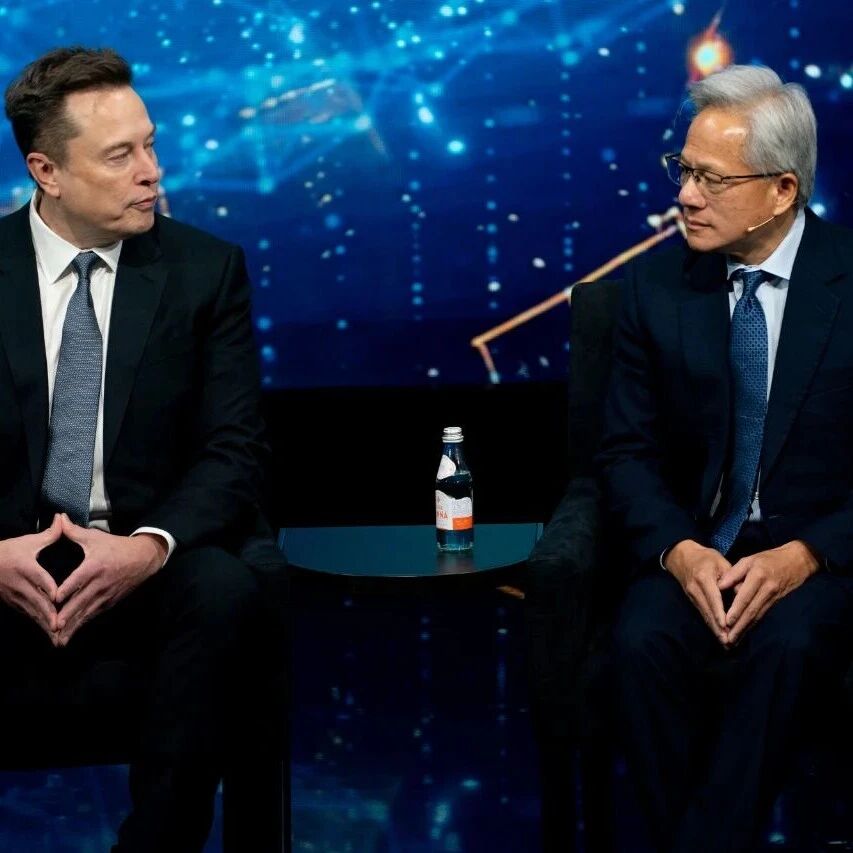
马斯克对话黄仁勋,“吵起来了”
Sou Hu Cai Jing· 2025-11-21 05:21
Group 1 - The core discussion revolves around the future of money and work in the context of advanced AI and robotics, with Elon Musk suggesting that money may become irrelevant as AI leads to unprecedented material abundance [1][2] - Musk envisions a future where work becomes optional and driven by passion rather than necessity, drawing parallels to hobbies like gardening [2][4] - Jensen Huang offers a more cautious perspective, asserting that while AI will change the nature of work, it will not eliminate the need for work altogether, and people may become busier as AI enhances productivity [3][4] Group 2 - The partnership between HUMAIN and Musk's xAI to build multiple super data centers in Saudi Arabia, including a massive 500 MW facility, highlights the region's ambition to become a global AI infrastructure hub [4][5] - Saudi Arabia's low energy costs, vast land, and capital availability position it as a strategic player in the AI landscape, aiming for a total capacity of 1.9 GW by 2030 [5][6] - Huang describes these super data centers as "AI factories," emphasizing their role in producing AI models and content rather than merely storing data [6][7] Group 3 - Huang identifies three key factors driving the AI boom: the need for processing vast amounts of data, the shift from recommendation algorithms to generative AI, and the rise of autonomous intelligent agents [8][9] - He argues that the current demand for AI computing power is based on real needs and technological evolution, distinguishing it from past tech bubbles [10] - The collaboration between Chinese companies and Saudi Arabia in AI infrastructure development reflects a growing trend of international partnerships in the tech sector [11][12] Group 4 - Geopolitical factors pose challenges to Sino-Saudi AI cooperation, particularly concerning U.S. restrictions on high-end AI technology exports [12][13] - The technological gap in high-performance computing may necessitate a focus on application-level collaborations rather than direct competition with U.S. firms [13][14] - Saudi Arabia aims to balance its partnerships with both U.S. and Chinese companies to maximize its technological and economic benefits [14]
昨晚,马斯克对话黄仁勋,「吵起来了」
36氪· 2025-11-20 10:43
Core Viewpoint - The dialogue between Elon Musk and Jensen Huang at the U.S.-Saudi Investment Forum raises profound questions about the future of work and the role of money in a world dominated by advanced AI and robotics, suggesting a potential shift towards a society where work is optional and wealth is abundant [5][6][9][30]. Group 1: Future of Work and Money - Musk envisions a future where AI and robotics lead to unprecedented material abundance, rendering the concept of money insignificant [8][9]. - He predicts that within 10 to 20 years, work will become a choice driven by passion rather than necessity, likening it to hobbies like gardening [9][30]. - Huang counters Musk's utopian vision by emphasizing that while AI will change job content, it will not eliminate the need for work; instead, it may lead to increased productivity and innovation [10][11]. Group 2: AI Infrastructure Development - The partnership between HUMAIN and Musk's xAI aims to establish multiple super data centers in Saudi Arabia, including a massive facility with a capacity of 500 megawatts [13][15]. - Saudi Arabia is positioning itself as a global AI computing hub, leveraging its abundant land, low energy costs, and capital to build world-class AI infrastructure [14][16]. - Huang describes these super data centers as "AI factories," which will produce trained AI models and content, marking a shift in the role of data centers from mere storage to active production [17][18]. Group 3: AI Market Dynamics and Challenges - Huang identifies three key factors driving the current AI boom: the need for processing vast amounts of data, the rise of generative AI replacing traditional recommendation systems, and the emergence of autonomous intelligent agents [21][22]. - He argues that the demand for AI computing power is based on real and sustainable needs, distinguishing it from past technology bubbles [23][24]. - The collaboration between China and Saudi Arabia in AI faces geopolitical challenges, particularly concerning U.S. restrictions on technology exports and the existing technological gap [27][28]. Group 4: Broader Implications and Reflections - The contrasting perspectives of Musk and Huang reflect differing attitudes towards the AI revolution: optimism about a future free from financial worries versus a cautious approach emphasizing the need for hard work and innovation [30][31]. - The dialogue raises critical questions about the future of money and work, suggesting that both concepts may need to be redefined in light of technological advancements [32][33].