ThinkStation工作站

Search documents
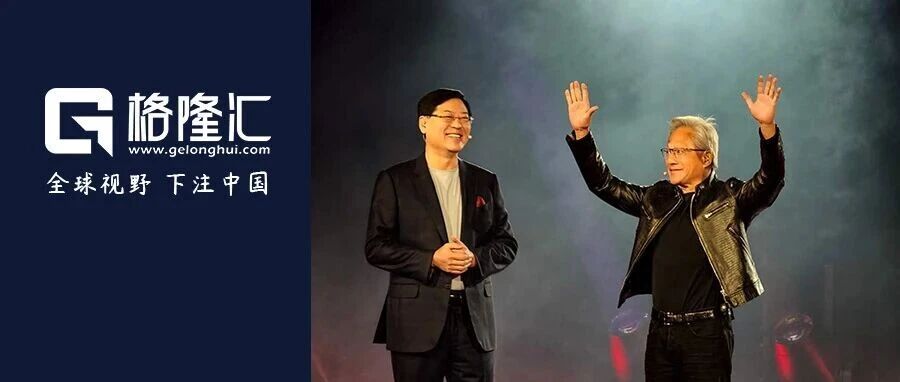
“算力之王”与“计算设备之王”:记一场跨越30年的握手
格隆汇APP· 2026-01-08 01:41
Core Viewpoint - The collaboration between Lenovo and NVIDIA has evolved significantly over the past 30 years, with a recent surge in partnership scale driven by advancements in AI technology, aiming to expand their business cooperation by four times in the next three years [4][11][12]. Group 1: Partnership Significance - NVIDIA hosted Lenovo's board members for the first time, indicating Lenovo's growing importance in NVIDIA's global AI ecosystem [1]. - The partnership has transformed from a supplier relationship to a comprehensive AI strategy collaboration, covering various sectors from supercomputers to AI factories [2][6]. - The scale of cooperation between the two companies has increased fivefold in the last two years compared to the previous 28 years [4][9]. Group 2: AI and Market Dynamics - Both companies recognize that AI will be foundational across all industries, with a focus on how AI can be effectively utilized in business applications [2][11]. - NVIDIA's CEO emphasized the need for a new computing paradigm centered around AI, moving from traditional CPU-based systems to GPU-centric architectures [9][21]. - The shift in AI focus from "is there enough computing power" to "how to effectively use computing power" reflects the evolving market demands [11][12]. Group 3: Technological Evolution - The partnership is characterized by a shared understanding of the need for engineering solutions to integrate AI into real-world applications [14][23]. - Lenovo's strategy involves transforming AI capabilities into practical, scalable products that can be deployed in various industries [15][22]. - The collaboration aims to redefine the infrastructure needed for AI, with Lenovo focusing on delivering stable, operational systems while NVIDIA pushes the boundaries of computational power [22][23]. Group 4: Future Outlook - Both companies are positioned to capitalize on the massive market opportunities presented by the need to modernize computing infrastructure, estimated at $10 to $15 trillion over the past 30 years [9][11]. - The partnership is expected to deepen further with the introduction of advanced technologies and platforms, enhancing their joint capabilities in AI solutions [14][16]. - The collaboration is seen as a long-term evolution rather than a short-term alliance, with both companies committed to addressing the challenges of AI deployment in real-world scenarios [16][23].



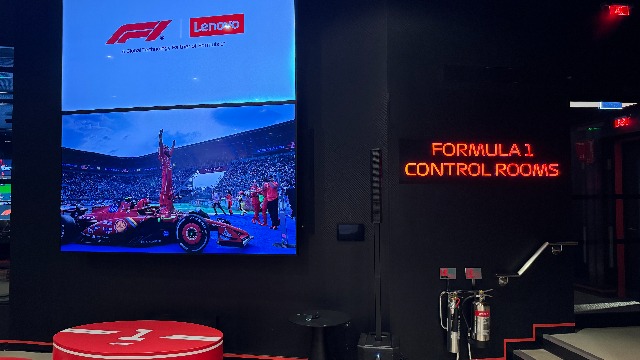
在F1技术心脏地带,看见中国科技驶入世界体系
第一财经· 2025-11-21 13:59
Core Viewpoint - The article discusses how Chinese technology companies, particularly Lenovo, are increasingly integrating into global industries, exemplified by Lenovo's partnership with Formula 1 (F1) as a technology collaborator, moving beyond mere brand exposure to deep infrastructure cooperation [3][7][11]. Group 1: Lenovo's Role in F1 - Lenovo has been an official partner of F1 since 2022 and will upgrade to "Global Technology Partner" in 2025, marking it as the first Chinese tech company at this level [3][7]. - Lenovo's hardware, including ThinkStation workstations and ThinkVision displays, plays a crucial role in F1's Media and Technology Center (MTC), supporting high-intensity tasks like image editing and real-time graphics rendering [6][7]. - F1 processes approximately 650TB of data each race weekend, necessitating rapid processing to ensure timely delivery of content to global audiences [6][14]. Group 2: Engineering Collaboration and Challenges - F1's equipment must withstand extreme conditions such as high temperatures and humidity, requiring high reliability and durability [9][10]. - The partnership between Lenovo and F1 is characterized by a collaborative approach to product development, where feedback from F1's technical team directly informs Lenovo's product iterations [10][11]. - The need for immediate usability of equipment upon arrival at race locations emphasizes the importance of structural strength and thermal management in Lenovo's products [9][10]. Group 3: Data Processing and AI Integration - The speed of data processing is critical for enhancing viewer experience, with F1's MTC operating with hundreds of processing cores and terabytes of memory to manage increasing data volumes [14][15]. - The introduction of AI into F1 operations will require advanced computational capabilities and stability from Lenovo's technology [14][15]. - F1 views the Chinese market as a significant growth area, with the return of the Chinese Grand Prix highlighting the potential for increased audience engagement and technological application [15]. Group 4: Globalization of Sports Technology - The collaboration between Lenovo and F1 illustrates a shift in Chinese technology's role from being a visible brand to a foundational player in global sports infrastructure [7][11]. - Chinese companies are contributing to the globalization of sports by providing technology and services that shape the operational frameworks of top-tier events like F1 [15].

在F1技术心脏地带,看见中国科技驶入世界体系
Di Yi Cai Jing· 2025-11-21 10:46
Core Insights - Chinese technology companies are increasingly participating in the global operations of top-tier events like Formula 1 (F1), moving from brand exposure to deep infrastructure collaboration [1][4][10] Group 1: Participation of Chinese Technology in F1 - Lenovo has become an official partner of F1 since 2022 and will upgrade to "Global Technology Partner" in 2025, marking a significant milestone as the first Chinese tech company at this level [1][4] - The collaboration between Lenovo and F1 showcases how Chinese technology is integrating into the global industrial chain, emphasizing a shift towards foundational technological contributions [1][4] Group 2: Technical Collaboration and Infrastructure - The F1 Media and Technology Center (MTC) processes data from various race tracks, with Lenovo's hardware playing a crucial role in real-time content production, including workstations and display systems [3][4] - F1's IT Director highlighted the importance of stability and computing power in high-pressure environments, with approximately 650TB of data processed each race weekend [3][9] Group 3: Engineering Challenges and Solutions - F1 equipment must withstand extreme conditions, requiring high reliability and performance standards, which Lenovo addresses through a close product iteration mechanism [6][7] - The collaboration is characterized by a partnership approach rather than a traditional supplier relationship, focusing on joint problem-solving and system construction [7][10] Group 4: Data Processing and AI Integration - The MTC operates with around 150 personnel and utilizes hundreds of processing cores and high-speed storage to manage the growing data demands of each race [9][10] - The introduction of AI in event operations necessitates enhanced computing capabilities, with Lenovo's systems being integral to this evolution [9][10] Group 5: Market Growth and Future Prospects - F1 recognizes China as a significant growth market, especially with the return of the Chinese Grand Prix, indicating a mutual benefit in technology application and audience engagement [10] - The partnership between Chinese tech firms and global events like F1 is reshaping the infrastructure of sports globalization, with ongoing exploration of AI-assisted content production [10]
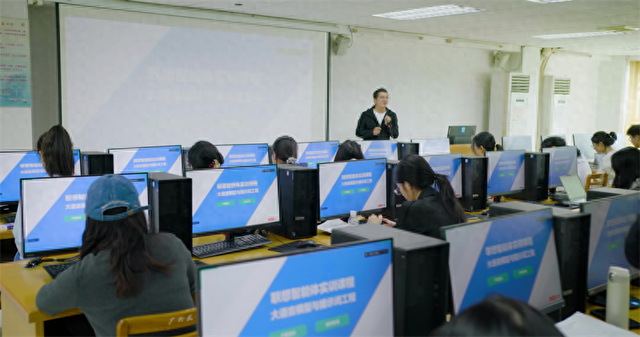
广东外语外贸大学携手联想“以赛促学”,探索文科AI教育新范式
Huan Qiu Wang· 2025-11-20 09:09
Core Insights - The Guangdong University of Foreign Studies (GDUFS) has successfully held its first AI Application Innovation Competition, showcasing interdisciplinary creativity among 12 finalist teams [1][2] - This competition marks a significant shift in AI education from theoretical understanding to practical application, particularly in the humanities [1][3] - The collaboration with Lenovo aims to integrate AI into the curriculum, enhancing the educational experience and preparing students for real-world applications [2][4] Group 1: AI Education Transformation - The rapid development of artificial intelligence necessitates a profound transformation in higher education, particularly in humanities disciplines like language and international business [1][3] - GDUFS is among the first universities to respond to this change, recognizing the limitations of traditional knowledge systems in the face of AI advancements [1][2] - The competition serves as a platform for students to transition from learning about AI to actively creating AI solutions [4][9] Group 2: Practical Application and Collaboration - The AI Practical Ability Competition emphasizes real-world problem-solving rather than just algorithmic depth, focusing on the feasibility of AI applications [3][4] - Lenovo provides comprehensive technical support, including hardware and software, to facilitate the development of AI solutions by students [3][6] - The collaboration aims to create a multi-layered AI teaching system that integrates computational power, curriculum, and practical platforms [6][7] Group 3: Infrastructure and Curriculum Development - Lenovo has deployed 606 ThinkStation workstations to provide a unified high-performance computing environment for students [6][7] - A joint AI literacy curriculum has been developed, merging engineering practices with academic frameworks to cover essential AI concepts [7][8] - The AI Force platform serves as a central hub for teaching and competition, enabling a seamless integration of learning, practice, and evaluation [7][8] Group 4: Future of Humanities in AI - GDUFS's approach aims to ensure that humanities students not only understand AI but also possess the skills to create AI applications [9] - The initiative is seen as a model for how humanities education can adapt to the demands of the AI era while maintaining its core values [9][8] - The collaboration between GDUFS and Lenovo is viewed as a pathway for humanities disciplines to evolve and remain relevant in an increasingly technology-driven world [9][8]