Tita

Search documents
互联网企业 OKR 季度复盘与年度绩效考核配合落地案例
Sou Hu Cai Jing· 2025-10-30 04:48
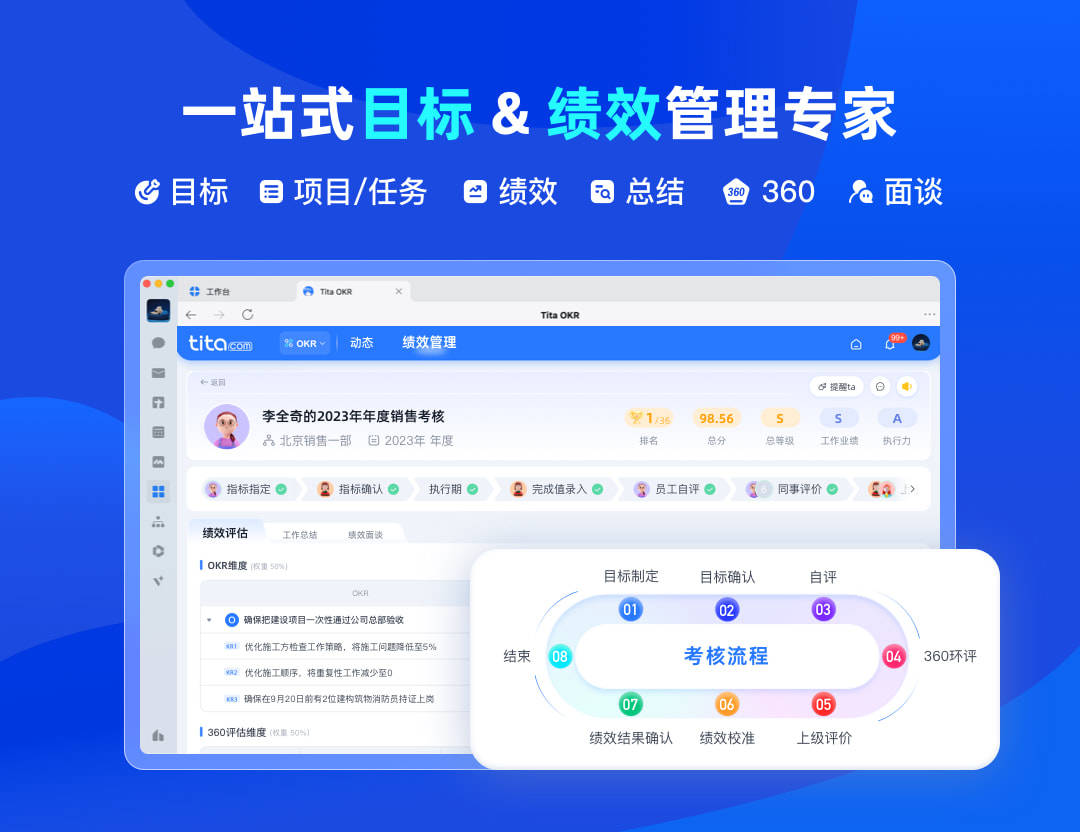
Core Insights - The company is an internet enterprise with 100 employees, focusing on the development and operation of a social app aimed at young users, currently experiencing rapid user growth but facing challenges in user retention and monetization [1] OKR Implementation and Performance Review - The company recognizes the need to better align quarterly OKR reviews with annual performance assessments to effectively achieve corporate goals, allowing for timely adjustments and comprehensive evaluations of employee contributions [2] - At the beginning of the year, the management set annual OKRs, aiming to increase app user retention to 40% and achieve a 50% growth in commercial revenue, with specific key results outlined for each quarter [3] - Each department developed quarterly OKRs based on the company's annual objectives, with the product department focusing on optimizing core app features and user experience [3][4] Quarterly Review Process - At the end of each quarter, the company conducts OKR review meetings, which have led to significant improvements, such as an increase in user retention from 25% to 38% and a 45% growth in commercial revenue, enhancing employee motivation and inter-departmental collaboration [5] - The Tita platform supports the hierarchical setting of OKRs from company to individual levels, facilitating efficient quarterly reviews and annual assessments [5] Execution and Adjustment - During the quarterly review, departments analyze their OKR completion status, identify issues, and adjust the next quarter's objectives accordingly, ensuring continuous improvement [7] - The annual performance evaluation incorporates data from all four quarters, assessing not only the completion of OKRs but also problem-solving abilities and teamwork, leading to targeted training and development plans for employees [7]

软件研发企业推行项目经营管理的解决方案
Sou Hu Cai Jing· 2025-08-13 07:10
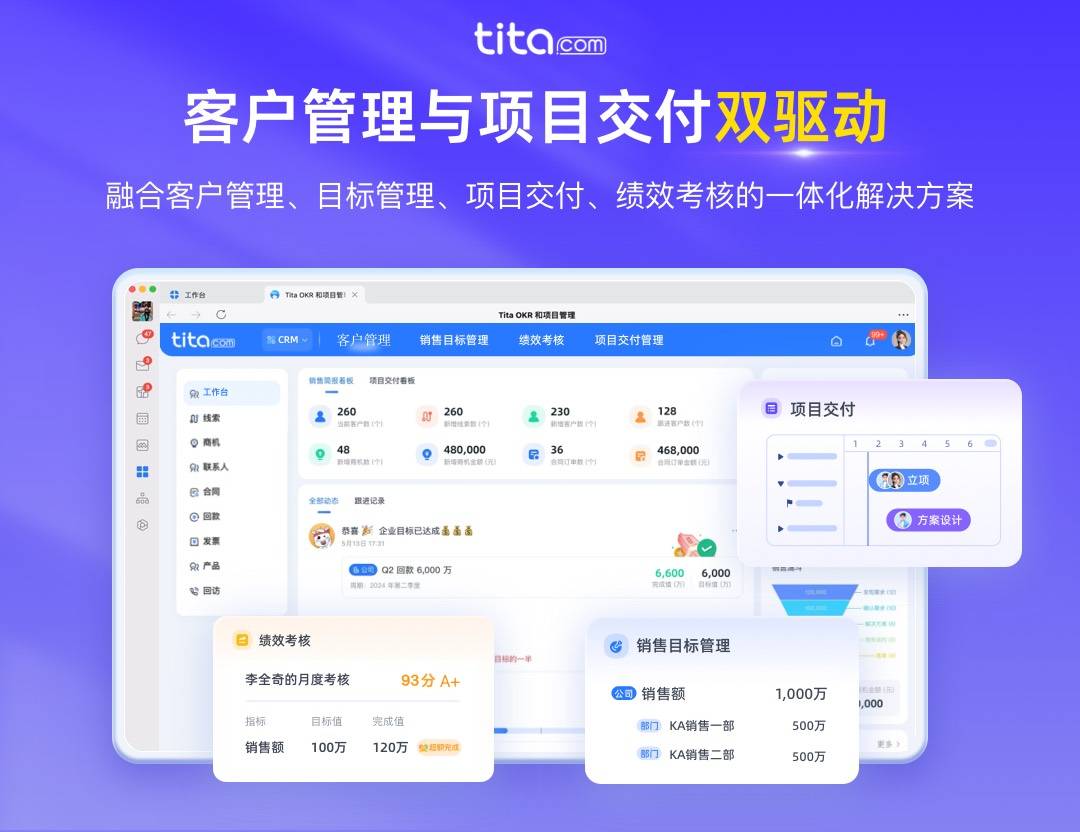
Group 1: Project Management System - The establishment of a project management system is essential for defining operational management needs and objectives [1] - Tita enables data-driven decision-making by integrating various business data into a unified data warehouse, supporting informed enterprise decisions [3] - A detailed mapping of business processes in software development helps identify pain points and bottlenecks, providing a clear operational foundation for management [4] Group 2: Project Lifecycle Management - Tita facilitates project initiation by clearly defining goals, scope, timelines, and milestones, ensuring clarity from the start [4] - Real-time progress tracking through Tita's visual tools allows project teams to monitor execution status and address potential issues promptly [4] - At project completion, Tita automatically generates summary reports covering outcomes, quality, progress, costs, and team performance for future reference [4] Group 3: Customer Relationship Management - Tita integrates customer information with project and order data, enabling personalized and precise service to enhance customer satisfaction and loyalty [5] - The system collects and analyzes customer feedback to quickly address needs and optimize service processes, identifying market opportunities [5] Group 4: Order and Payment Management - Tita tracks order status in real-time from creation to execution, ensuring tight coordination and timely issue resolution [5] - The system automates reminders for payment follow-ups and supports various payment methods, enhancing cash flow efficiency and reducing financial risks [5] Group 5: Continuous Improvement - Tita includes built-in performance metrics for monitoring key performance indicators (KPIs), allowing management to make informed decisions based on real-time data [7] - Predictive analytics based on historical and real-time data help in planning and risk reduction, while also identifying areas for process optimization [7] - Employee training on Tita's functionalities ensures effective usage, while a support system addresses any operational challenges [7] Group 6: Knowledge Sharing and Process Optimization - Encouraging knowledge sharing on the Tita platform fosters a culture of learning and collaboration, enhancing overall competitiveness [7] - Continuous optimization of business processes based on data analysis improves efficiency and adaptability to changing market conditions [7]