
UCM推理记忆数据管理技术

Search documents
存力中国行暨先进存力AI推理工作研讨会在京顺利召开
Zheng Quan Ri Bao Wang· 2025-11-07 07:29
Core Insights - The conference focused on the role of advanced storage in empowering AI model development in the AI era [1][2] - Key experts from various organizations discussed the challenges and solutions related to AI inference and storage technology [2][3][4] Group 1: Advanced Storage and AI Inference - The chief expert from the China Academy of Information and Communications Technology emphasized that advanced storage is crucial for improving AI inference efficiency and controlling costs [2] - The national policies highlight the importance of advancing storage technology and enhancing the storage industry's capabilities [2] - A working group was established to promote collaboration and innovation in storage technology within the AI inference sector [2] Group 2: Technical Challenges and Solutions - Current challenges in AI inference include the need for upgraded KV Cache storage, multi-modal data collaboration, and bandwidth limitations [3] - China Mobile is implementing layered caching, high-speed data interconnects, and proprietary high-density servers to enhance storage efficiency and reduce costs [3] - Huawei's UCM inference memory data management technology addresses the challenges of data management, computational power supply, and cost reduction in AI applications [4] Group 3: Industry Collaboration and Future Directions - The conference facilitated discussions among industry experts from various companies, contributing to the consensus on the future direction of the storage industry [5] - The focus is on enhancing computational resource utilization and addressing issues related to high concurrency and low latency in AI inference [4][5] - The successful hosting of the conference is seen as a step towards fostering innovation and collaboration in the storage industry [5]
Token经济时代,AI推理跑不快的瓶颈是“存力”?
Tai Mei Ti A P P· 2025-11-07 04:08
Core Insights - The AI industry is undergoing a structural shift, moving from a focus on GPU scaling to the importance of storage capabilities in enhancing AI performance and cost efficiency [1][10] - The demand for advanced storage solutions is expected to rise due to the increasing requirements of AI applications, with storage prices projected to remain bullish through Q4 2025 [1][10] - The transition from a "parameter scale" arms race to a "inference efficiency" commercial competition is anticipated to begin in 2025, emphasizing the significance of token usage in AI inference [2][10] Storage and Inference Changes - The fundamental changes in inference loads are driven by three main factors: the exponential growth of KVCache capacity due to longer contexts, the complexity of multi-modal data requiring advanced I/O capabilities, and the need for consistent performance under high-load conditions [4][10] - The bottleneck in inference systems is increasingly related to storage capabilities rather than GPU power, as GPUs often wait for data rather than being unable to compute [5][10] - Enhancing GPU utilization by 20% can lead to a 15%-18% reduction in overall costs, highlighting the importance of efficient data supply over merely increasing GPU numbers [5][10] New Storage Paradigms - Storage is evolving from a passive role to an active component in AI inference, focusing on data flow management rather than just capacity [6][10] - The traditional storage architecture struggles to meet the demands of high throughput, low latency, and heterogeneous data integration, which hinders AI application deployment [7][10] - New technologies, such as CXL and multi-level caching, are being developed to optimize data flow and enhance the efficiency of AI inference systems [6][10] Future Directions - The next three years will see a consensus on four key directions: the scarcity of resources will shift from GPUs to the ability to efficiently supply data to GPUs, the management of data will become central to AI systems, real-time storage capabilities will become essential, and CXL architecture will redefine the boundaries between memory and storage [10][11][12] - The competition in AI will extend beyond model performance to the underlying infrastructure, emphasizing the need for effective data management and flow [12]


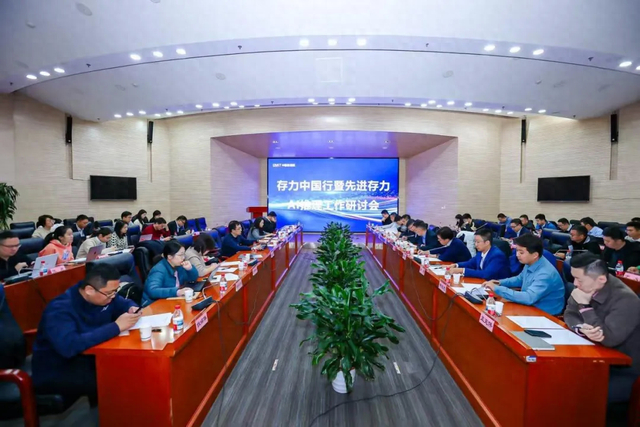
存力中国行北京站暨先进存力AI推理工作研讨会顺利召开
Guan Cha Zhe Wang· 2025-11-06 04:14
Core Insights - The article emphasizes the rapid integration of AI large models across various industries, highlighting the significance of data as a fundamental strategic resource for national development [1][3] - The event organized by the China Academy of Information and Communications Technology focused on the role of advanced storage technologies in enhancing AI model performance and addressing challenges in inference costs and efficiency [1][3] Group 1: Industry Challenges and Developments - The current AI application landscape faces significant challenges in inference costs, efficiency, and quality, making advanced storage a key factor in improving AI inference performance and controlling costs [3] - The Chinese government is prioritizing the development of advanced storage technologies, as outlined in policies like the "Action Plan for High-Quality Development of Computing Power Infrastructure," which aims to accelerate research and application of storage technologies [3] - The meeting resulted in the establishment of a working group focused on advanced storage for AI inference, with recommendations to encourage innovative storage technology development and promote deep integration of storage and computing [3][6] Group 2: Technological Innovations and Solutions - China Mobile shared insights on storage technology trends, addressing challenges such as the need for KV Cache storage upgrades and bandwidth limitations, proposing solutions like hierarchical caching and high-speed data interconnects [4] - Huawei highlighted three major challenges in IT infrastructure for the AI era: managing data effectively, ensuring sufficient computing power, and reducing costs, while introducing their UCM inference memory data management technology [5] - Silicon-based Flow discussed solutions to the slow and costly inference issues of large models, focusing on enhancing computing resource utilization and optimizing performance through intelligent gateways and KV Cache solutions [5]
先进存力赋能AI大模型发展
Zhong Guo Xin Wen Wang· 2025-11-06 02:29
Core Insights - The "Storage Power China Tour" event in Beijing focused on the role of advanced storage in empowering AI model development in the AI era [1] - The need for seamless integration of model capabilities into various business scenarios is emphasized, highlighting the importance of storage for AI training and inference [1] Group 1: Industry Challenges and Developments - AI applications are facing significant challenges in inference costs, efficiency, and quality, making advanced storage crucial for enhancing AI inference performance and controlling costs [1] - The Ministry of Industry and Information Technology and other departments released an action plan in October 2023, emphasizing the acceleration of storage technology development and the enhancement of storage industry capabilities [1] Group 2: Technological Innovations and Solutions - Huawei's UCM inference memory data management technology aims to address challenges in data management, computational power, and cost reduction for AI inference [2] - Recommendations from industry experts include adapting core inference frameworks to multi-modal models and optimizing existing models to improve cost-effectiveness [2] - Future trends indicate a shift in storage from passive to intelligent computing collaboration, with a focus on high-density all-flash storage and integrated storage-computing technologies [2]