
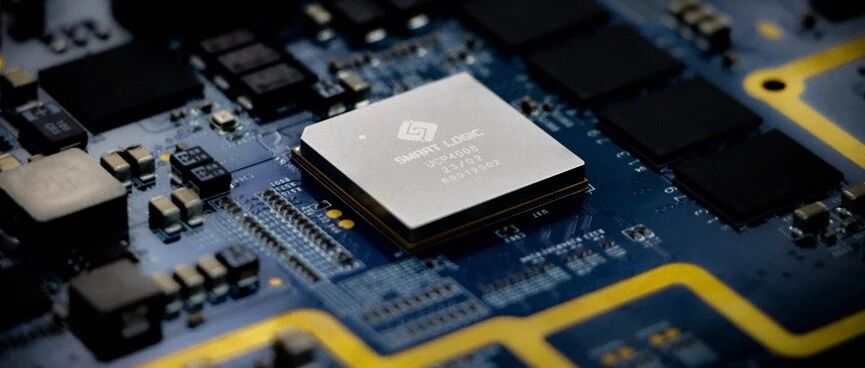
UCP基带芯片

Search documents
算力困局终被破!
是说芯语· 2026-01-27 00:03
Core Viewpoint - The article emphasizes the emergence of "AI for Science" (scientific intelligence) as a transformative force in research, moving beyond traditional methods to integrate AI deeply into scientific discovery processes [1][2]. Group 1: Company Overview - SiLang Technology, founded in 2016 and rooted in the Chinese Academy of Sciences, has become a leader in the scientific intelligence sector, focusing on high-performance computing chip design [4]. - The company has completed seven rounds of financing, attracting investments from major industry players like CATL and Kweichow Moutai, as well as notable financial investors, ensuring comprehensive coverage of the industry chain [4]. Group 2: Technological Innovation - SiLang Technology has developed the MaPU (Matrix Processing Unit) architecture, which is a key innovation that allows for significant advancements in scientific computing [5][7]. - The MaPU architecture achieves over 90% core utilization in scientific tasks and is reported to be dozens of times faster than traditional CPUs, overcoming previous performance limitations [7]. Group 3: Product Development - The company has launched two core products: the "Tianqiong" supercomputer and the UCP baseband chip, which together form a dual-driven strategy to convert foundational technology into high-value solutions [8]. - The "Tianqiong" supercomputer, as China's first fully self-developed 3D scientific computer, significantly enhances computational speed and reduces communication latency, outperforming traditional supercomputers by 2 to 4 orders of magnitude [9][11]. Group 4: Application and Impact - The "Tianqiong" supercomputer has been instrumental in various fields, including biomedicine and new materials, facilitating drug development and addressing challenges in lithium battery research [13]. - The UCP baseband chip has been successfully applied in 5G and satellite communication, establishing itself as a preferred solution among domestic low-orbit satellite internet constellations [14]. Group 5: Strategic Positioning - SiLang Technology aims to build a complete scientific intelligence ecosystem that integrates architecture, computing power, data, and applications, driven by a strong team combining technical and commercial expertise [16]. - The company is positioned to compete globally in the scientific intelligence arena, with a focus on creating a "scientific data factory" to ensure high-quality data generation and model effectiveness [16][18].

思朗科技启动IPO辅导 深耕科学智能“超算”赛道
Zheng Quan Shi Bao Wang· 2026-01-05 09:40
Core Insights - Shanghai Silang Technology Co., Ltd. (Silang Technology) has filed for IPO guidance with the Shanghai Securities Regulatory Bureau, with Guotai Junan Securities as the advisory institution [1] - The company, founded in 2016, focuses on the design and application of high-performance domestic computing chips, specifically for AI in scientific research, and holds complete intellectual property rights for its trillion operations per second algebra processing unit (MaPU) [1] - The MaPU architecture combines the efficiency of ASICs with the programmability of CPUs/GPUs, achieving performance that can exceed traditional architectures by several times in specific scientific computing tasks [1] Company Developments - Based on the MaPU architecture, Silang Technology has developed a series of communication baseband products and the "Tianqiong" 3D scientific computer, which is the first fully domestically developed 3D scientific computer in China [2] - The "Tianqiong" computer offers significant advantages in low communication latency and computational efficiency, providing 2 to 4 orders of magnitude acceleration compared to traditional 2D supercomputers [2] - The company has established a commercial supercomputing center in Xiaogan, Hubei Province, which is the first operational center for the "Tianqiong" in China, launched in 2023 [3] Industry Context - The distinction between "supercomputing" and "intelligent computing" is highlighted, with supercomputing focusing on large-scale calculations for scientific research, while intelligent computing is tailored for AI training and inference [2][3] - The integration of AI with physical, chemical, and biological research is emphasized, showcasing the need for high-performance chips in supercomputing to meet the demands of extensive computational requirements [3] - Silang Technology's MaPU architecture has also made strides in the communication sector, with its UCP baseband chips being adopted in 5G small base stations by major telecom operators and participating in low Earth orbit satellite communication projects [4]