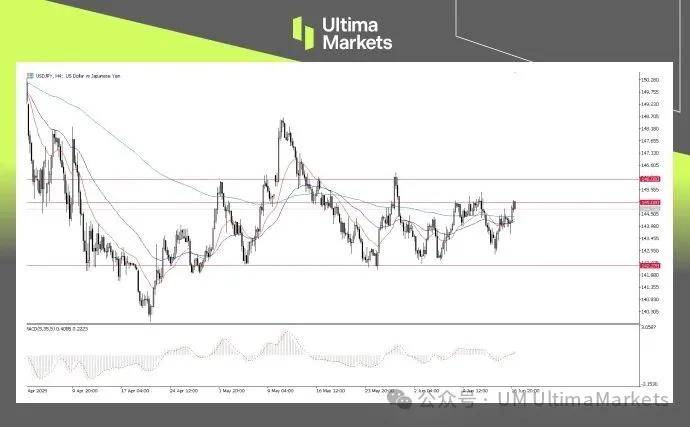
USDJPY exchange rate

Search documents
美日贸易协定达成后,美元 日元汇率将如何变动-Japan FX_ How will the USDJPY move after the US-Japan trade agreement_
2025-07-28 01:42
Summary of Key Points from the Conference Call Industry and Company Involved - **Industry**: Foreign Exchange (FX) and Trade Relations - **Companies**: United States and Japan Core Insights and Arguments 1. **Trade Agreement Impact**: The basic trade agreement between the US and Japan is expected to lead to JPY appreciation over time, although short-term pressures may cause depreciation due to rising Japanese equities in a global risk-on environment [1][3][4] 2. **Monetary Policy Normalization**: As the Bank of Japan (BoJ) continues to normalize its monetary policy, there may be a coordinated FX policy between the US and Japan, which could strengthen the JPY [1][5] 3. **Future Rate Cuts**: A recovery of the JPY is anticipated when the Federal Reserve resumes rate cuts and the interest rate differential between the US and Japan narrows [1][4] 4. **Medium-Term Outlook**: In the medium term, the JPY is likely to strengthen if US and Japanese equity markets experience a downturn, even if temporary [1][4] 5. **USDJPY Forecast**: The forecast for USDJPY is a decline to ¥140/$ in the October-December period [1] Additional Important Points 1. **Investment Commitment**: President Trump announced that Japan will invest $550 billion in the US as part of the trade agreement, which may have contributed to a temporary weakening of the JPY [7][8] 2. **Japanese Foreign Reserves**: Japan's foreign reserves have reached $1.2 trillion, and there are discussions about how to utilize these reserves effectively, particularly in relation to US Treasury coupon payments [6] 3. **Foreign Direct Investment (FDI)**: As of December 2024, outstanding Japanese FDI in the US was ¥124 trillion (approximately $830 billion), with total outstanding investments (including foreign portfolio investment) amounting to ¥466 trillion (about $3.1 trillion) [7] 4. **Challenges of Investment Goals**: The $550 billion investment goal is viewed as challenging in the long run, and measures to provide USD funds will be necessary if such investments increase significantly [8][9] 5. **Gas Field Development Costs**: The development of a gas field in Alaska is estimated to cost about ¥7 trillion, indicating potential discussions on utilizing Japanese foreign reserves for such projects [9]

地缘政治风险升温,央行决议临近
Sou Hu Cai Jing· 2025-06-17 09:50
Core Viewpoint - Global financial markets are cautious as investors weigh geopolitical tensions and central bank decisions, reflecting a delicate balance between risk appetite and defensive strategies [1] Market Overview - Wall Street stock index futures experienced a slight decline, while European markets remained flat. Asian markets opened higher but failed to sustain gains due to shifting focus on geopolitical issues and policy signals [2] - The US dollar strengthened slightly against major currencies, driven by increased safe-haven flows amid escalating tensions in the Middle East and expectations surrounding upcoming Federal Reserve and Bank of Japan policy decisions [2] Central Bank Focus - The upcoming meetings of the Bank of Japan (BOJ) and the Federal Reserve (Fed) are pivotal, with expectations that the BOJ will maintain its current interest rates while investors look for clues on potential policy tightening [3] - The Fed's meeting is anticipated to result in a decision to keep rates unchanged, bolstered by recent CPI and employment data. However, market attention is also on Chairman Powell's guidance regarding future rate cuts, which could begin as early as September [3] Geopolitical Risks - Tensions between the US and Iran escalated following Israeli airstrikes on Iranian infrastructure, prompting the US to order the evacuation of personnel from Tehran [4] - China has also urged its citizens to leave Israel, highlighting the potential for the situation to escalate further [5] - Despite the seriousness of the situation, market reactions have been relatively muted, as investors expect diplomatic efforts to prevent a full-scale conflict [6] USD/JPY Analysis - The USD/JPY pair is currently in a narrow consolidation range below the 145 level, with market participants awaiting clearer policy signals from central banks to determine the next direction [7] - Key drivers include potential signals from the BOJ regarding policy tightening, which could lead to a stronger yen, and any hawkish signals from the Fed that might support the dollar [9]